Foreign tourists in Korea can get a refund on value-added tax (VAT) when they shop at stores with a "Tax Free" sign. For expensive electronics such as smartphones, laptops, and cameras, the amount you get back and when you get it depend on the refund method and the customs steps you follow when you leave. Tax Free is a system that lets foreign tourists claim back the tax on goods they buy during a trip. A Global Tax Free notice posted at a store entrance in Seoul's Myeongdong shopping district. Photo: Tenant News Refunds are about 4–8% of the purchase price The Tax Free refund applies to foreign tourists who spend at least ₩15,000 per receipt. The amount you actually get back is about 4–8% of the purchase price. The taxes refunded are VAT and the individual consumption tax. The VAT included in the price is about 9%, and you receive that amount minus the refund agency's fee. You qualify if you are a non-resident foreigner staying in Korea for less th...
Bowing in Korea and Japan looks almost the same on paper. Both countries divide bows into three levels: about 15 degrees for a light bow, about 30 degrees for a medium bow, and about 45 degrees for a deep bow. What differs in Korea is that a bow rarely stands alone. In Korea, a bow is often paired with a spoken greeting and a handshake.
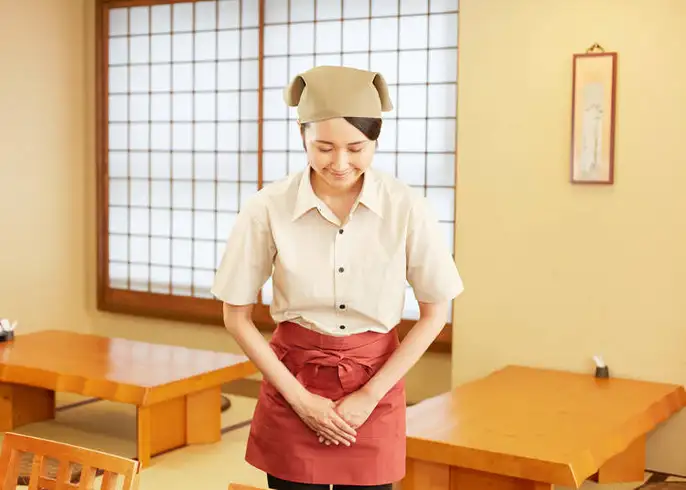
Korea vs. Japan: Bows at 15, 30, and 45 Degrees
Bows in both countries are described in the same three levels, so the angles themselves barely differ. In Japan, a bow is called ojigi (お辞儀). The Japanese 15-degree bow is used for morning and evening greetings, when passing someone, and when greeting customers. The 30-degree bow is used when speaking with customers or superiors. The 45-degree formal bow is used for apologies, deep thanks, and in front of very important customers.
In Korea, a bow (jeol) is a greeting made by bending the head and waist. Korean bows follow a similar scale: about 15 degrees for a light greeting, about 30 degrees for a first meeting or business, and about 45 degrees or more for an apology or thanks. In both countries, the heavier the situation, the deeper the bow.
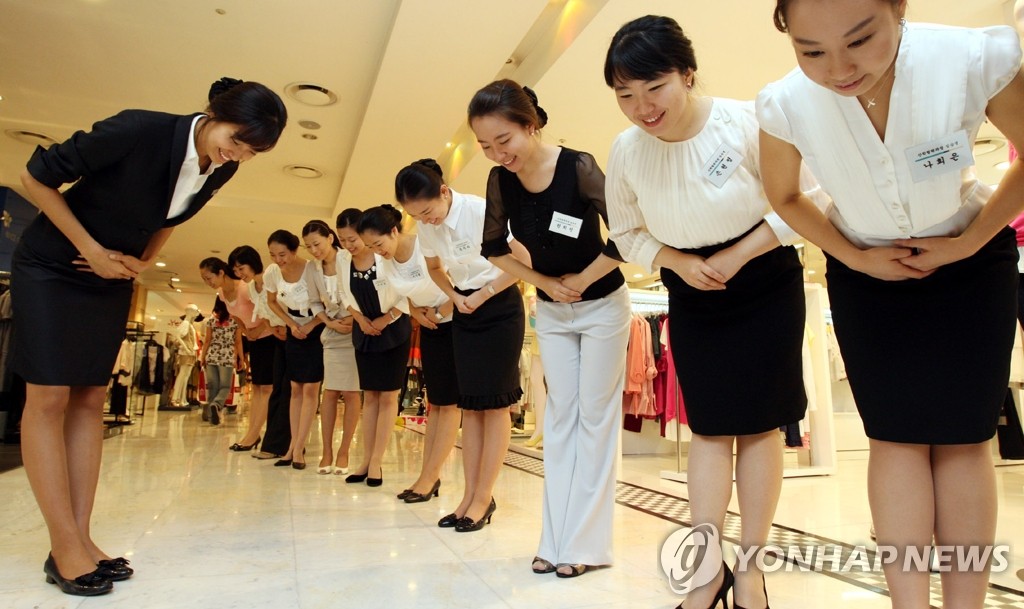
Bowing in Korea: How Deep for Each Person
In Korea, how deep you bow depends on who you are meeting: about 15, 30, or 45 degrees or more.
- About 15 degrees: For casual, passing contact, such as a store clerk or a neighbor you meet in the elevator.
- About 30 degrees: For someone you are meeting for the first time, a business contact, or an elder. For an elder, bow slightly deeper than they do.
- About 45 degrees or more: For an apology or deep thanks.
Angle ranges differ a little from source to source. Many sources put a first meeting or business bow at about 30 degrees, while others describe a respectful bow as 30 to 45 degrees. Some writing treats 45 degrees as moderately formal and 90 degrees as highly formal. This guide uses three levels as its baseline: 15 degrees, 30 degrees, and 45 degrees or more.
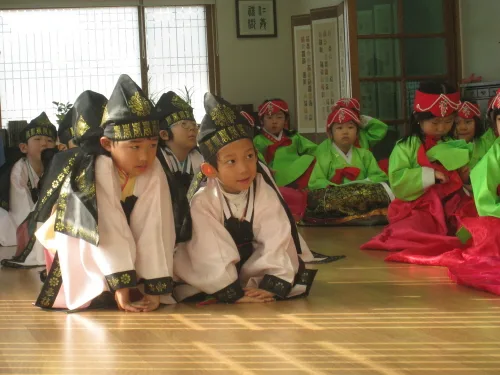
The hand position is set separately in the traditional bow. In a traditional bow, men place the left hand over the right, and women place the right hand over the left.
Bow and Handshake: Both in Business
In Korean business settings, people often bow and shake hands at the same time. You bend your head about 30 degrees, extend your hand, and add a spoken greeting. Even when two men meet, a bow and a handshake together are common.
There is a specific way to show respect when shaking hands with someone older or senior. Shake with both hands, or shake with your right hand while your left hand supports your right forearm. Some Koreans link a handshake made with the left hand alone to bad luck, so use your right hand.
When greeting a woman, a light nod (mokrye, 목례) is often used instead of a handshake. A mokrye is a slight bow of the head.

Common Greeting Mistakes Foreigners Make
Foreigners in Korea tend to make five greeting mistakes:
- Bobbing only the head, like a pigeon
- Bowing to someone below you from the top of a high staircase
- Bowing with your hands in your pockets
- Bowing without saying a greeting
- Bowing 90 degrees to a convenience store clerk
The fixes are simple. Don't just lower your head; say "annyeonghaseyo" (안녕하세요, "hello") as you bow. For a convenience store or shop clerk, about 15 degrees is enough. A bow that is too deep can make the other person uncomfortable.
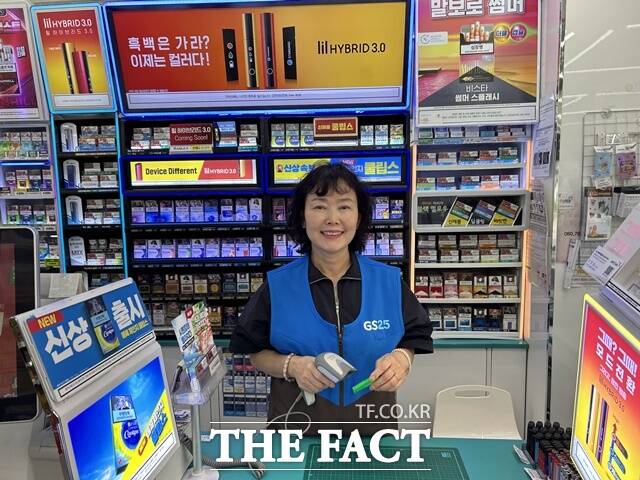
In Korea, bow about 15 degrees to shop staff, about 30 degrees to someone you meet for the first time or to an elder, and 45 degrees or more for an apology or thanks. In business, add a handshake. Choose among a 15-degree nod, a 30-degree bow, or a bow with a handshake depending on who you are greeting, and that is enough for a first greeting in Korea.