Foreign tourists in Korea can get a refund on value-added tax (VAT) when they shop at stores with a "Tax Free" sign. For expensive electronics such as smartphones, laptops, and cameras, the amount you get back and when you get it depend on the refund method and the customs steps you follow when you leave. Tax Free is a system that lets foreign tourists claim back the tax on goods they buy during a trip. A Global Tax Free notice posted at a store entrance in Seoul's Myeongdong shopping district. Photo: Tenant News Refunds are about 4–8% of the purchase price The Tax Free refund applies to foreign tourists who spend at least ₩15,000 per receipt. The amount you actually get back is about 4–8% of the purchase price. The taxes refunded are VAT and the individual consumption tax. The VAT included in the price is about 9%, and you receive that amount minus the refund agency's fee. You qualify if you are a non-resident foreigner staying in Korea for less th...
Spice levels in Korean food vary widely by region and restaurant, even for the same dish. When a Korean person says a dish is "a little spicy," it is usually quite spicy even for Koreans. This guide covers how to gauge the heat, how to read a menu, what to say to order milder food, and which dishes make a gentle start.
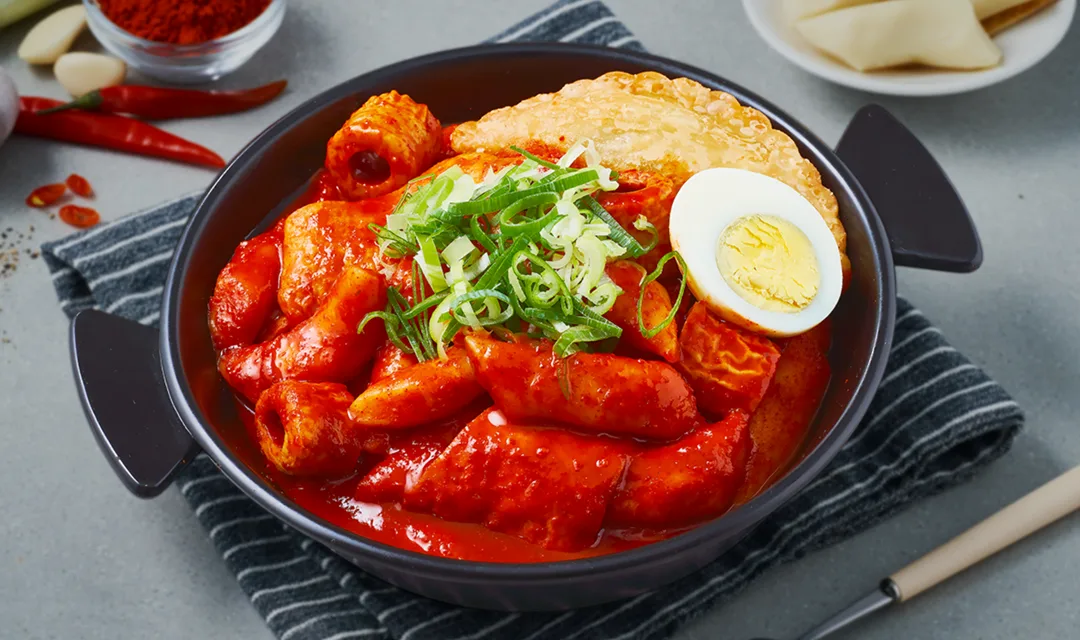
Daegu Tteokbokki Is Hot, Busan Tteokbokki Is Mild
Tteokbokki (떡볶이) is a classic Korean street food made by stir-frying rice cakes in sauce. The heat level differs by region, even under the same name. The Korea Tourism Organization introduces tteokbokki as a "representative spicy Korean food." Some versions use gochujang (고추장), a red Korean chili paste, and are spicy. Other versions use soy sauce instead and are not spicy.
Daegu tteokbokki gets its heat from cheongyang chili (청양고추, a hot Korean chili), chili powder, or curry powder in the sauce. The Korea Tourism Organization names Daegu tteokbokki as the one to try if you are confident with spicy food. Busan tteokbokki looks red and hot, but it is simmered with mulyeot (물엿), a thick sweet syrup, so it is milder than it looks. Sindang-dong tteokbokki in Seoul was originally spicy enough to "make anyone cry," but it has become milder to suit younger tastes. This means color alone will not tell you how hot a dish is. If you want spicy tteokbokki, choose the Daegu style. If you want mild, choose the Busan or Sindang-dong style.
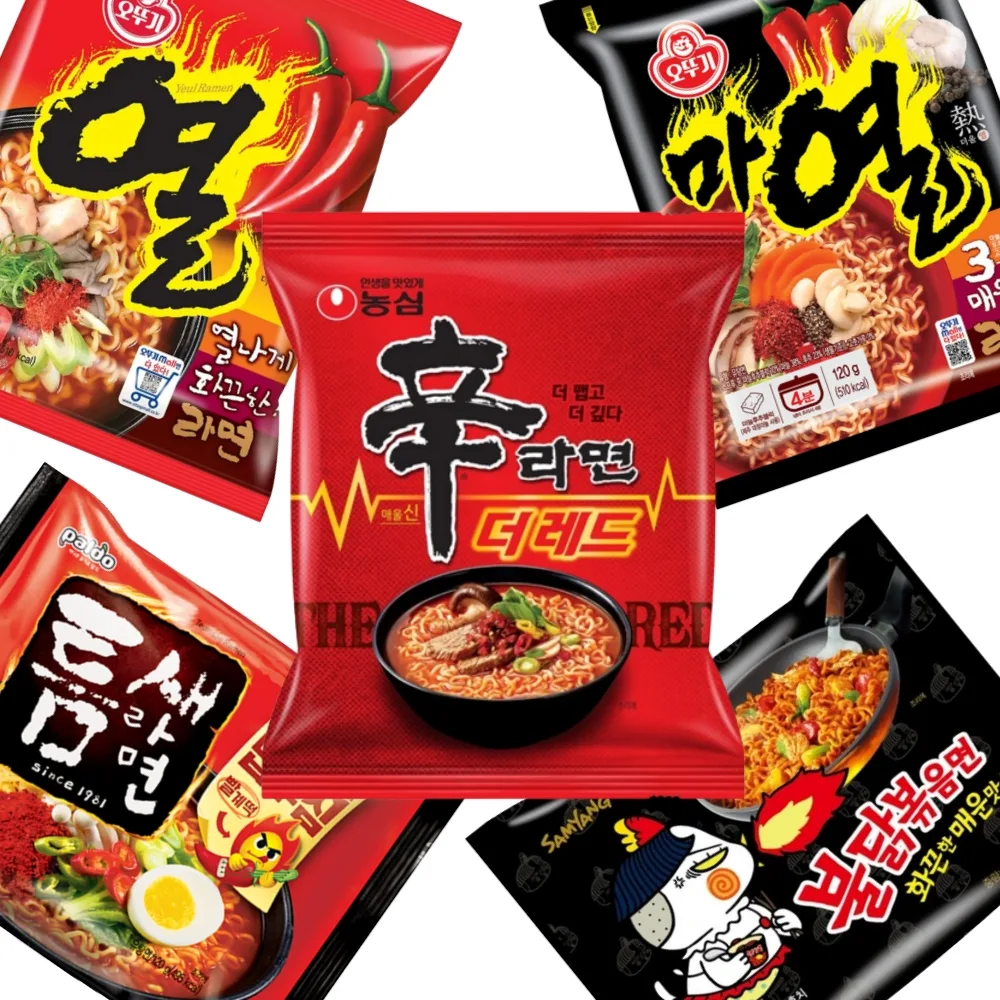
Ramen Heat: Shin Ramyun Is About 3,400 Scoville Units
You can compare the heat of ramen using Scoville (the unit is SHU), a measure of how hot a chili is. The higher the number, the hotter the food.
- Shin Ramyun: about 3,400 (about 2,900 before 2017)
- Samyang Buldak Ramen (released in 2012): about 4,404
- Nongshim Shin Ramyun Red, Ottogi Yeol Ramen: about 7,500
- Paldo Teumsae Ramen Red Tteokbokki: about 10,000
Shin Ramyun Red and Yeol Ramen score more than twice as high as Shin Ramyun. Cheongyang chili is about 4,000 to 10,000 Scoville units, so Teumsae Ramen Red Tteokbokki reaches the top of the cheongyang chili range. The numbers shown may differ by manufacturer, so treat them as a rough comparison.
At the other end, Nongshim Tuigim Udon is about 310 Scoville units. Most Koreans do not consider it a spicy ramen, but two foreigners, one from Japan and one from the United Kingdom, found it spicy. The same food can feel different depending on the heat level you are used to.
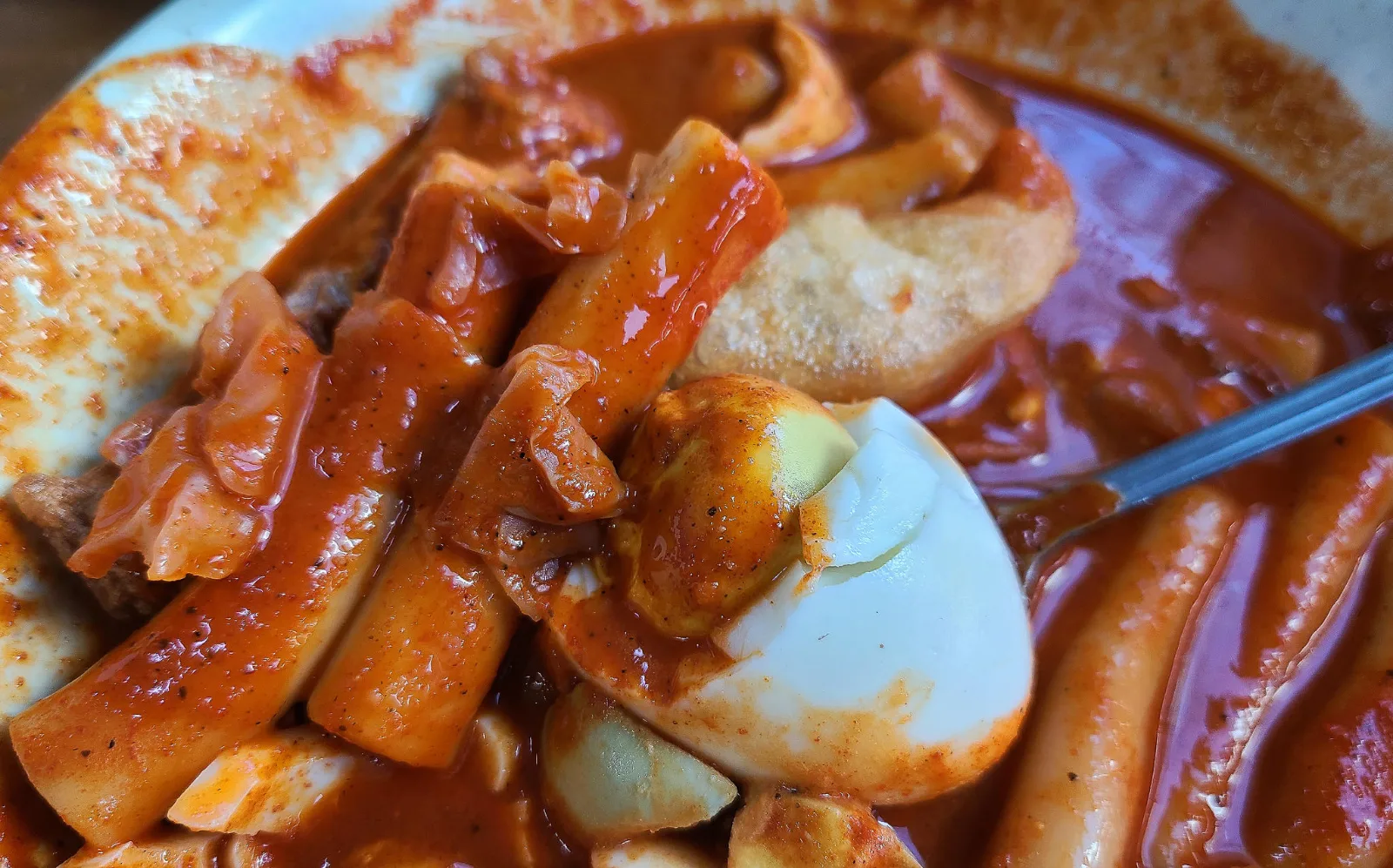
Korean Food Has Gotten Hotter Since the Early 2000s
Spice levels in Korean food have risen sharply since the early 2000s. Chili peppers arrived on the Korean Peninsula about 400 years ago, and in traditional Korean cooking the heat was mild, used to bring out flavor. In the early 2000s, buldak (spicy fire chicken), extremely spicy tteokbokki, and extremely spicy ramen appeared. A race for heat began as companies tried to stand out and attract more customers.
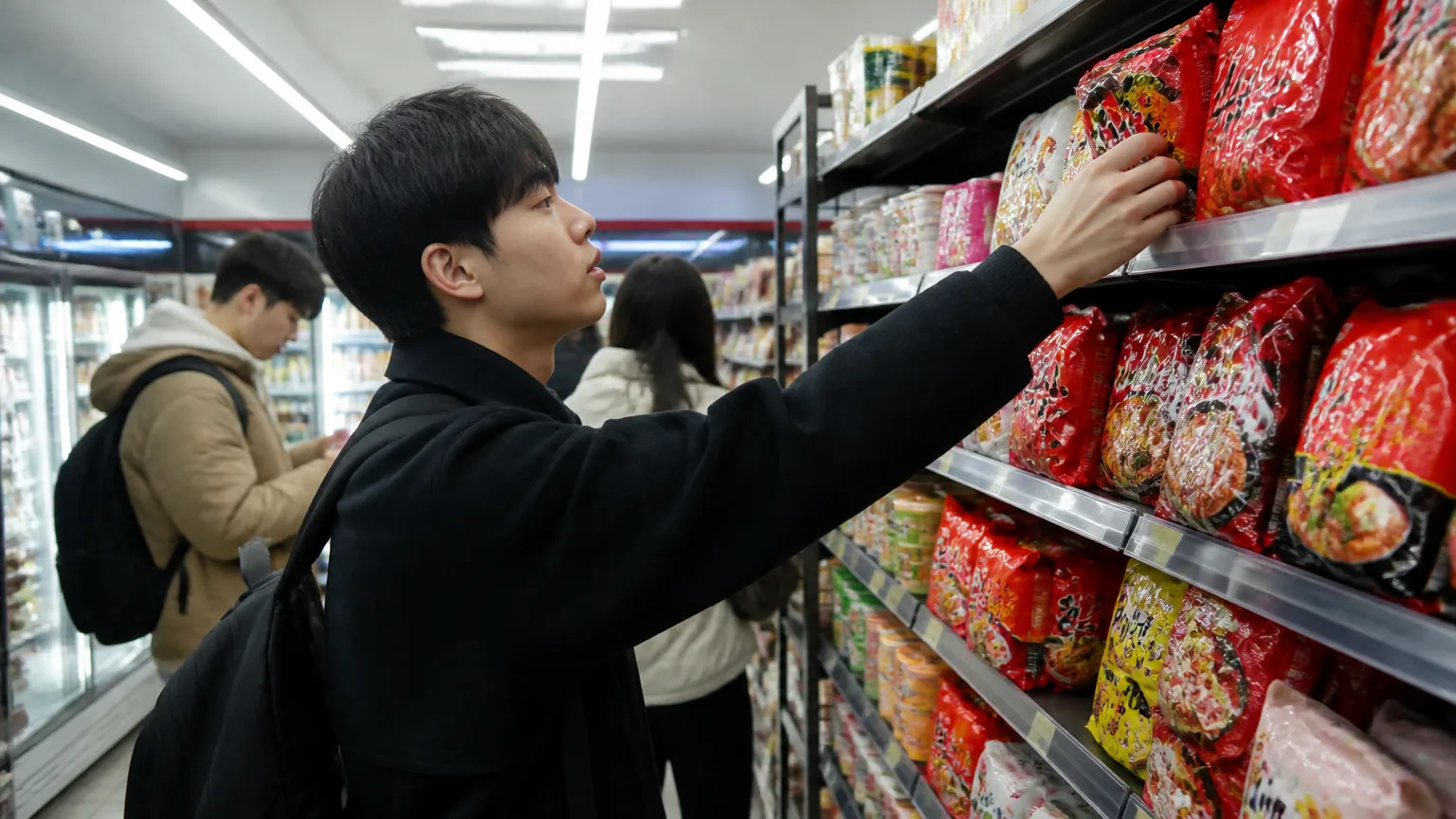
Demand for spicy noodles keeps growing. Teumsae Ramen Red Tteokbokki has sold 240 million units in total. At one convenience store chain, sales of 10 spicy noodle products above 3,040 Scoville units rose 98.8% over three years, and 67.5% of spicy noodle buyers were in their 20s and 30s. Today, "spicy" at a Korean restaurant or convenience store means something different from the heat of old Korean cooking.
Spice Signals on Menus and Phrases for Ordering
If you see maeun (매운), gochu (고추), or yangnyeom (양념) on a Korean menu, the dish may be spicy. Yangnyeom often means a spicy sauce. A dish with eolkeun (얼큰) in its name is also a spicy version, such as eolkeun sujebi (얼큰수제비). Maeuntang (매운탕, spicy fish stew) and buldak are dishes to avoid if you dislike spicy food. Even ordinary-looking dishes like tteokbokki can be quite spicy, so it is safest to ask before you order.
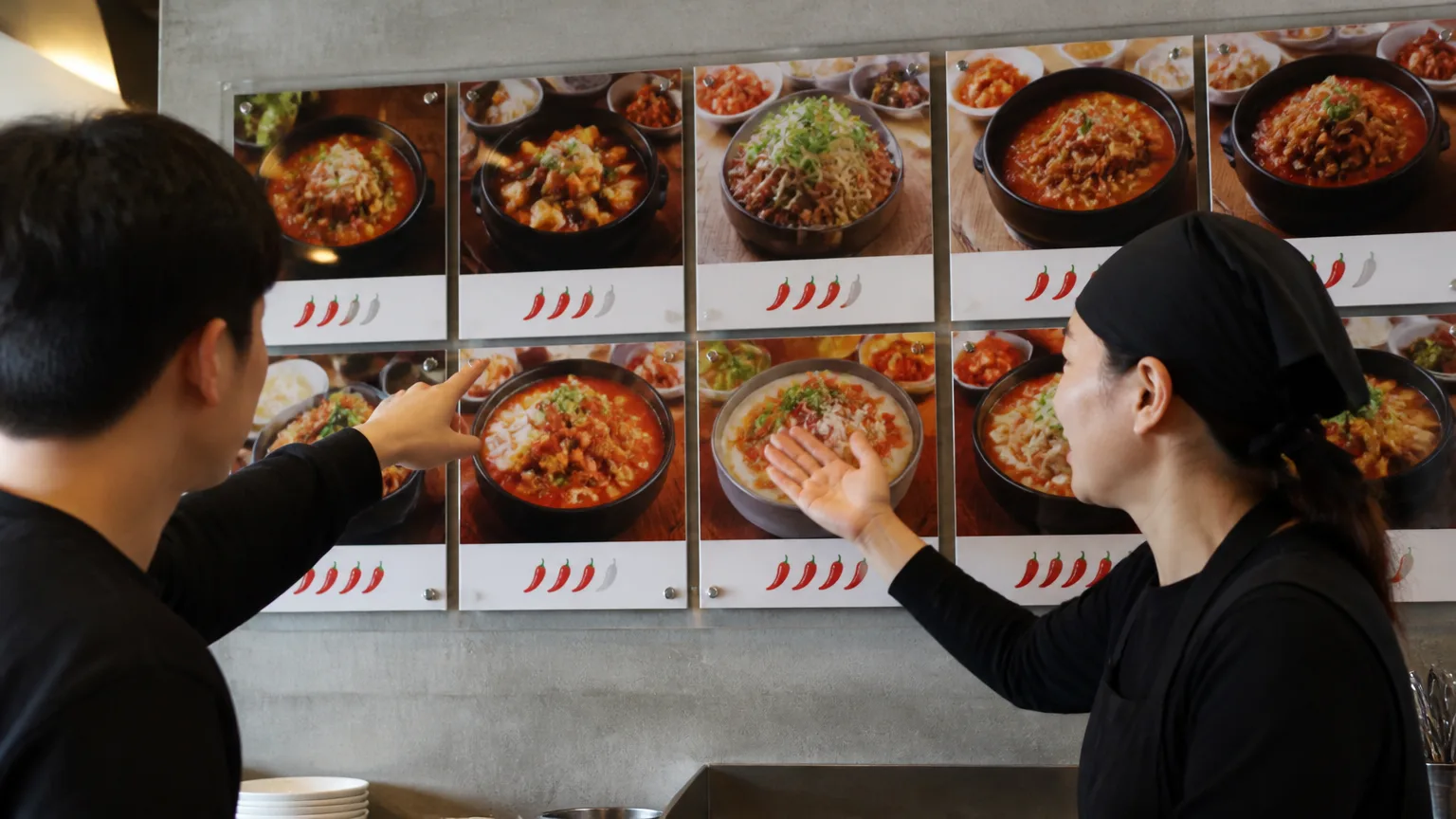
Buldak is chicken cooked in a very spicy sauce, and ramen with that flavor is sold under the same name. Some restaurants list heat levels on the menu: soonhan mat (순한맛, mild), botong mat (보통맛, medium), maeun mat (매운맛, spicy), and aju maeun mat (아주 매운맛, very spicy). Others mark heat with chili pepper icons. If you cannot eat spicy food, use these phrases when you order.
- Is this spicy? (이거 맵나요?): to ask whether a dish is spicy
- Please make it less spicy. (덜 맵게 해 주세요): to ask for less heat
- Please make it not spicy. (안 맵게 해 주세요): to ask for no heat
- Do you have any non-spicy dishes? (안 매운 메뉴가 있나요?): to look for dishes that are not spicy
- I have a child with me, so please make it mild. (아이가 있으니까 순한맛으로 주세요): when eating with a child
Start With Mild Tteokbokki and Cheese
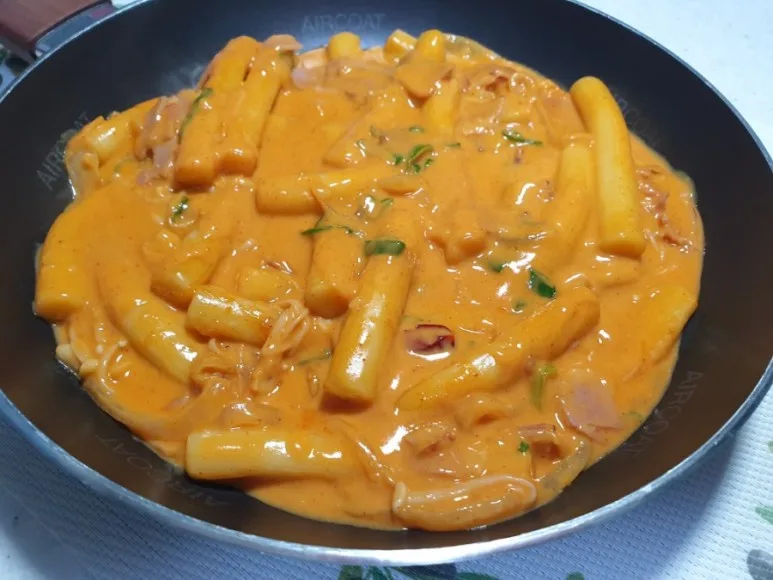
If this is your first time, start with mild dishes such as soy sauce tteokbokki, rosé tteokbokki, or jajang tteokbokki. Rosé tteokbokki is less spicy than traditional tteokbokki, and the Korea Tourism Organization says even people who do not handle spicy food well can enjoy it. Jajang tteokbokki, made with black bean sauce, is also not spicy.
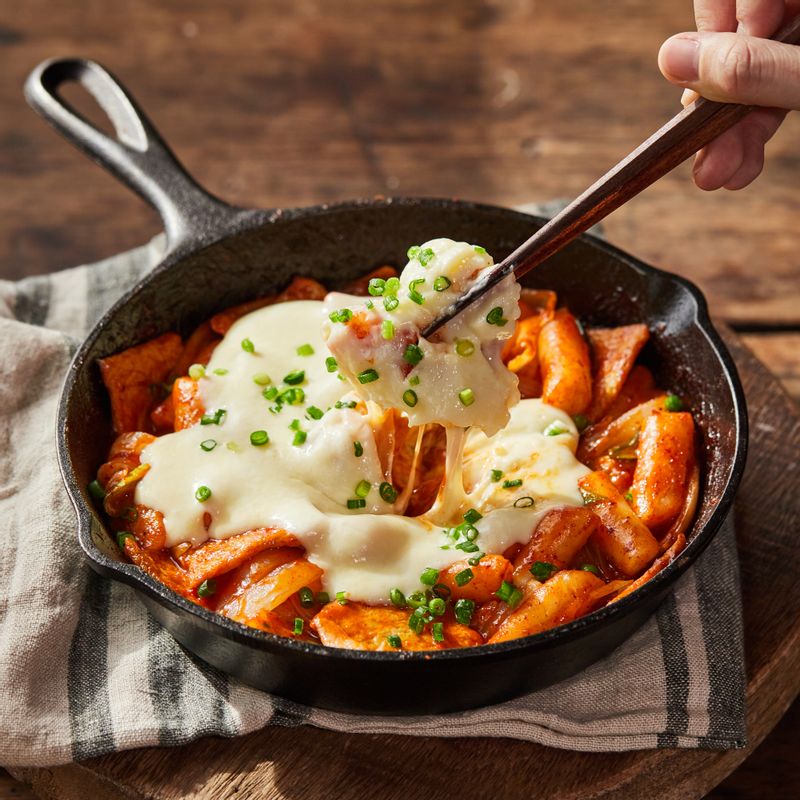
Adding cheese tones down the heat of tteokbokki. The Korea Tourism Organization's Tteokbokki Road page also describes using cheese to neutralize the spice. If you are worried about the heat, ask for extra cheese when you order. Buldak sauce products also come in cheese, carbonara, jajang, and rosé flavors, which are milder than the original.
Beyond tteokbokki, good starter dishes include kimchi (김치, a Korean side dish of cabbage and other vegetables fermented in chili seasoning), budae jjigae (부대찌개, army stew), jjamppong (짬뽕, spicy noodle soup), Jin Ramen mild version, and soy sauce jjimdak (간장찜닭, braised chicken).
Spice levels in Korean food depend on the dish name, the region, and the restaurant. If you know a few mild dishes and ordering phrases ahead of time, you can start with confidence. Pick a mild first meal, then widen your heat range step by step.