Foreign tourists in Korea can get a refund on value-added tax (VAT) when they shop at stores with a "Tax Free" sign. For expensive electronics such as smartphones, laptops, and cameras, the amount you get back and when you get it depend on the refund method and the customs steps you follow when you leave. Tax Free is a system that lets foreign tourists claim back the tax on goods they buy during a trip. A Global Tax Free notice posted at a store entrance in Seoul's Myeongdong shopping district. Photo: Tenant News Refunds are about 4–8% of the purchase price The Tax Free refund applies to foreign tourists who spend at least ₩15,000 per receipt. The amount you actually get back is about 4–8% of the purchase price. The taxes refunded are VAT and the individual consumption tax. The VAT included in the price is about 9%, and you receive that amount minus the refund agency's fee. You qualify if you are a non-resident foreigner staying in Korea for less th...
The standard way for a foreigner to open a Korean bank account is to visit a bank branch with an Alien Registration Card (ARC) and a passport. Since March 21, 2025, you can also open an account with a mobile ARC at Shinhan, Hana, iM, Busan, Jeonbuk, and Jeju banks. The Seoul and Incheon city governments list two documents: the ARC and a passport. Opening an account with a passport alone, without an ARC, depends on the bank.
ARC and Passport: Opening an Account at a Branch
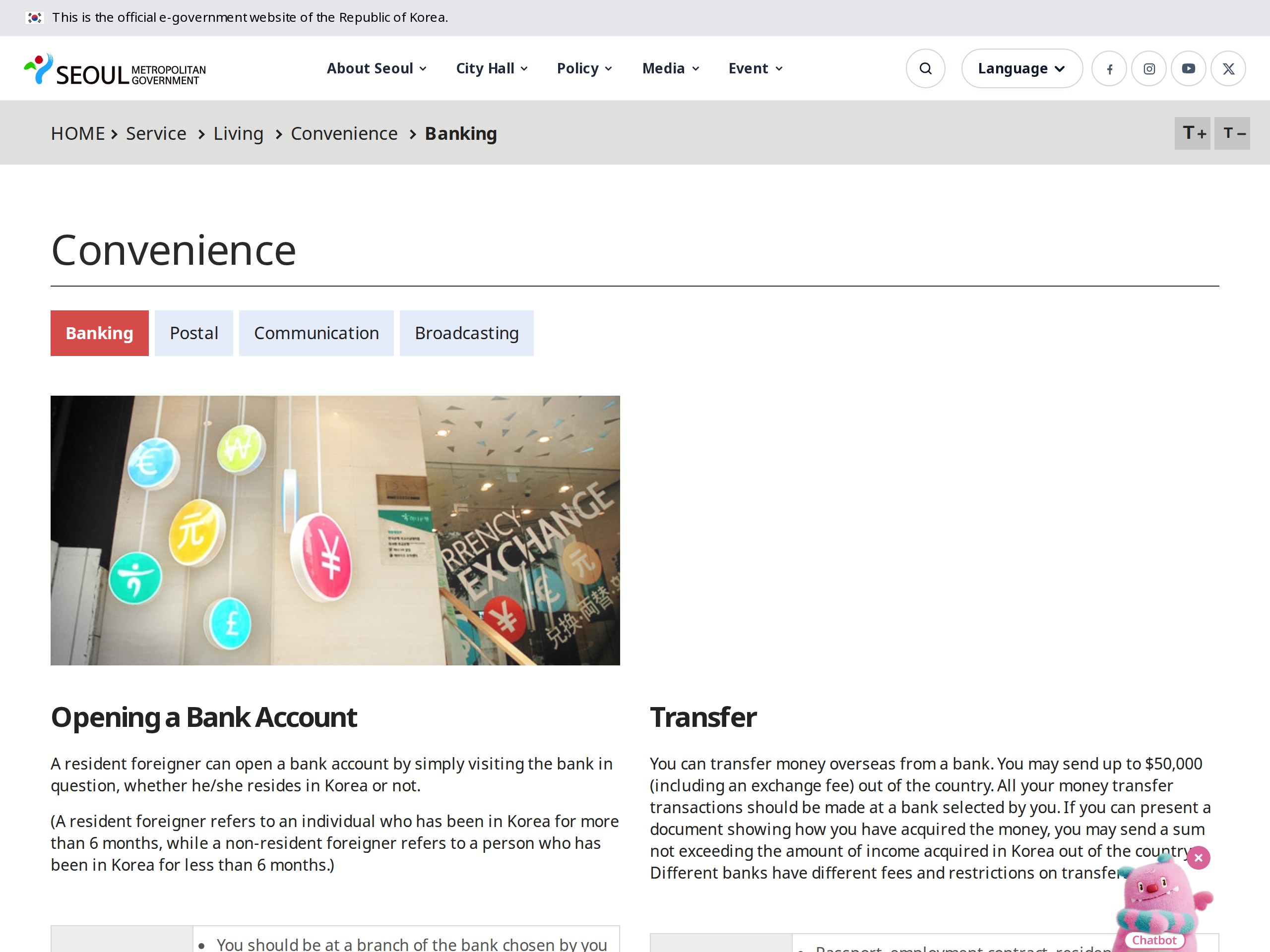
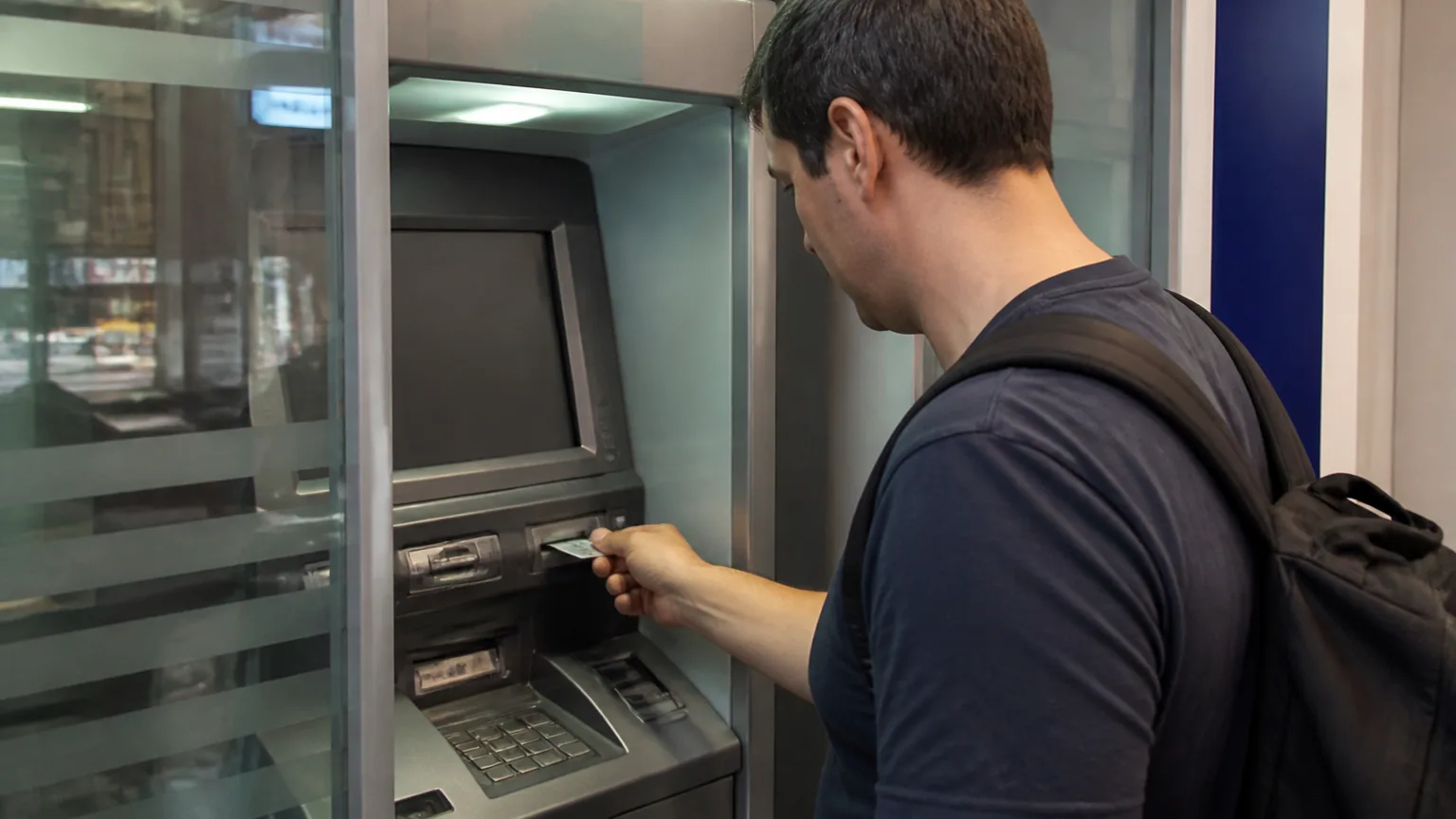
If you are a registered foreigner, you can open an account by taking your ARC and passport to a bank branch. The Seoul city government's English guide says a resident foreigner (someone staying in Korea for more than six months) can open an account at a bank, and it lists the alien registration card and passport as the documents to show. You receive your passbook and cash card at the branch.
Branch counters are open on weekdays (Monday to Friday) from 9 a.m. to 4 p.m. ATMs are available at all hours except 10 p.m. to 8 a.m. The Incheon city government also describes the same steps: fill out an application, then show your passport and alien registration card.
Mobile ARC: Six Banks Accept It
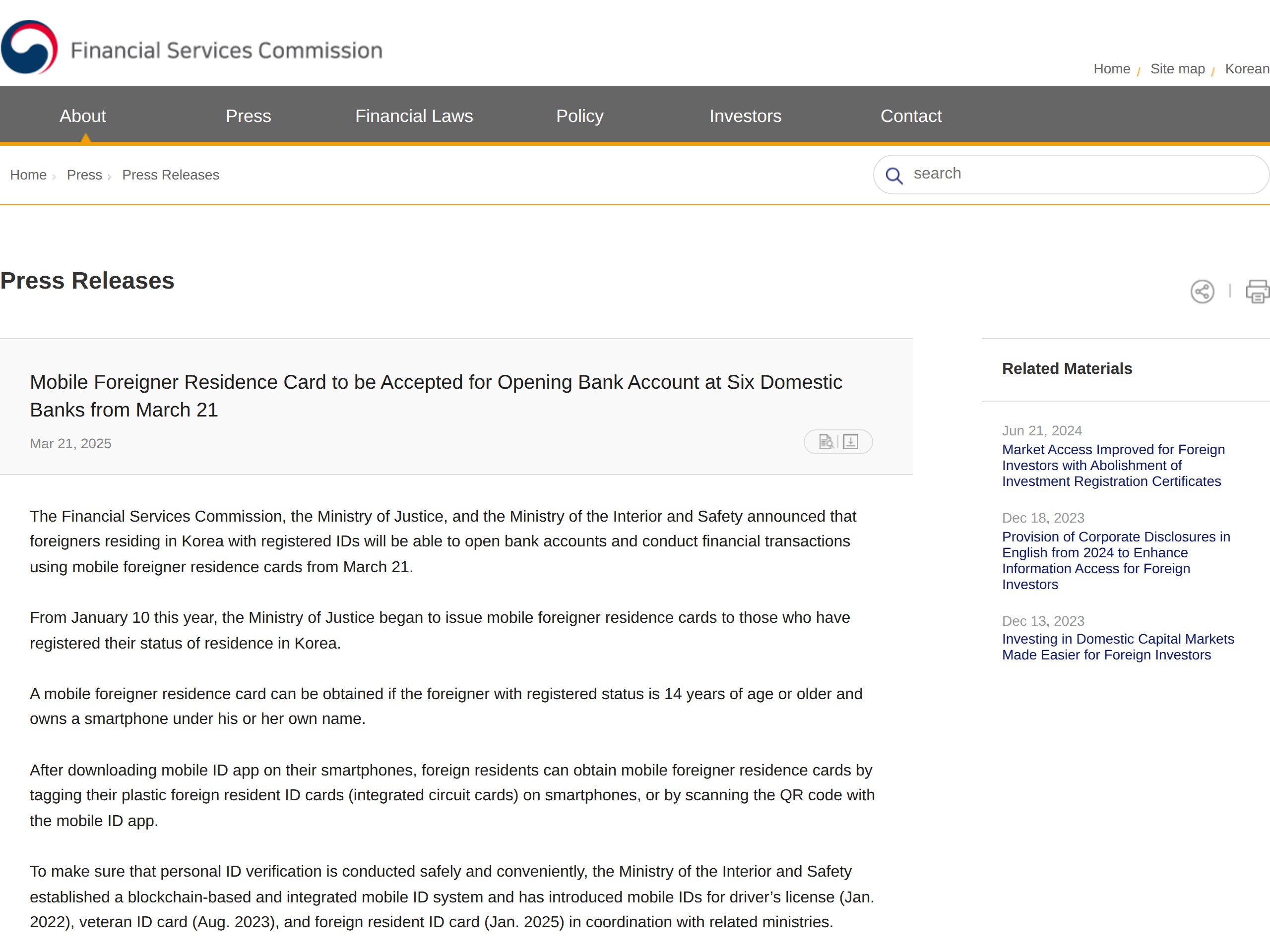
You can open an account with a mobile ARC at six banks: Shinhan, Hana, iM, Busan, Jeonbuk, and Jeju. The Ministry of Justice began issuing mobile ARCs on January 10, 2025, and the Financial Services Commission announced that banking use would start on March 21, 2025. To be eligible, you must be a registered foreigner aged 14 or older with a smartphone in your own name.
You issue a mobile ARC in a mobile ID app, either by tapping the IC chip of your plastic card to your phone or by scanning a QR code. It has the same legal effect as the plastic card. This means a mobile ARC is a form of ID you submit in place of the ARC. It is not a way to open an account without an ARC.
At a branch, you scan a QR code from the bank with your mobile ID app, then pass face verification and password verification to submit your ID. In a bank app, the app calls up the mobile ID app so you can submit your ID.
Passport Only, Without an ARC: It Depends on the Bank
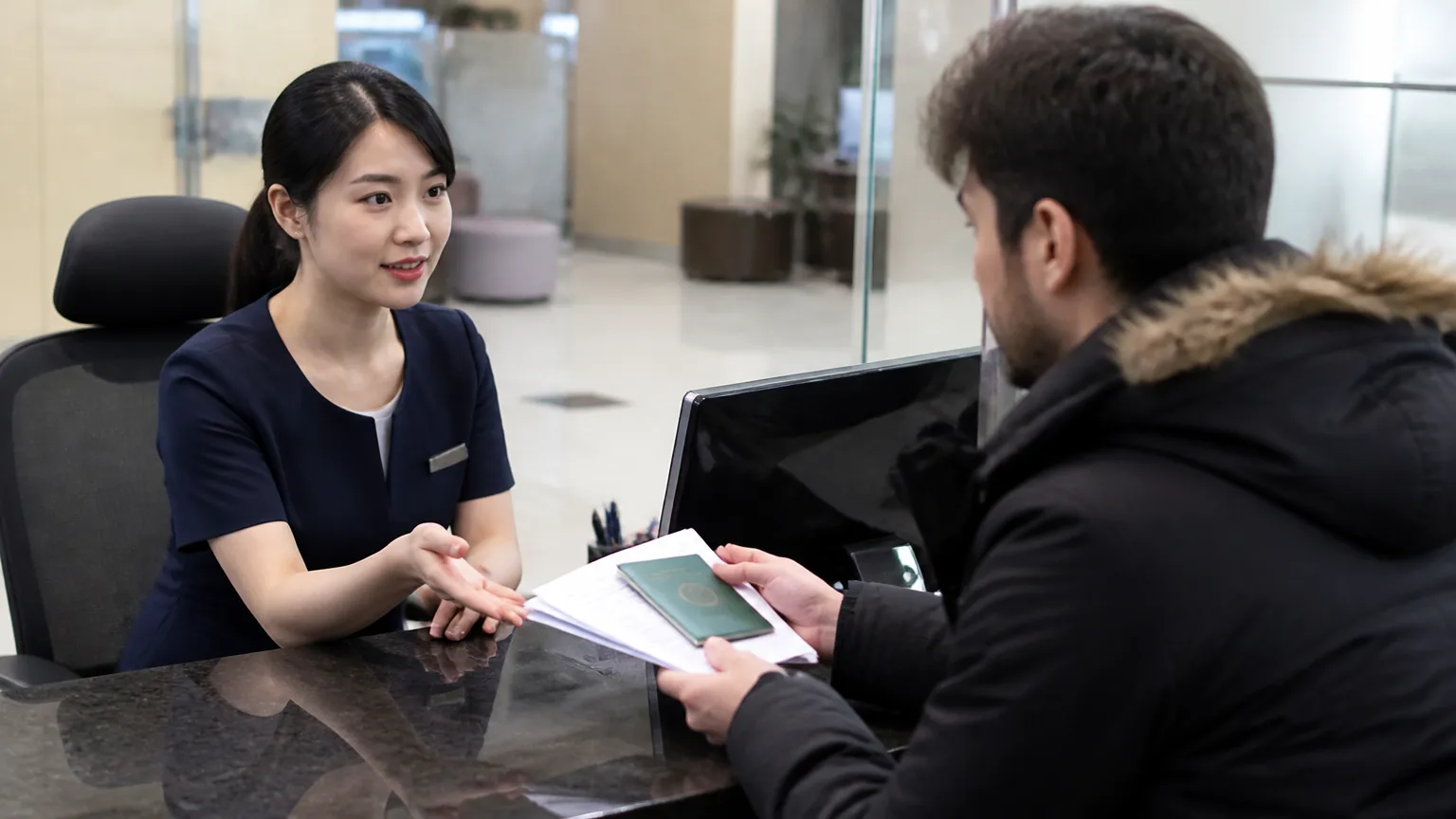
Whether you can open an account with only a passport depends on the bank. The branch documents listed by the Seoul and Incheon city governments are the ARC and a passport. Some private guides say that banks such as Hana Bank may let you open a limited account with just a passport. A limited account (한도제한계좌) is an account with low daily transfer and withdrawal limits.
Without an ARC, the required documents differ slightly from guide to guide. The guides mention proof of a long-term visa (such as D-2 or F-2), proof of address such as a utility bill or a long-term hotel voucher, and proof of purpose such as an employment contract or an admission letter. Some guides also say certain banks accept the receipt for your ARC application.
If you do not have an ARC yet, call the English-language line of the bank you plan to visit and ask which documents you need before you go.
- Hana Bank: 1599-1111 (press 8)
- Woori Bank, foreigner line: 1599-2288
- Shinhan Bank: 1599-8000
- KB Kookmin Bank: 1588-9999
Opening an Account in an App: Toss Bank, KB, and Shinhan
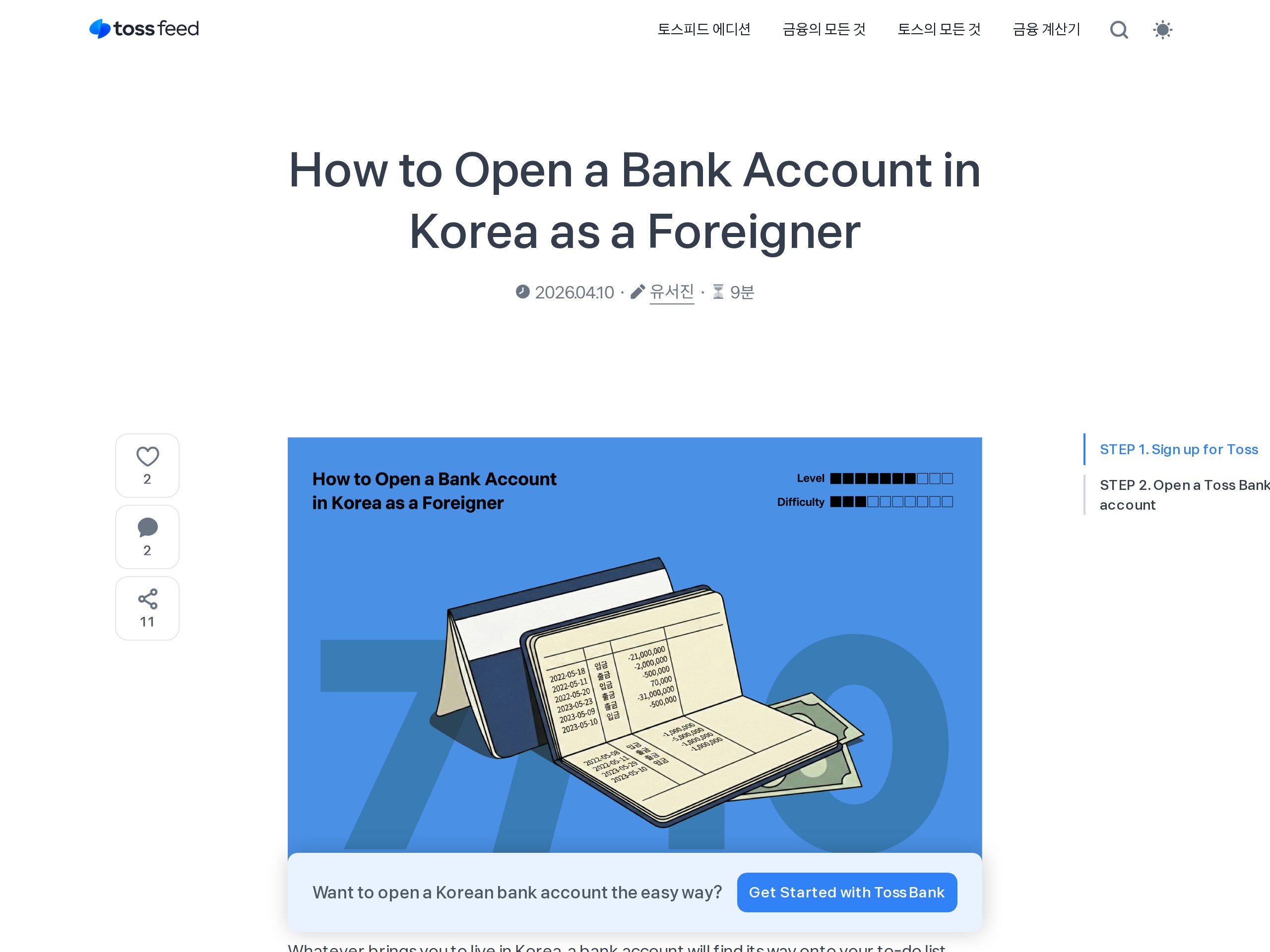
You can open an account in an app at three banks: Toss Bank, KB Star Banking, and Shinhan SOL. Age and ID requirements differ by bank.
- Toss Bank: You need a smartphone and one of these: an ARC, a permanent resident card (영주증), or a domestic residence report card (국내거소신고증). If you do not have a Korean phone number, you can sign up with an NFC e-passport.
- KB Star Banking: Available to foreign residents aged 19 or older. You can use only an ARC, a permanent resident card, or a domestic residence report card (a mobile ID is accepted). A passport or driver's license does not work. You also need a phone from a Korean carrier in your own name and a Korean bank account number for identity verification.
- Shinhan SOL: Launched in June 2024 and open to people aged 17 or older. You need an ID issued in Korea, such as an ARC, a domestic residence report card, or a permanent resident card, and you must pass account verification.
Why Applications Are Rejected, and Limited Accounts
Common reasons for rejection or for a spending cap are a name mismatch, an expired ID, a failed verification with an overseas or prepaid USIM, a request for a taxpayer ID number, and nationality restrictions.
- Name and spacing: Verification is blocked if the name or the spacing differs between your ID and what you enter.
- ID status: An expired or cancelled ID cannot be used.
- Phone verification: Identity verification fails with an overseas carrier or a prepaid USIM.
- Taxpayer ID number: Foreigners who need a taxpayer ID number are excluded from opening a Shinhan SOL account in the app.
- Nationality: Nationals of high-risk countries designated by the Financial Action Task Force (FATF) are excluded from opening a Shinhan SOL account in the app, and citizens of sanctioned countries cannot open an account at Toss Bank.
The daily limit on a newly opened limited account differs by source: 300,000 won, 500,000 to 1 million won, or 1 million won. Toss Bank starts with a daily limit of 300,000 won. If you are approved, the limit rises to 50 million won per day and 10 million won per transfer. Review takes two to three business days. One guide says you can raise the limit by submitting documents such as an employment contract, a lease, a salary transfer confirmation, or a tuition payment receipt. The documents you need differ by bank.
Debit Cards and Sending Money Abroad After Opening
After you open an account, you can get a debit card, and you can send up to US$50,000 abroad per year. A credit card is issued only if you meet the card company's eligibility requirements, and you may be rejected.
You can send money abroad only within the range of income you earned in Korea, and you need supporting documents such as a passport, an employment contract, proof of residence, and receipts. Fees and limits differ by bank. A short-term non-resident visitor can exchange up to US$10,000, and you need the exchange receipt if you want to convert the money back when you leave Korea.
Right After Arrival: The Toss Prepaid Card
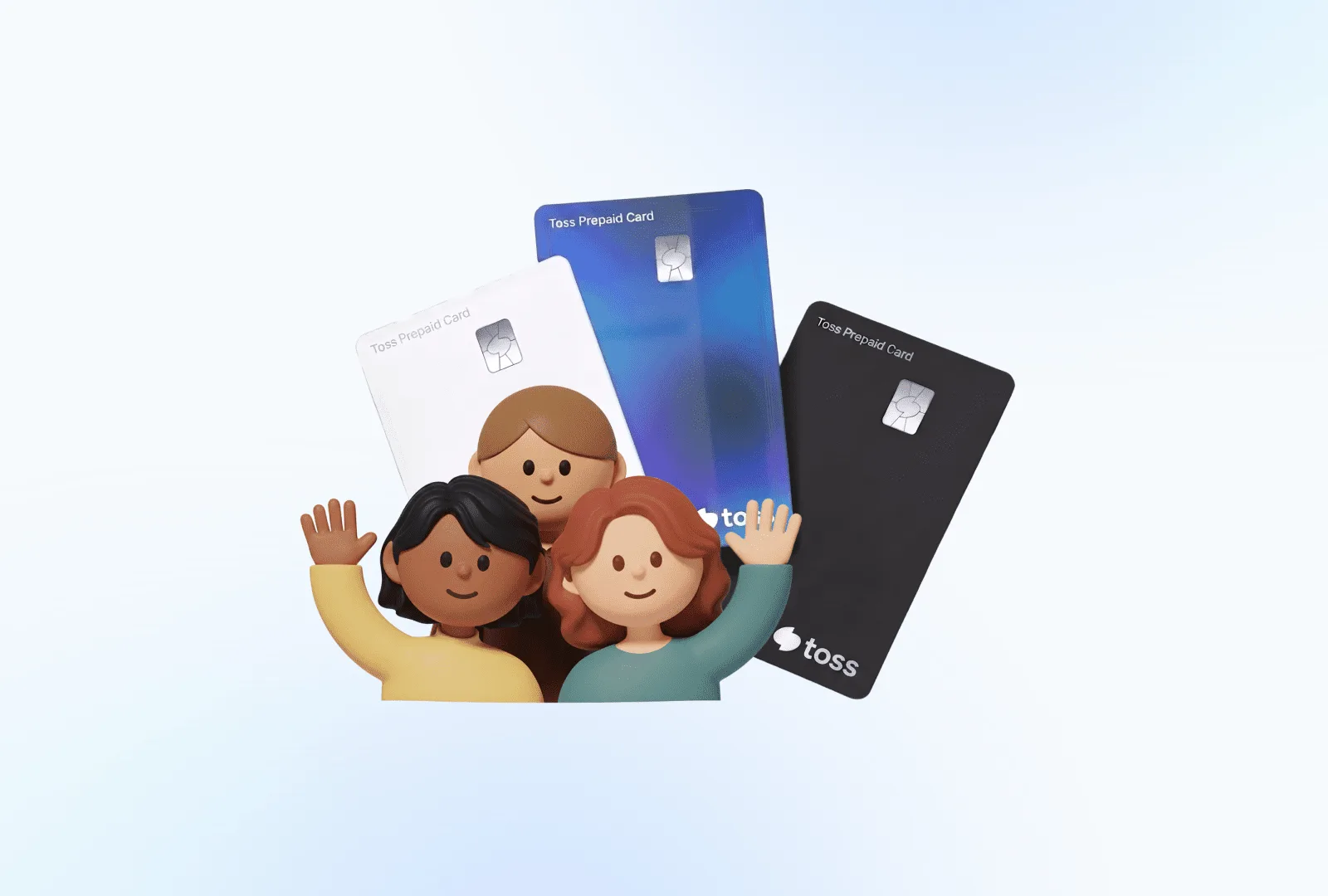
Toss offers a prepaid card to newly arrived international students at 15 universities. You can pay online and in stores without a Korean bank account. The service launched on August 27 and targets the first weeks in Korea, when registering your address and opening an account take time.
You apply in the Toss app before you arrive and pick up the card at your university's international office after you arrive. You can top it up with cash at CU convenience stores. You can register it with Toss Pay, or use its T-money function to ride buses and subways. Purchases in stores earn 20% cashback (up to ₩10,000).
The basic routes are to visit a branch with your ARC and passport, or to use a mobile ARC with a bank app. Opening an account without an ARC depends on the bank. Sorting out your residence status and your ARC first will make your first steps with Korean banking easier.