
How to Get a Tax Refund on Electronics in Korea (2026 Guide)

Foreign tourists in Korea can get a refund on value-added tax (VAT) when they shop at stores with a "Tax Free" sign. For expensive electronics such as smartphones, laptops, and cameras, the amount you get back and when you get it depend on the refund method and the customs steps you follow when you leave. Tax Free is a system that lets foreign tourists claim back the tax on goods they buy during a trip.   A Global Tax Free notice posted at a store entrance in Seoul's Myeongdong shopping district. Photo: Tenant News   Refunds are about 4–8% of the purchase price The Tax Free refund applies to foreign tourists who spend at least ₩15,000 per receipt. The amount you actually get back is about 4–8% of the purchase price. The taxes refunded are VAT and the individual consumption tax. The VAT included in the price is about 9%, and you receive that amount minus the refund agency's fee.   You qualify if you are a non-resident foreigner staying in Korea for less th...

Do You Need to Press the Crosswalk Button in Korea?

In Korea, some crosswalks change only when you press a button, and others change on their own. The ones that need a press have a "pedestrian push-button signal" (보행자 작동신호기). If you press the button and the light does not change, wait for the next signal cycle. If the green walk signal is flashing, do not start crossing.
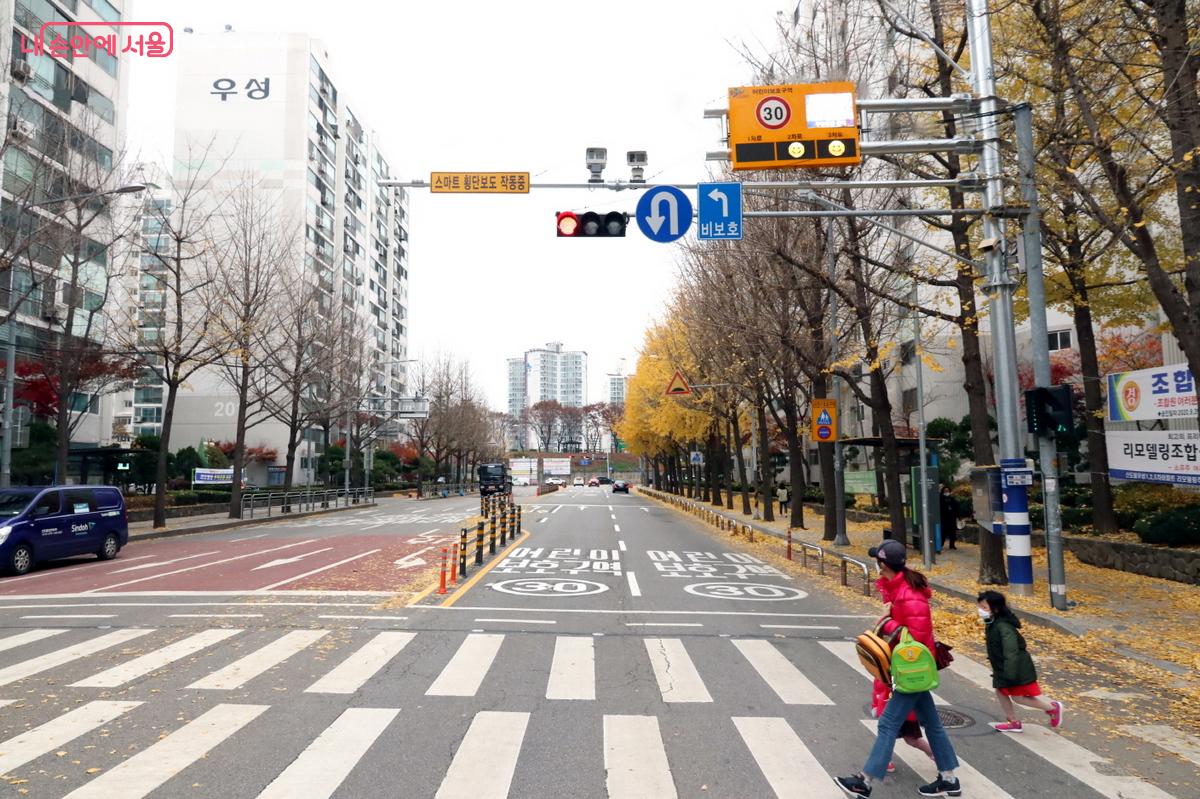
 

A pedestrian push-button signal (보행자작동신호기) beside a crosswalk in Korea. Photo: Naver News


Push-Button Signals: Press First

A pedestrian push-button signal turns the walk signal on only after a pedestrian presses the button to request it. These buttons are supposed to be placed where pedestrians can easily see them. The walk signal will not come on unless you press, so if you see a button at a crosswalk, press it first.


Some crosswalks have a button on the pole, but pressing it does not change the light. Some buttons on signal poles are for visually impaired pedestrians. Pressing one gives a voice message telling them when it is safe to cross.
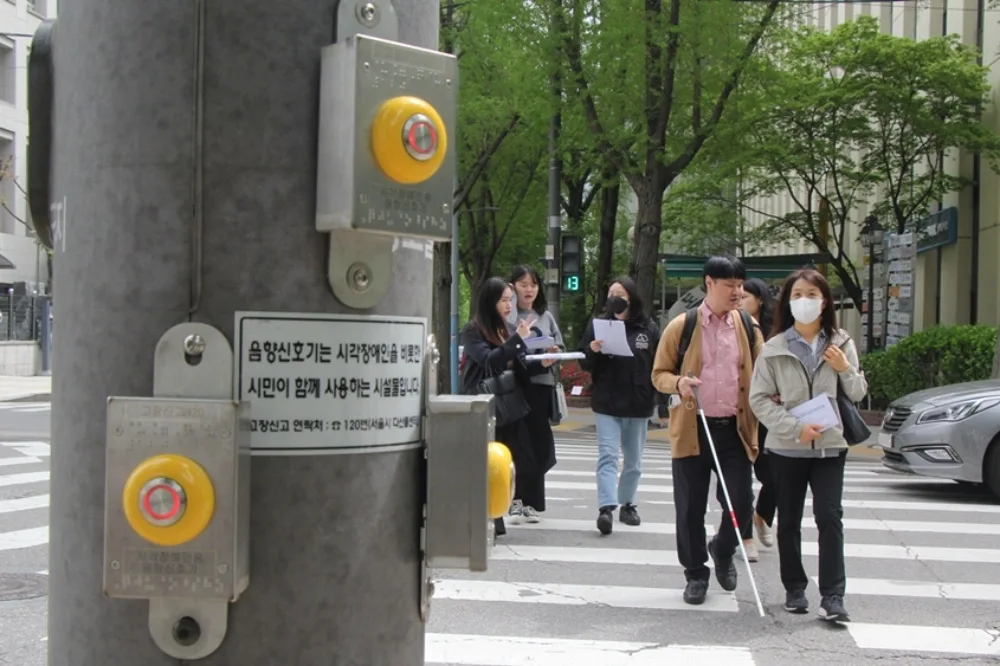
 

Pushbuttons mounted on a crosswalk signal pole in Korea. Photo: Naver News


Walk Time: 7 Seconds Plus 1 Second per Meter

Seoul sets walk signal time with a basic rule: 7 seconds for starting to cross, plus 1 second for every meter of crosswalk. The longer the crosswalk, the longer the walk signal.


  • Standard 32 m crosswalk: 39 seconds
  • 32 m crosswalk with many mobility-limited pedestrians (children, older adults, people with disabilities) or heavy foot traffic: about 47 seconds (based on 1 second per 0.8 m)
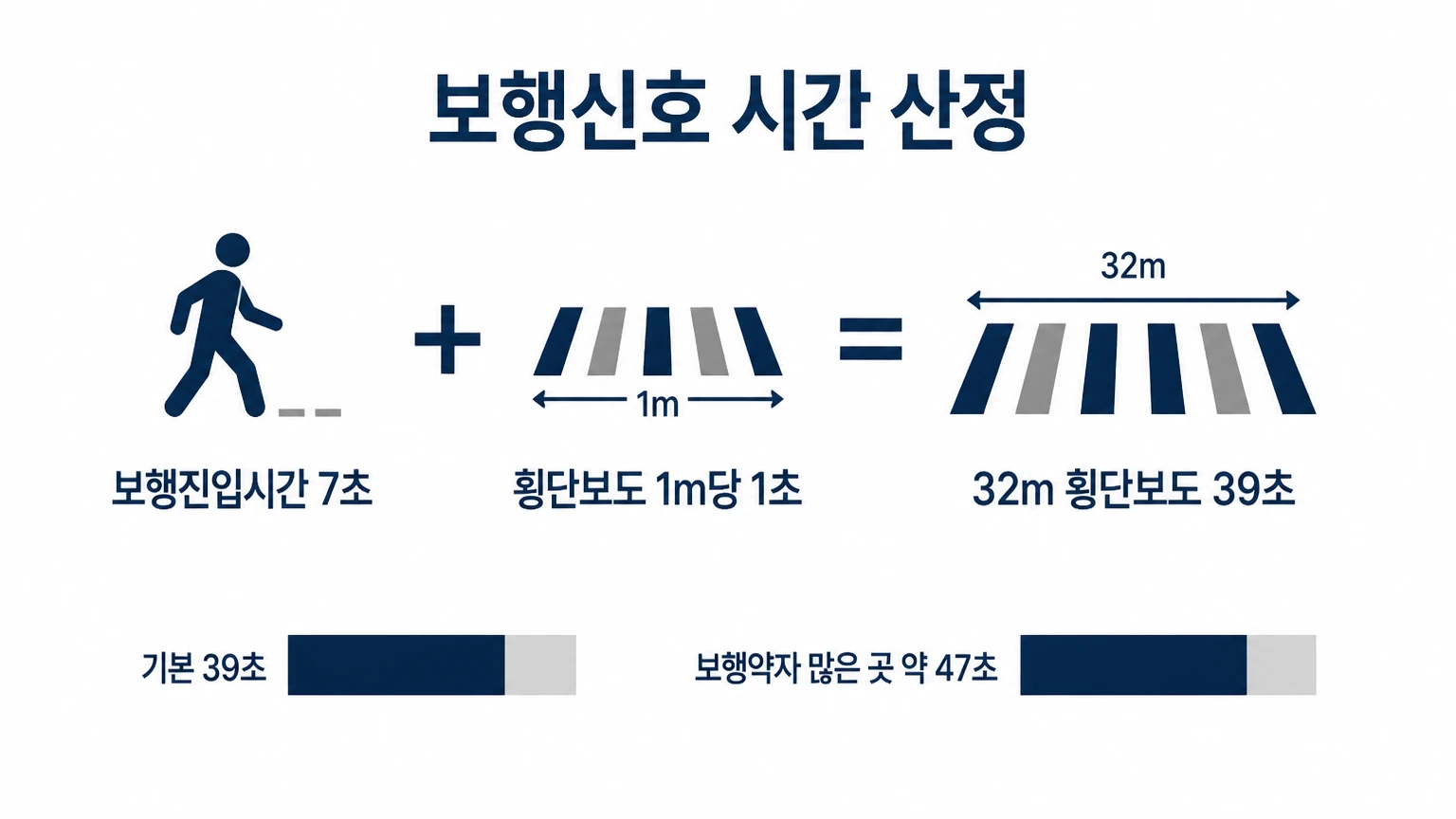
 

Seoul traffic crosswalk walk-time rule (7 seconds plus 1 second per meter)


Don't Cross on Flashing Green

A flashing green walk signal means you must not start crossing. When the green light starts to flash, stop at the curb and wait for the next green signal.
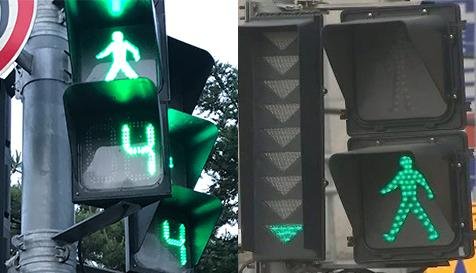
 

Green pedestrian signals with countdown timers at Korean crosswalks. Photo: Financial News


Right-Turning Cars Must Stop Too

Drivers must stop not only when a pedestrian is crossing but also when a pedestrian is about to cross. This rule has been in effect since July 12, 2022. At a crosswalk, wait until you see the car stop before you start crossing.
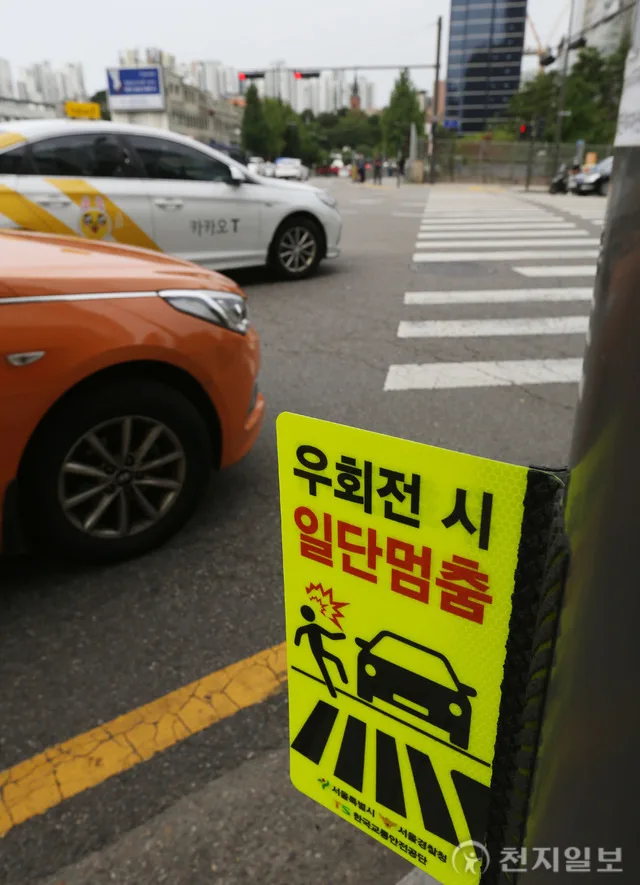
 

Taxis at a right-turn crosswalk beside a "Stop before turning right" sign in Seoul. Photo: Cheonji Ilbo


Sensor Signals and Diagonal Crossings

Seoul has run one sensor-based "automatic pedestrian detection signal" (보행자 자동인식 신호기) in Eungam 1-dong, Eunpyeong District, since October 29, 2014. Normally only cars move through. When a person appears, a sensor above the waiting area detects them and gives a green walk signal. Unlike a push-button signal, you do not need to press anything.
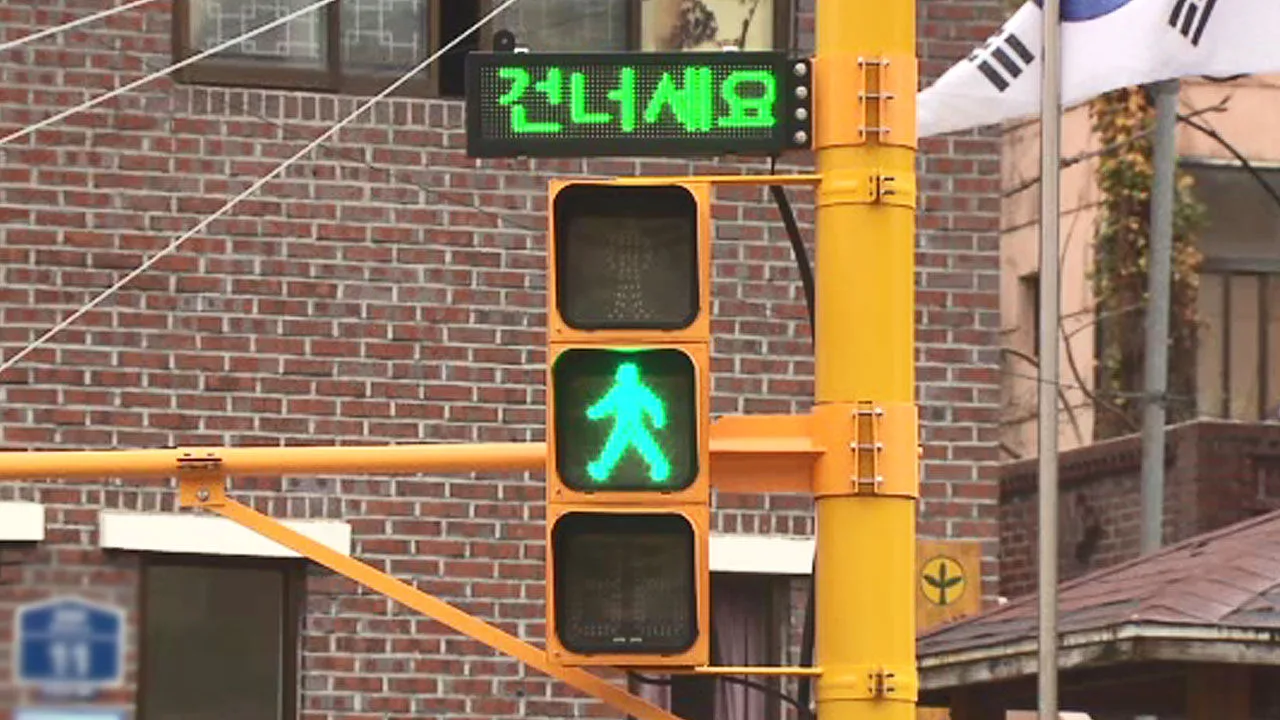
 

A pedestrian signal with a green walk light and a "건너세요" ("Cross") display, of the kind used in automatic pedestrian detection systems. Photo: SBS News


The National Police Agency plans to add more all-way pedestrian signals, which turn every crosswalk at an intersection green at the same time, and more diagonal crosswalks. An all-way pedestrian signal lets pedestrians cross from every direction together. A diagonal crosswalk cuts across the intersection from one corner to the opposite corner.
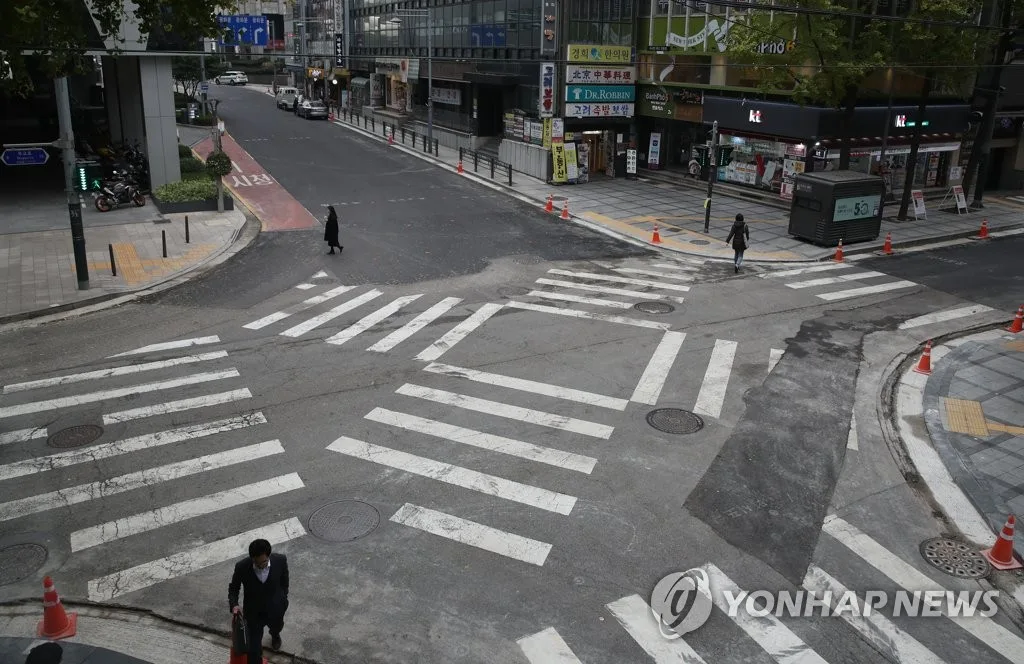
 

A crosswalk intersection in Seoul with diagonal crossing markings. Photo: Yonhap News


At a Korean crosswalk, press the button if you see one, wait for the next cycle if the light does not change, and don't start crossing on flashing green. A few seconds spent making sure cars have stopped make for safer walking.


References

Popular posts from this blog

Korean Etiquette for Tourists: Greetings, Dining, Subway and Palace Rules

Korean etiquette for tourists comes down to five habits: bow to greet, take off your shoes, use two hands, let elders go first, and keep your voice low. Knowing these five helps you avoid mistakes in most places, including restaurants, the subway, and royal palaces. This guide covers homes, restaurants, public transit, palaces, and Bukchon Hanok Village, in that order.   Greet with a bow, and say the family name first The standard greeting in Korea is a bow, not a handshake. Bend from the waist, keep your legs straight, and keep your hands at your sides. The older the other person is, or the higher their position, the deeper you bow. Men sometimes shake hands too. When they do, they support the right hand with the left.   In Korea, the family name comes first when you say a name. Until you are invited to do otherwise, do not call someone by their given name alone. Use their family name plus their title.   Visit Seoul's Korean etiquette page from the Seoul Tourism O...

Korean Food Spice Levels: Where to Start as a Beginner

Spice levels in Korean food vary widely by region and restaurant, even for the same dish. When a Korean person says a dish is "a little spicy," it is usually quite spicy even for Koreans. This guide covers how to gauge the heat, how to read a menu, what to say to order milder food, and which dishes make a gentle start.   Spicy tteokbokki in a bright red chili sauce, served with scallions and a boiled egg, with dried chili peppers and gochugaru beside the pot. Source: Naver Search   Daegu Tteokbokki Is Hot, Busan Tteokbokki Is Mild Tteokbokki (떡볶이) is a classic Korean street food made by stir-frying rice cakes in sauce. The heat level differs by region, even under the same name. The Korea Tourism Organization introduces tteokbokki as a "representative spicy Korean food." Some versions use gochujang (고추장), a red Korean chili paste, and are spicy. Other versions use soy sauce instead and are not spicy.   Daegu tteokbokki gets its heat from cheongya...

Korean Gift Giving Etiquette: How to Give, Receive, and Choose

In Korea, you give a gift with both hands, receive it with both hands, and don't open it on the spot. Add a few gifts to avoid, plus what to bring and how much to spend for holidays, housewarmings, and weddings, and you have most of Korean gift etiquette covered.   Handing over a gift box with both hands   Give with both hands, open it later In Korea, you hand over a gift with both hands and receive it with both hands. The rule is stricter with older people and in formal settings. It is looser among young people and close friends. The person receiving the gift looks at the wrapping, says thank you, sets the gift aside, and opens it later when alone. If the giver suggests opening it now, you can open it on the spot.   Politely declining once at first is good manners. A short refusal from the receiver may not be a real refusal, so the giver gently offers two or three more times. Where company rules ban gifts, don't offer one.   Gifts to avoid: the number 4 and...