Foreign tourists in Korea can get a refund on value-added tax (VAT) when they shop at stores with a "Tax Free" sign. For expensive electronics such as smartphones, laptops, and cameras, the amount you get back and when you get it depend on the refund method and the customs steps you follow when you leave. Tax Free is a system that lets foreign tourists claim back the tax on goods they buy during a trip. A Global Tax Free notice posted at a store entrance in Seoul's Myeongdong shopping district. Photo: Tenant News Refunds are about 4–8% of the purchase price The Tax Free refund applies to foreign tourists who spend at least ₩15,000 per receipt. The amount you actually get back is about 4–8% of the purchase price. The taxes refunded are VAT and the individual consumption tax. The VAT included in the price is about 9%, and you receive that amount minus the refund agency's fee. You qualify if you are a non-resident foreigner staying in Korea for less th...
Korea's main taxi-hailing app is Kakao T, made by Kakao Mobility. Foreign visitors can also use k.ride, an app for foreigners that the same company released in June 2024, or the English-language app TABA. Both let you register an overseas card and call a taxi.
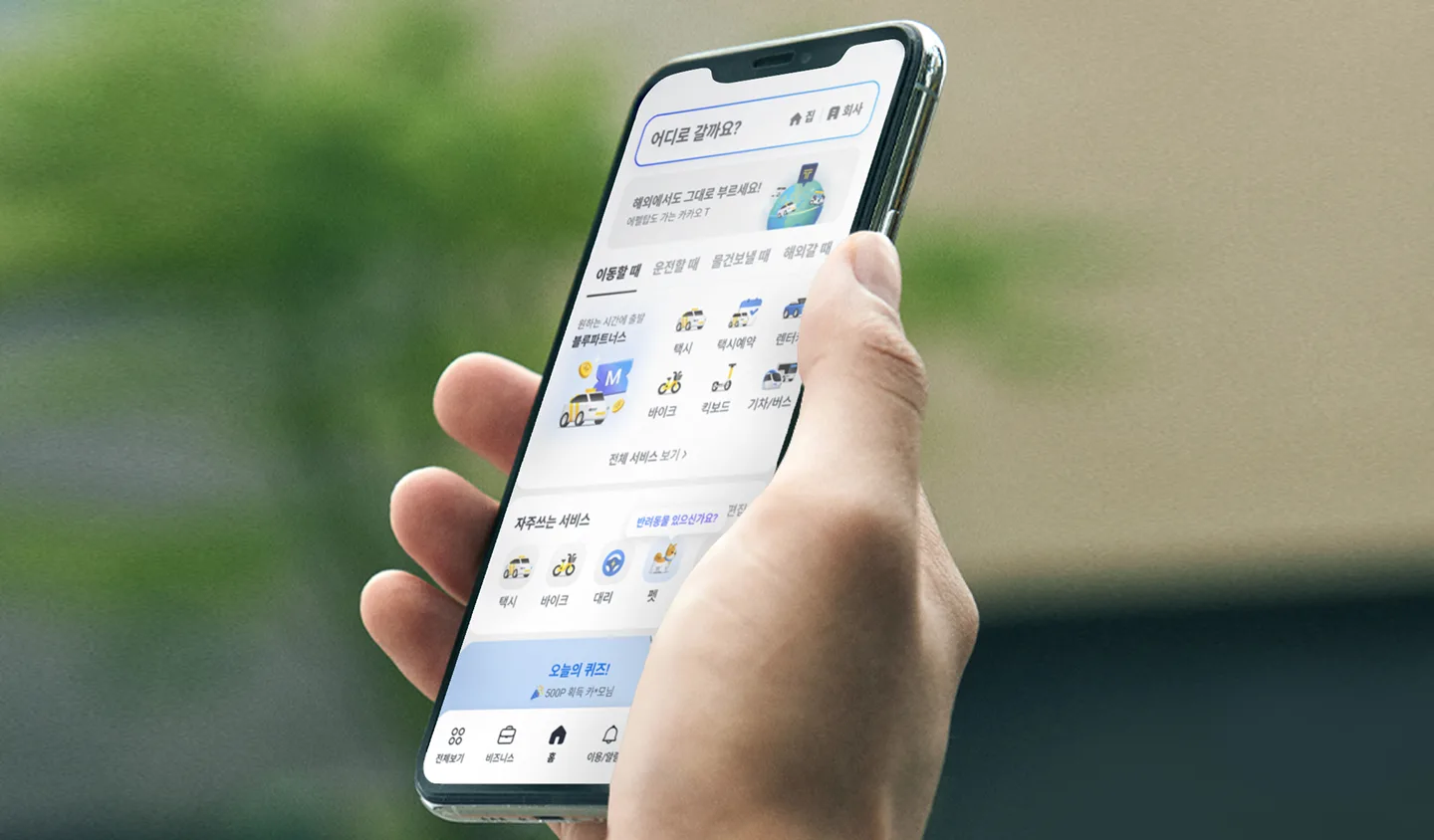
Kakao T Is the Default Taxi App in Korea
The best-known taxi apps in Korea are Kakao T, Uber Taxi, KakaoMap, and intltaxi.co.kr, a booking site for international taxis. Kakao T supports English. Uber Taxi is not an Uber car service. It calls regular Korean taxis.
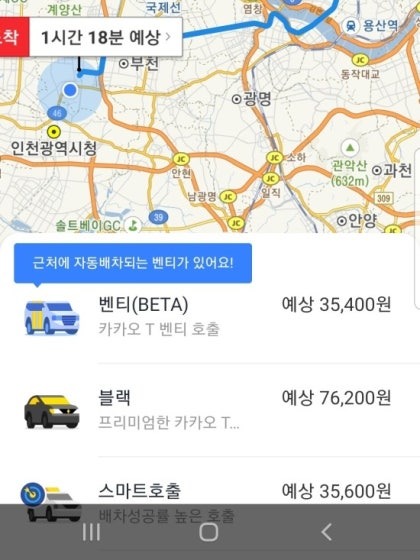
With Kakao T, you can call Blue, Venti, Deluxe, and Black class taxis across the country. The app supports English, Japanese, and Korean. Once you register one card, you can pay for every service in the app.
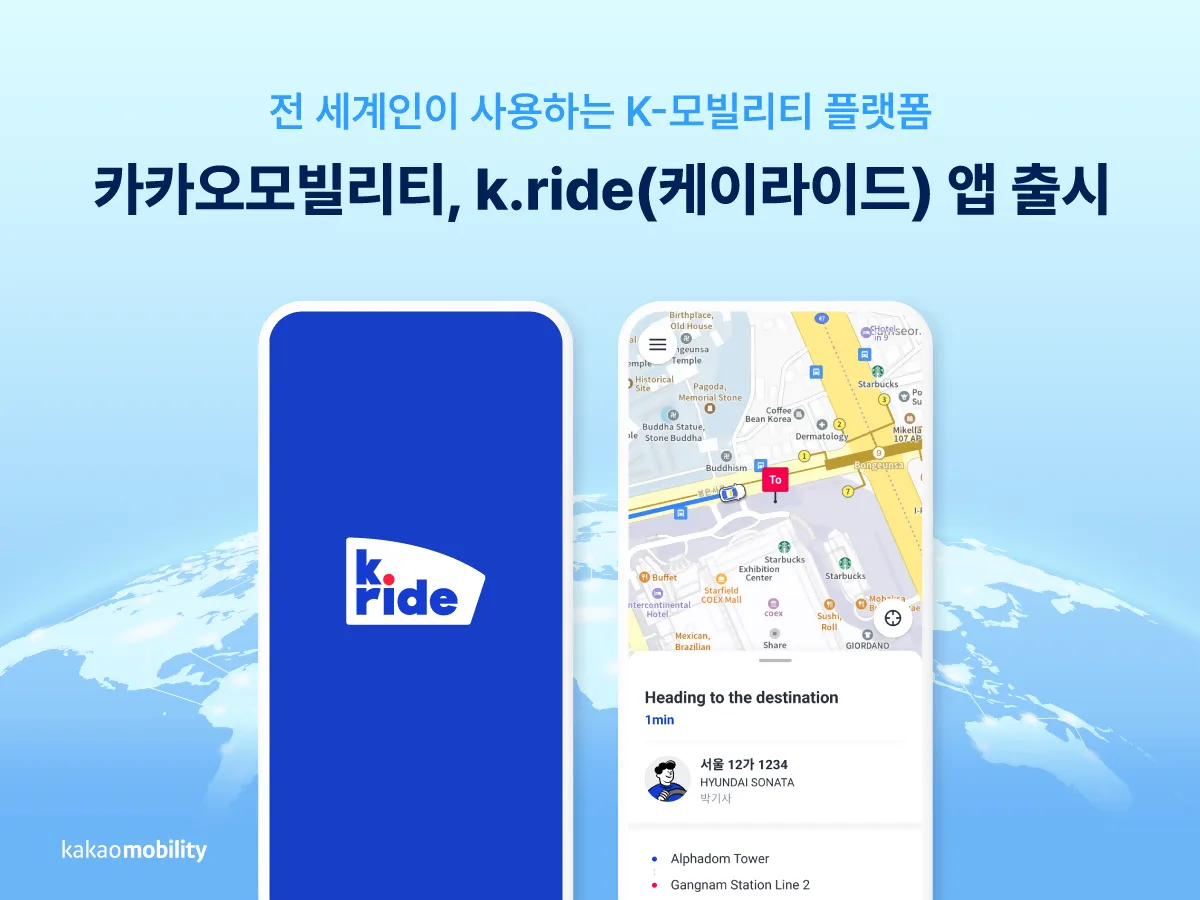
Foreign Visitors: Use k.ride or TABA
Two taxi apps are made for foreign visitors: k.ride, released on June 4, 2024, and the English-language app TABA. As of May 2023, registering a credit card in Kakao T required a Korean phone number. k.ride was released so that foreigners could use an overseas card right away.
Here is how k.ride works:
- Login: Google, Apple, or email ID
- Payment: register a card issued outside Korea
- Language: the default settings are English, Traditional Chinese, Simplified Chinese, and Japanese. Destination search and chat with the driver are machine-translated in about 100 languages.
- Download: available in the app stores of 14 countries
TABA has an English interface. You sign up with a phone number, a Google account, or an Apple account. You pay with an overseas card such as Visa or Mastercard. The app also guides you through the routes at Incheon and Gimpo airports.
Kakao T also has a menu for registering an overseas card. Open the payment method (wallet icon) in My Info, then choose Non-Korean Credit Card.
Seoul Regular Taxi Base Fare: ₩4,800
A regular (standard) taxi in Seoul costs ₩4,800 for the first 1.6 km. After that, ₩100 is added for every 131 m. If the taxi travels slower than 15 km/h, ₩100 is added every 30 seconds.
Fares by taxi type:
- Regular: ₩4,800 base (first 1.6 km), ₩100 per 131 m
- Deluxe (모범): ₩7,000 base (first 3 km), ₩200 per 151 m, ₩200 per 36 seconds
- Jumbo/Van (대형): ₩7,000 base, ₩200 per 151 m
- International taxi: ₩4,800 base, plus 20% for foreign passengers
Since 10 p.m. on December 1, 2022, Seoul has extended the late-night surcharge period for standard taxis to 10 p.m.–4 a.m. The surcharge for regular taxis varies by time of day:
- 10–11 p.m.: 20%
- 11 p.m.–2 a.m.: 40%
- 2–4 a.m.: 20%
Deluxe taxis and large passenger taxis add 20% from 10 p.m. to 4 a.m. A 20% out-of-city surcharge also applies. Regular taxis also add 20% for the part of the trip outside Seoul. Tolls are added to the meter fare at the actual amount. If you book ahead through Kakao T, the fee is about ₩3,000.
Paying by Cash or Overseas Card, and Talking to Drivers
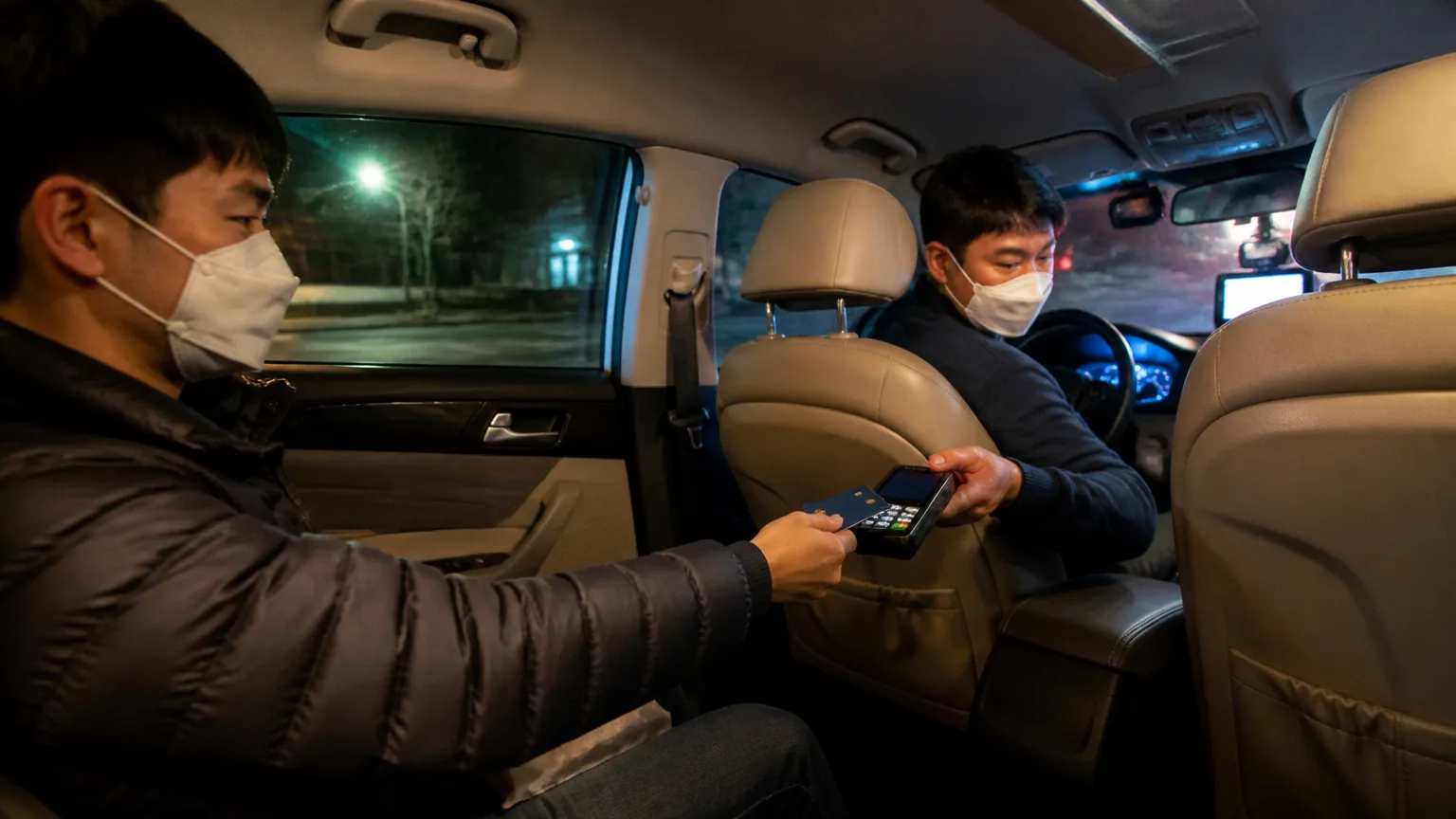
In Seoul, you can pay for a taxi with cash, an overseas credit card (Visa, Mastercard), T-money, or a card saved in Kakao T. Newer taxis also accept Apple Pay and Samsung Pay. Korea has no taxi tipping culture. The most you might do is round up in ₩1,000 units for a driver who helps with heavy airport luggage.
If you pay in cash, the driver may not have change, so bring ₩1,000 and ₩5,000 bills. You can pay in cash with both Kakao T and Uber Taxi.
If you and the driver do not share a language, use k.ride's translated chat to give your destination. Incheon Airport also has designated international taxis whose drivers support foreign languages. The Seoul tourist information hotline, 1330, offers advice in English 24 hours a day.
User reviews of Kakao T mention failed address recognition and wrong pickup locations. For TABA, there are 2024 reviews saying a driver did not accept the call, and reviews saying the app froze. Other reviews praise the sign-up, payment, and English guidance.
To report a fare complaint, use the online form at english.seoul.go.kr or your ride history in Kakao T. You need the last four digits of the vehicle number and your receipt. For lost items, contact LOST112.
At Incheon Airport, Use the Designated Taxi Stands
At Incheon Airport, take a taxi only from the designated stands at the terminal. Touts at the airport who offer rides in "call vans" (콜밴) are illegal, and overcharging is common.
Airport taxi fares:
- Regular: ₩4,800 base
- Deluxe and large (9-seat): ₩7,000 base
- International taxi and smart taxi: flat fare to Seoul
Airport flat fares do not include the late-night surcharge. Taxis going to Seoul, Incheon, Goyang, Gwangmyeong, Gimpo, and Bucheon have no out-of-city surcharge. For any other destination, Seoul and Gyeonggi taxis add 20%, and Incheon taxis add 30%.
The stand numbers are 4C and 3C for international taxis and smart taxis, and 5C, 6C, and 6D for regular taxis at Terminal 1. If you booked a taxi in advance, go to the pickup number you were given. For questions, call 1577-2600 (07:00–22:00).
Before you leave, install k.ride or Kakao T, register an overseas card, save your hotel's address in Korean, and carry cash in small bills. With the app, the card, and the cash, taking a taxi in Seoul is not difficult.
References
- Seoul city transportation website
- Seoul Tourism taxi guide
- Incheon Airport taxi information
- Kakao T App Store
- TABA App Store
- k.ride App Store
- https://www.koreajoongangdaily.com/korea/booking-transportation-will-be-made-easier-for-foreigners-kto-says/10373365
- https://www.koreatimes.co.kr/www/tech/2024/06/129_375921.html
- Wise