Foreign tourists in Korea can get a refund on value-added tax (VAT) when they shop at stores with a "Tax Free" sign. For expensive electronics such as smartphones, laptops, and cameras, the amount you get back and when you get it depend on the refund method and the customs steps you follow when you leave. Tax Free is a system that lets foreign tourists claim back the tax on goods they buy during a trip. A Global Tax Free notice posted at a store entrance in Seoul's Myeongdong shopping district. Photo: Tenant News Refunds are about 4–8% of the purchase price The Tax Free refund applies to foreign tourists who spend at least ₩15,000 per receipt. The amount you actually get back is about 4–8% of the purchase price. The taxes refunded are VAT and the individual consumption tax. The VAT included in the price is about 9%, and you receive that amount minus the refund agency's fee. You qualify if you are a non-resident foreigner staying in Korea for less th...
The K-ETA (Korea Electronic Travel Authorization) application fee is ₩10,000 per person. If you pay by card, a separate 3% processing fee is added. The fee is not refunded, whatever the result of the review.
The official application site is www.k-eta.go.kr. Third-party sites charge a service fee on top of the same application, so their prices are much higher.
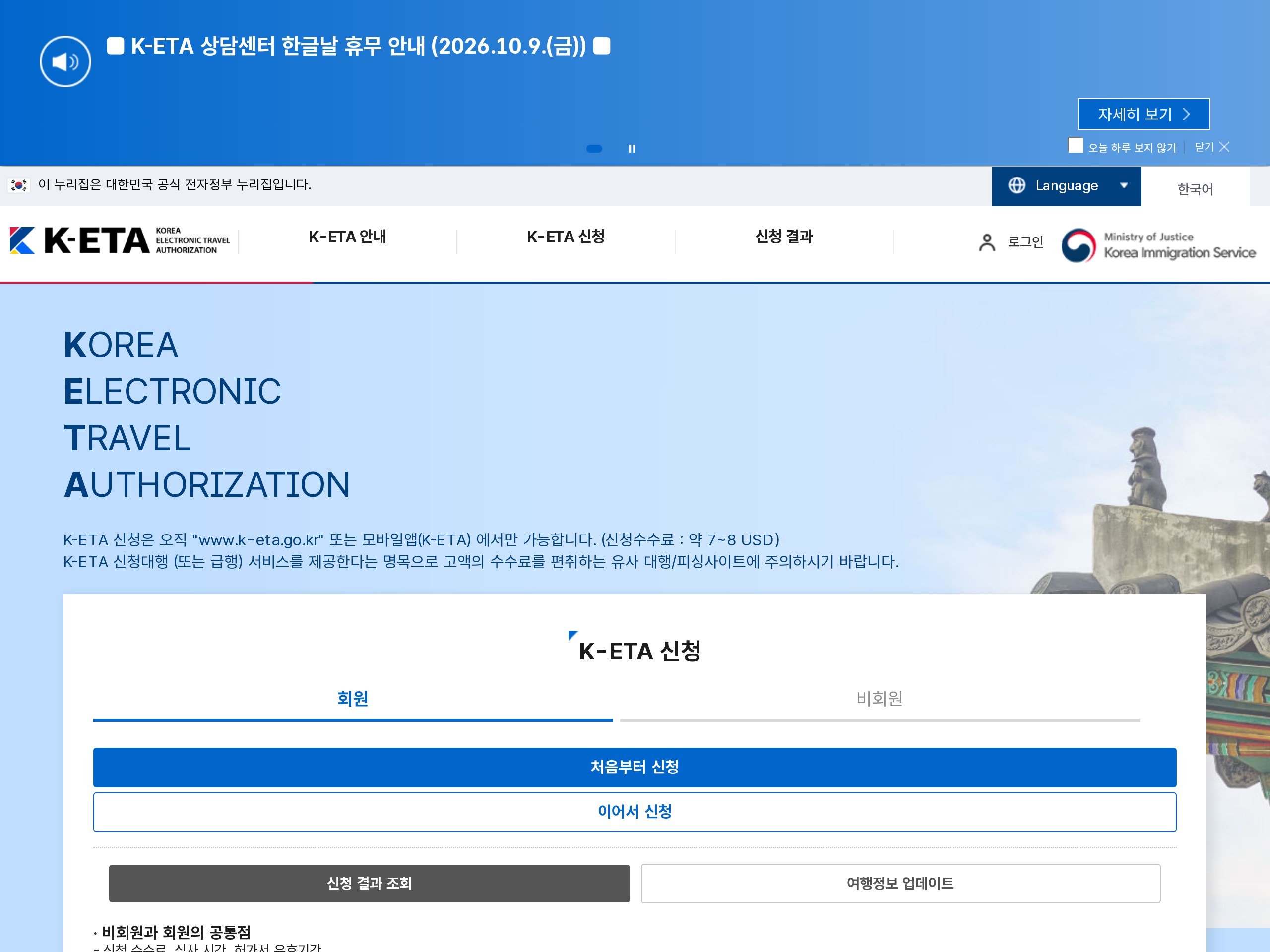
The K-ETA fee is ₩10,000 per person
The K-ETA fee is ₩10,000 per person, which is roughly 9 to 10 U.S. dollars. Paying by card adds a 3% processing fee.
You cannot get the fee back, even if your application is not approved. That is why you should enter your passport details and travel plans exactly right before you submit.
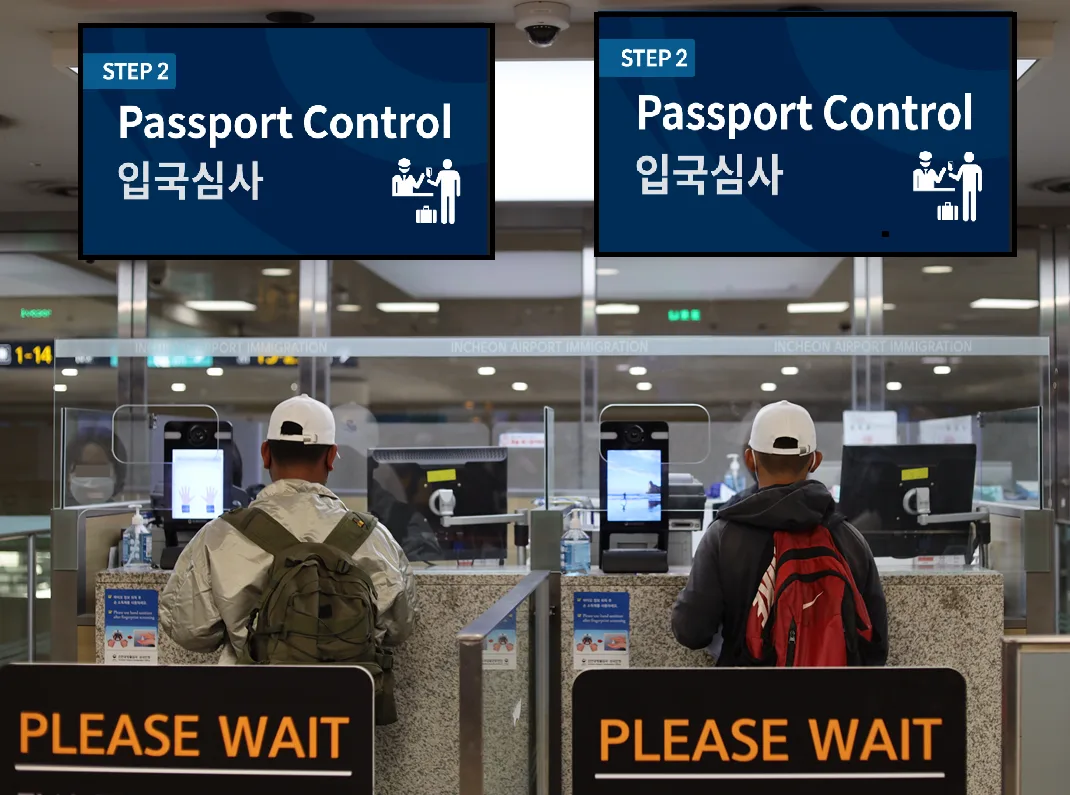
Who needs a K-ETA: visa-free travelers
Foreign travelers who enter Korea without a visa have needed a K-ETA since September 1, 2021. The following groups are exempt:
- Transit passengers
- UN passport holders
- Diplomatic and official passport holders
- Travelers aged 17 or younger and 65 or older (since July 3, 2023)
Apply 72 hours to 1 week before departure
Apply for a K-ETA at least 72 hours to 1 week before you board. Review can take longer than 72 hours, so applying right after you buy your ticket gives you more room in your schedule.
An approved K-ETA is valid for 3 years. The 3-year period applies to applications made on or after July 3, 2023. Before that, approval lasted 2 years from the approval date. If you renew your passport, you must apply for a new K-ETA.

How to apply for a K-ETA, from the site to checking your status
Applying takes six steps, from opening the official site to checking your approval status.
1. Type www.k-eta.go.kr directly into your browser's address bar to open the official site.
2. On the home page, use the menu for who must apply and which countries are exempt to check whether you need a K-ETA.
3. Enter your passport details and travel plans on the application form. Enter both exactly as they appear on your passport and flight ticket.
4. Pay the ₩10,000 fee. If you pay by card, 3% is added.
5. Wait for the review. It can take more than 72 hours.
6. Check your approval status in the status inquiry menu on the home page. For questions about your approval status, use the online inquiry form of the K-ETA Center.
Once you submit the form and pay, the fee is not refunded. The most important thing is to check your passport details and travel plans from step 3 one more time before you submit.
Third-party sites charge $68 to $99
Third-party sites charge several times the official fee. One such site sells products for U.S. citizens at $68 (a $9 embassy fee plus a $59 service fee) and $98 ($9 plus an $89 service fee).
There are also reports of travelers paying up to $99 to an unofficial site. In one case involving a traveler from Malaysia, the official fee was RM35.80, while the traveler paid RM475 to an unofficial site.
The official address is www.k-eta.go.kr. Instead of clicking a search result, type this address directly into your address bar. The K-ETA Center is not responsible for applications made through unofficial sites.

Checking your approval status and asking questions
The home page of the official site has menus for the fee, who must apply, exempt countries, processing time, validity period, how to apply, and status inquiry. For questions about your approval status, use the online inquiry form of the K-ETA Center.
Embassies do not review or approve K-ETA applications.

Apply for a K-ETA on the official site for ₩10,000 per person, plus a separate 3% if you pay by card. If you apply a week before departure, a review that runs past 72 hours will not disrupt your plans. If you type the address in yourself, you avoid paying unnecessary service fees.