Foreign tourists in Korea can get a refund on value-added tax (VAT) when they shop at stores with a "Tax Free" sign. For expensive electronics such as smartphones, laptops, and cameras, the amount you get back and when you get it depend on the refund method and the customs steps you follow when you leave. Tax Free is a system that lets foreign tourists claim back the tax on goods they buy during a trip. A Global Tax Free notice posted at a store entrance in Seoul's Myeongdong shopping district. Photo: Tenant News Refunds are about 4–8% of the purchase price The Tax Free refund applies to foreign tourists who spend at least ₩15,000 per receipt. The amount you actually get back is about 4–8% of the purchase price. The taxes refunded are VAT and the individual consumption tax. The VAT included in the price is about 9%, and you receive that amount minus the refund agency's fee. You qualify if you are a non-resident foreigner staying in Korea for less th...
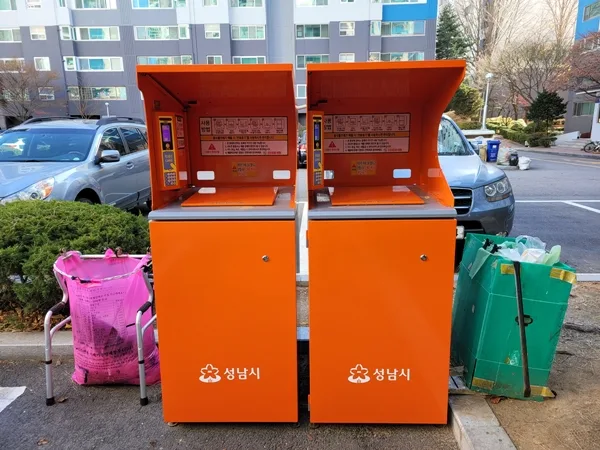
In Korea, food waste is separated from general trash. The disposal method and fees differ by local government and by building. Three systems are in use: an apartment RFID collection bin, a food waste container with a payment sticker, and a volume-based food waste bag.
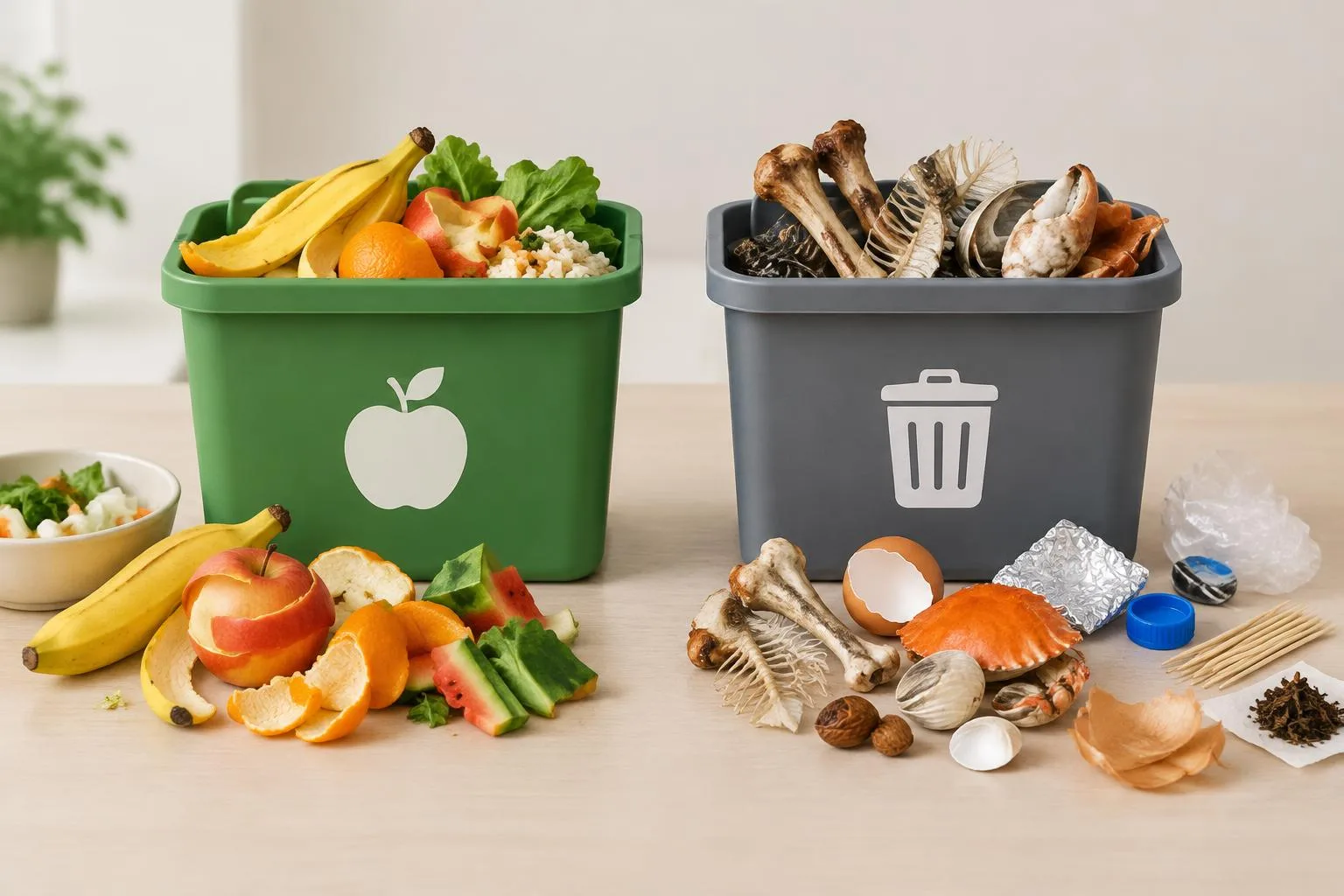
Bones, shellfish shells, eggshells, and tea bags are not food waste. They go in general trash bags.
Three Systems, Set by Your District Office
Korea uses three food waste systems: an apartment RFID bin, a dedicated container with a payment sticker, and a volume-based food waste bag. Which one applies to you depends on your district office (gu office, your local government) and your building.
- RFID bin: RFID is a system that reads a card. At the bin on the ground floor of an apartment complex, you tap your card and the lid opens. The bin weighs your waste and charges you by amount.
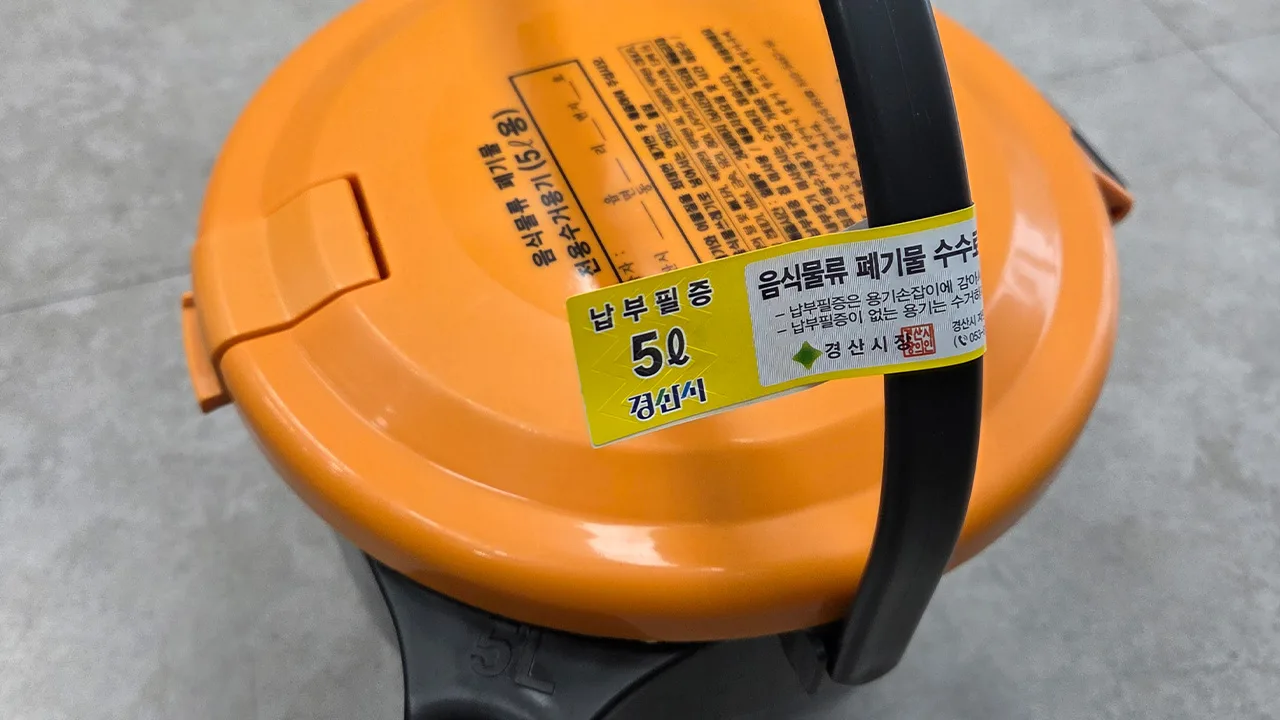
- Dedicated container with a payment sticker: The sticker (납부필증) shows that you have paid the fee. You put the sticker on the container's handle and leave the container outside your door.
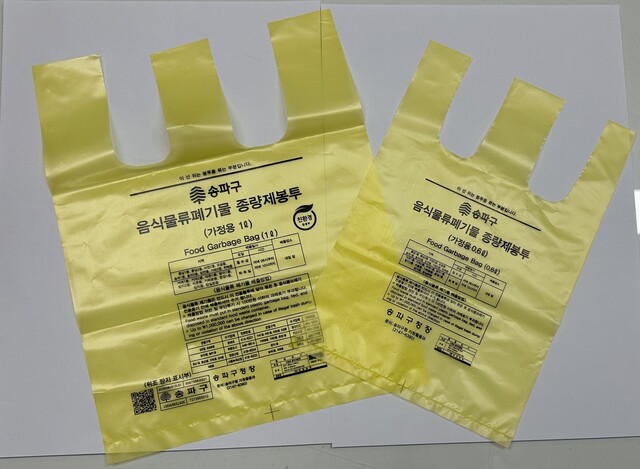
- Volume-based food waste bag: You buy a standard bag set by your district office, fill it with food waste, and throw it away. If your apartment has no collection bin, you buy this bag.
In Incheon's Yeonsu-gu, apartments use RFID machines, while detached houses and multi-household houses use dedicated containers with stickers. Seoul's Geumcheon-gu lists fees for all three systems: volume-based bags, payment-sticker containers, and RFID.
Bones, Shells, and Tea Bags Go in General Trash
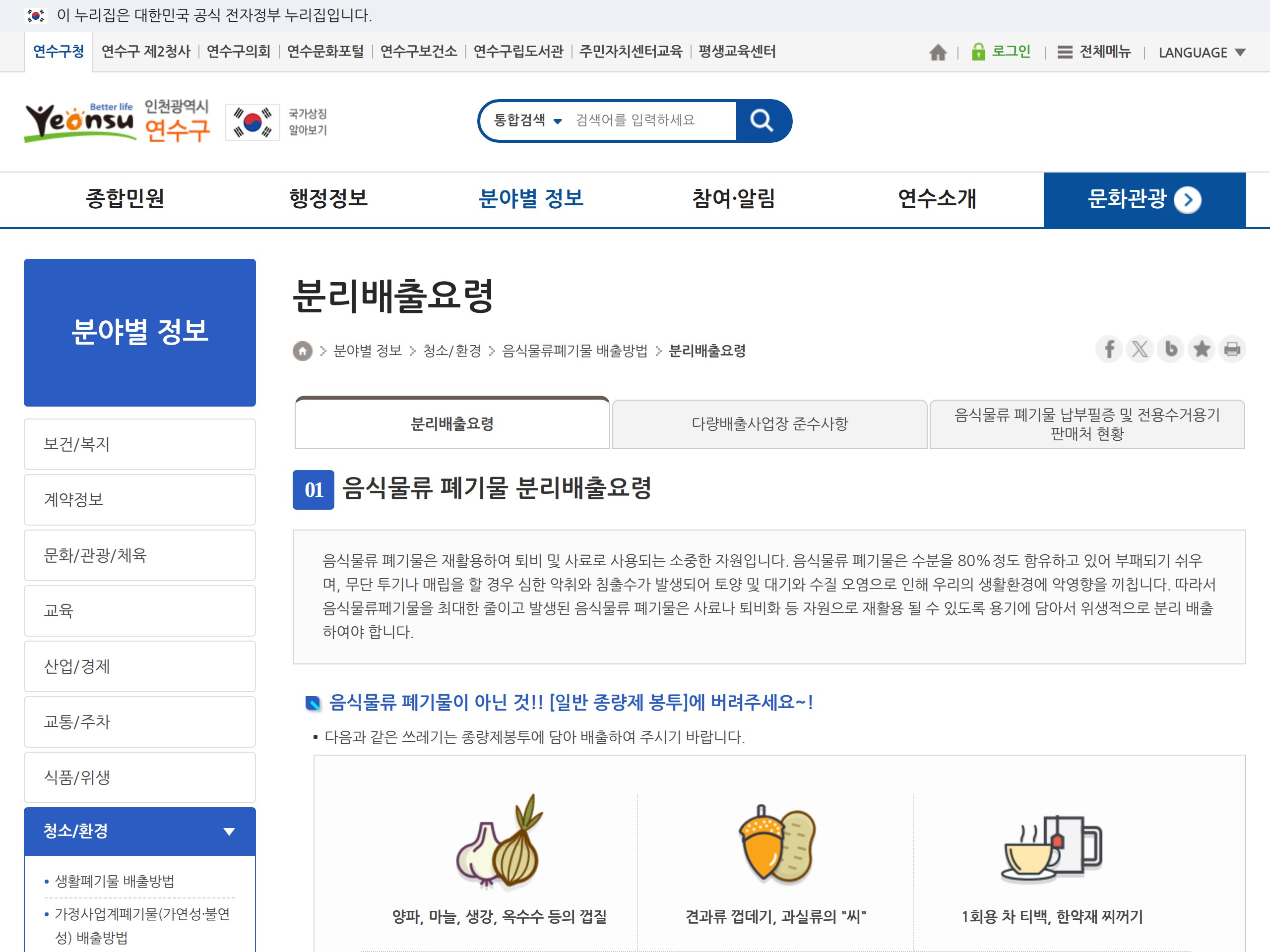
Yeonsu-gu classifies the following as non-food waste, to be thrown away in general volume-based bags: animal and fish bones, clam and crab shells, eggshells, nut shells, fruit pits, and disposable tea bags. The same list includes onion, garlic, and ginger skins, corn husks, vegetable roots and stems, herbal medicine residue, and animal hair.
Seoul has set a standard for general-waste items: animal bones, shellfish shells, vegetable roots and stalks, pineapple skins, peach and persimmon pits, chili seeds, and plastic items. It has recommended that its 25 districts revise their ordinances to match. The actual rules are set by each district's ordinance.
Do not put foreign objects in food waste bags or containers. Yeonsu-gu lists these as foreign objects: tea bags wrapped in paper or cloth, plastic bags, bottle caps, metal, plastic, toothpicks, paper, foil, straws, disposable utensils, and glass.
RFID Bins Cost 63 to 130 Won per kg
RFID bin fees differ by district. Yeonsu-gu charges ₩63 per kg, and Geumcheon-gu charges ₩130 per kg. In Yeonsu-gu apartments, this fee is billed through the monthly maintenance fee.
Yeonsu-gu payment sticker prices (for households) are:
- 3 L: ₩180
- 5 L: ₩300
- 10 L: ₩600
- 25 L: ₩1,430
- 120 L: ₩6,830
In Yeonsu-gu, a 20 L bag costs ₩1,450 and is meant for large amounts of waste, such as around holidays and kimchi-making season. Dedicated containers cost from ₩4,300 for 3 L to ₩39,000 for 120 L.
Geumcheon-gu volume-based food waste bag prices are:
- 1 L: ₩100
- 2 L: ₩190
- 3 L: ₩300
- 5 L: ₩500
- 10 L: ₩1,000
Geumcheon-gu payment sticker (dedicated container) prices are:
- 10 L: ₩1,400
- 25 L: ₩3,500
- 60 L: ₩8,400
- 120 L: ₩16,800
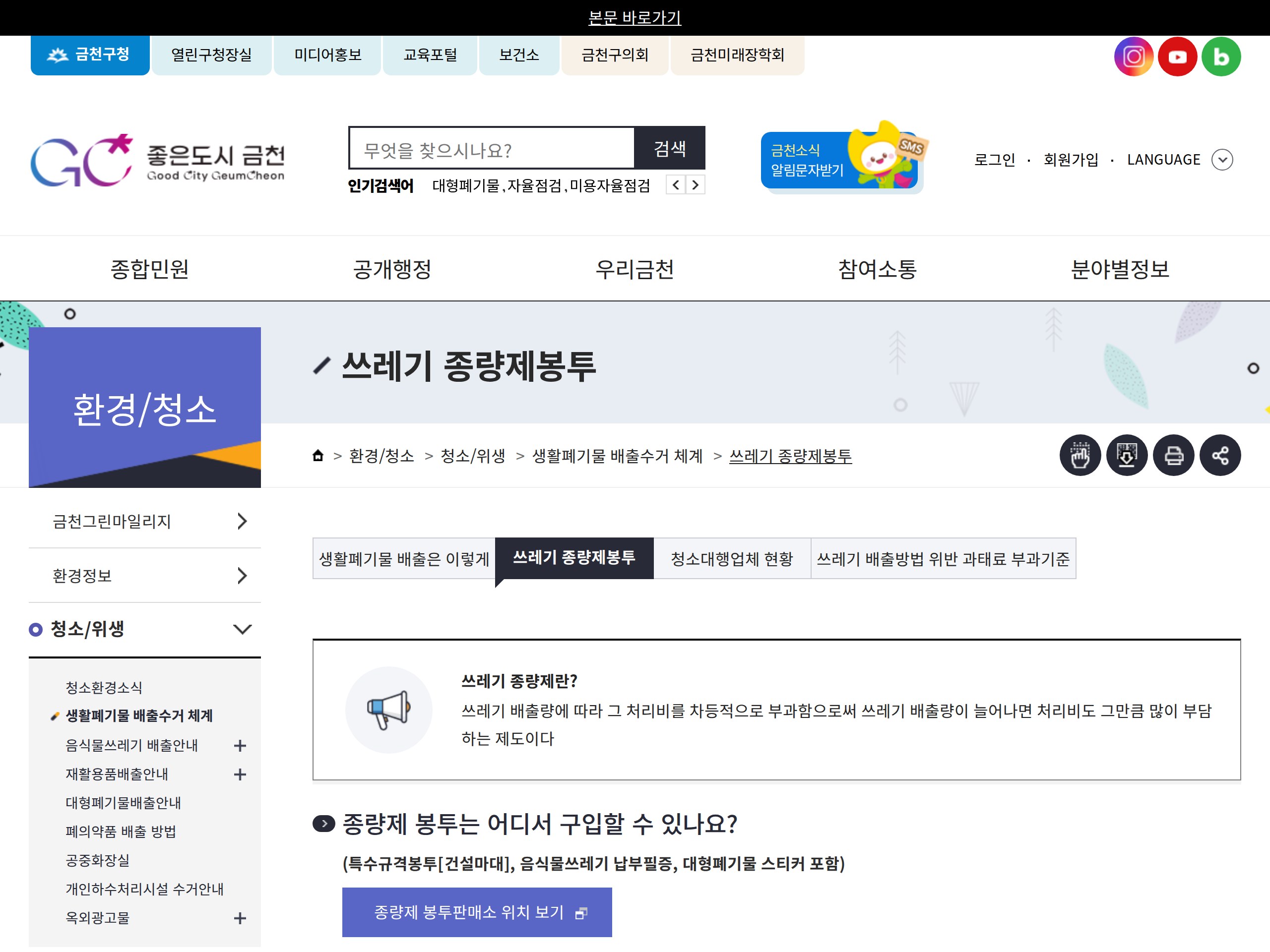
Where you buy them also varies by district. Geumcheon-gu offers a link for searching the locations of volume-based bag stores. Yeonsu-gu requires you to pre-order containers of 10 L or larger from a store. For questions in Geumcheon-gu, call the Cleaning Administration Division at +82-2-2627-1494.
Fines for Mixing Waste or Using Non-Standard Bags
You may be fined if you mix food waste with general trash or use a bag that is not the standard type. Throwing household trash into public trash cans may also lead to a fine.
Keep bones, shells, seeds, and tea bags in a separate general trash bag.
Apartments Use RFID, Houses Use Stickers
In Yeonsu-gu, apartment residents throw food waste into the RFID machine (120 L) in the complex. Residents of detached and multi-household houses put out a dedicated container with a sticker outside the door.
For detached and multi-household houses: drain the water, remove foreign objects, and put the food waste in a dedicated container with a payment sticker on the handle. Leave it outside your door between 6 p.m. and 4 a.m. the next day. Small restaurants with a total floor area under 200 m² (about 2,150 sq ft) follow the same method. Collection days differ by neighborhood. Okryeon-dong and Yeonsu-dong are collected on Sundays, Tuesdays, and Thursdays. Seonhak-dong, Cheonghak-dong, and Dongchun-dong are collected on Mondays, Wednesdays, and Fridays. Songdo-dong is collected Monday through Friday and on Sunday. There, you put a pink dedicated bag (1 to 10 L) in the automated collection facility or outside your door.
Gimhae also has detached-house residents attach a band sticker to a dedicated container and leave it outside the door. Disposal hours are after 8 p.m. from Sunday to Thursday, and not on Fridays or Saturdays. Apartments that use RFID do not need stickers. In apartments that do not, the management office buys the stickers and attaches them to the existing containers.
Before disposal, remove soil and water. Seoul advises rinsing salty foods such as kimchi, doenjang (soybean paste), and gochujang (red chili paste), and cutting large vegetables into smaller pieces. Many households also freeze food waste to keep down odors.
In Korea, you dispose of food waste with whichever system your home uses: an RFID bin, a container with a payment sticker, or a volume-based bag. Bones, shells, seeds, and tea bags go separately in general trash bags. Once you know your system and its fees, daily disposal gets much easier.