Foreign tourists in Korea can get a refund on value-added tax (VAT) when they shop at stores with a "Tax Free" sign. For expensive electronics such as smartphones, laptops, and cameras, the amount you get back and when you get it depend on the refund method and the customs steps you follow when you leave. Tax Free is a system that lets foreign tourists claim back the tax on goods they buy during a trip. A Global Tax Free notice posted at a store entrance in Seoul's Myeongdong shopping district. Photo: Tenant News Refunds are about 4–8% of the purchase price The Tax Free refund applies to foreign tourists who spend at least ₩15,000 per receipt. The amount you actually get back is about 4–8% of the purchase price. The taxes refunded are VAT and the individual consumption tax. The VAT included in the price is about 9%, and you receive that amount minus the refund agency's fee. You qualify if you are a non-resident foreigner staying in Korea for less th...
T-money is a prepaid transit card used on public transportation across Korea. You can buy one at convenience stores (GS25, CU, 7-Eleven) and at service centers in Seoul subway stations on Lines 1–8. The card costs ₩3,000–5,000, and you top it up with cash.
Foreign credit and debit cards work at some Seoul subway ticket machines, but only for certain products. Seoul city buses will accept foreign cards directly starting in 2027. If you are arriving in Korea now and need to get around right away, buying a T-money card is the simplest option.
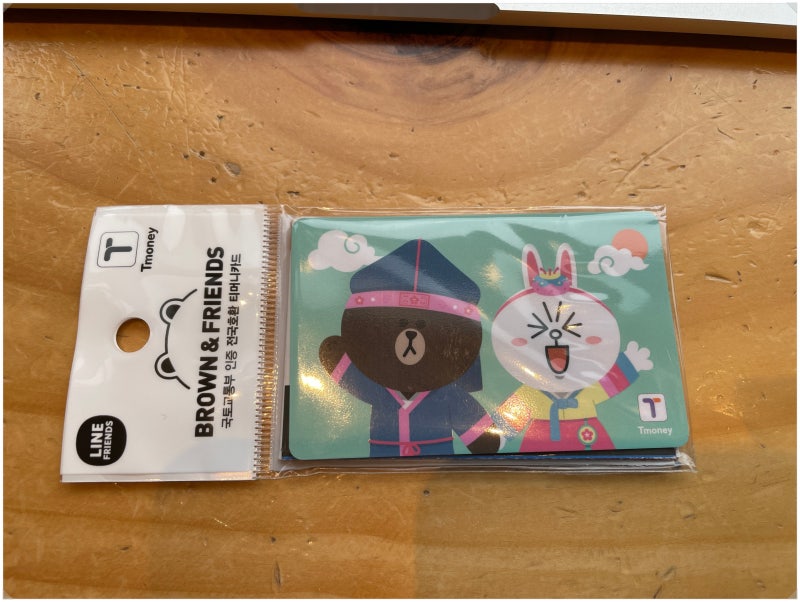
Where to Buy a T-money Card and What It Costs
Buy a T-money card for ₩3,000–5,000 at convenience stores nationwide or at service centers in Seoul subway stations on Lines 1–8. GS25, CU, and 7-Eleven all sell them, so you can buy one the same way in any city. At Incheon International Airport, some convenience stores in the arrivals hall and on the first basement level (B1) also sell the card.
The price depends on the design. A standard card costs ₩3,000, and a character card costs around ₩5,000. The card must be loaded with money before you can ride.
You can use a T-money card for:
- Public transportation, including subways and buses
- Partner shops that display the T-money logo
- Expressway tolls
- Pay phones
- Some vending machines and photo booths in subway stations
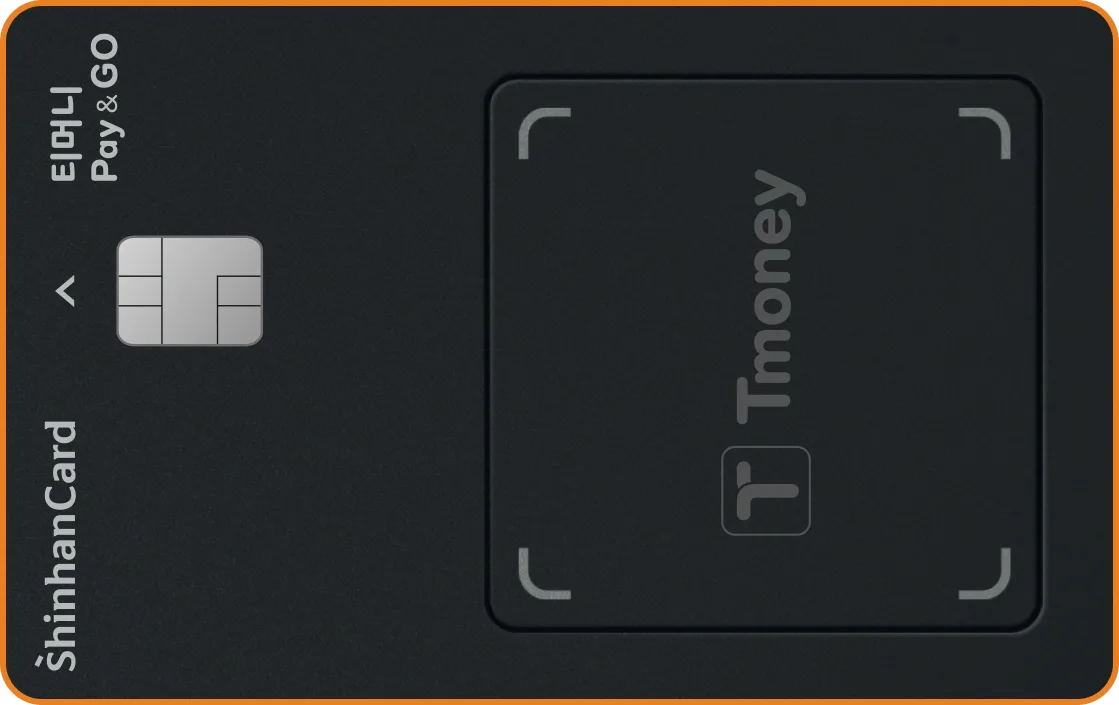
Top Up with Cash, and Start with ₩50,000 or Less
Cash is the standard way to top up a physical T-money card. You can add money at convenience stores and at subway station machines, in units of ₩1,000. The maximum balance on the card is ₩500,000.
Foreign credit cards cannot top up a standard physical T-money card. That means you need Korean won in cash right after you arrive.
Start with a first top-up of ₩50,000 or less. Adding more when you run low is the way to avoid leaving money on the card.
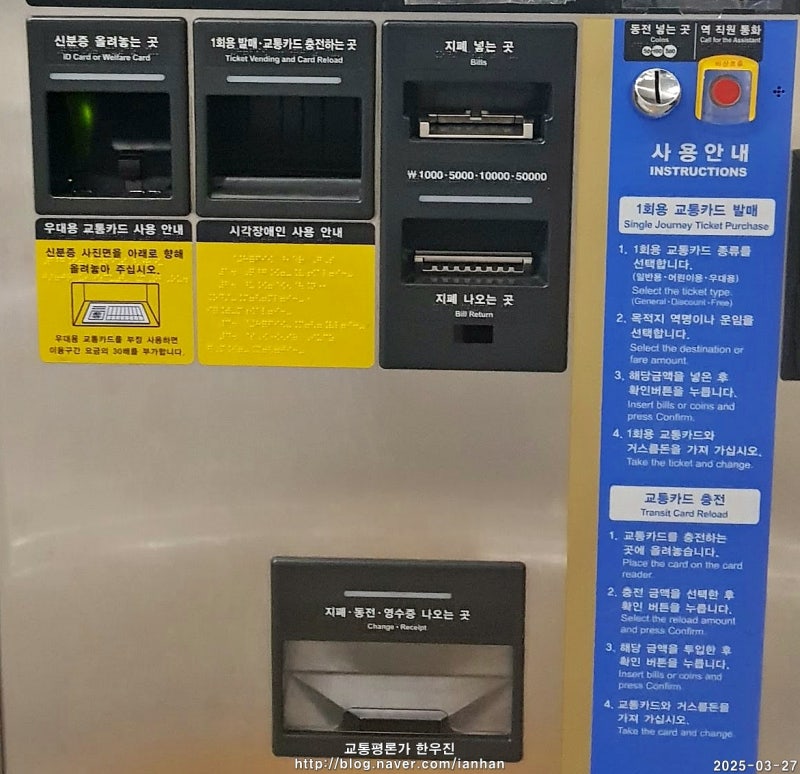
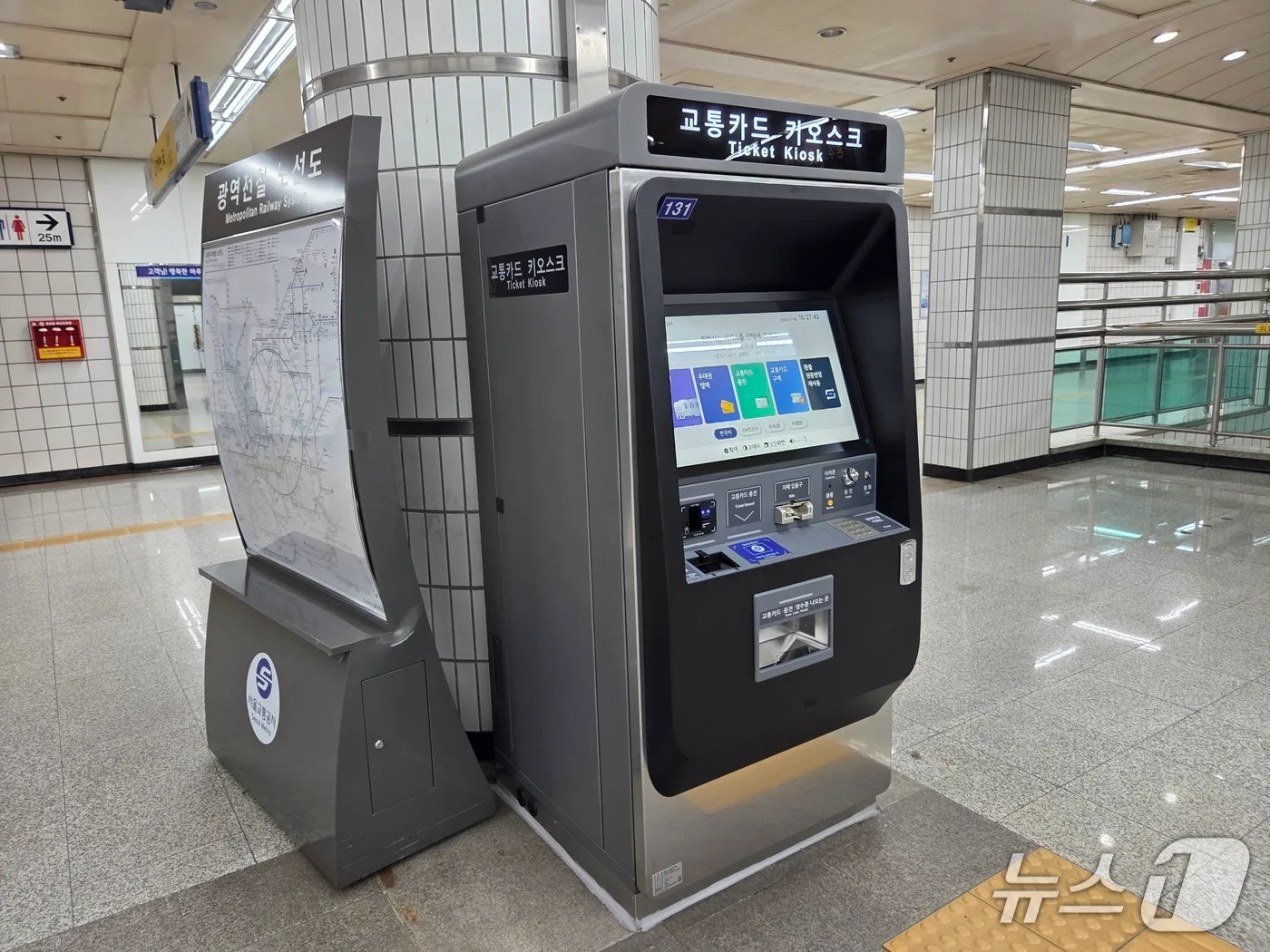
Foreign Cards at Subway Ticket Machines
Since March 17, foreign-issued credit cards, debit cards, and mobile payments work at 440 new ticket machines in 273 stations on Seoul subway Lines 1–8. The first products covered are the purchase of the Climate Card (Gihu Dongaeng Card, 기후동행카드) and top-ups for short-term passes (1-day, 2-day, 3-day, 5-day, and 7-day).
The Climate Card is a Seoul-only transit card with a 1-day to 7-day period you choose. It is a different product from topping up a regular T-money card with a foreign card. If your trip is based in Seoul and lasts only a few days, these machines are the way to pay without cash.
Foreign Cards on Buses from 2027
Starting in 2027, riders on Seoul city buses will be able to tap a foreign-issued Visa, Mastercard, UnionPay, or JCB contactless card directly on the reader. The plan is to extend this later to Incheon buses and airport buses. You will not need to buy or top up a separate transit card. System development and testing will run through the end of 2026.
Seoul city buses are the first target of the plan. For now, a traveler who has just arrived in Korea and is switching between the subway and buses needs a T-money card.
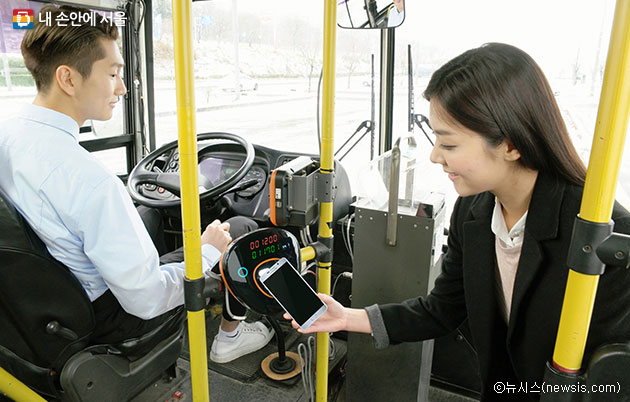
Refunds: Convenience Stores for ₩50,000 or Less
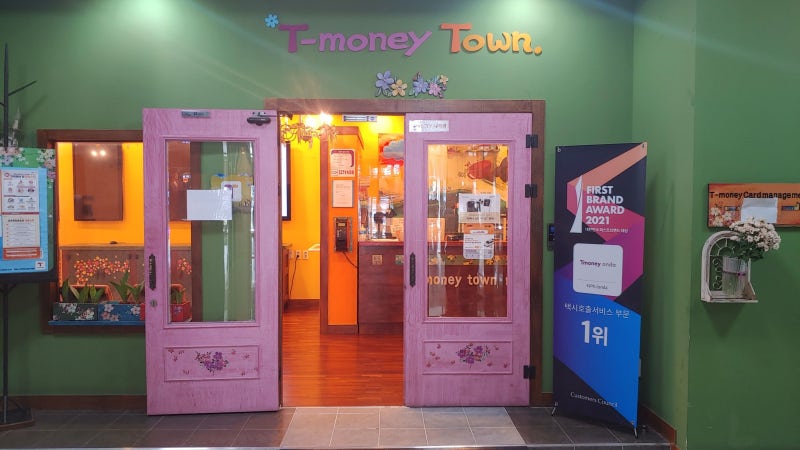
You can get a refund of the remaining balance at a convenience store if it is ₩50,000 or less. If it is more than ₩50,000, go to T-money Town (티머니타운) near Seoul Station. It is at Exit 10 of Seoul Station.
Refund limits differ between sources, and some list the convenience store limit as a balance under ₩20,000. In that case, balances of ₩20,000–50,000 are refunded at a subway customer service center. Either way, a balance under ₩20,000 can be handled at a convenience store, so the simplest approach is to bring your balance below ₩20,000 before you leave Korea.
The refund fee is ₩500, and the price of the card itself is not refunded.
Alternatives: Mpass and WOWPASS
If you cannot get a T-money card, you can use Mpass (a card for foreign visitors), WOWPASS (a prepaid card), or the Climate Card.
Mpass is a flat-rate transit card sold by period:
- 1-day pass: ₩15,000
- 2-day pass: ₩23,000
- 3-day pass: ₩30,500
- 5-day pass: ₩47,500
- 7-day pass: ₩64,500
Mpass allows up to 20 rides per day and accepts only Korean won in cash. It is valid for 30 days from the issue date, and buying it after 5 p.m. gets you a ₩3,000 discount. You get and return the card at T-money Town at Exit 10 of Seoul Station.
WOWPASS costs ₩5,000 and requires your passport. You buy it through the app or at a kiosk, and you withdraw the remaining balance in won at a kiosk.
The EZL card starts at ₩4,000 at convenience stores, and balances under ₩20,000 are refunded at convenience stores.
The Climate Card costs ₩3,000 for the card itself, with passes from ₩5,000 for 1 day to ₩20,000 for 7 days. It works only in Seoul. Sales of the 30-day pass stopped on October 1.
Frequently Asked Questions
Q. How do I get the discount for riders under age 18?
A. You must register your date of birth on the card at a convenience store. The discount does not apply to a card used without registration.
Q. Can I use a T-money card in a taxi?
A. Only some taxis that display the T-money logo accept it. Check for the logo on the car before you get in.
Buy a T-money card at a convenience store for ₩3,000–5,000, load ₩50,000 or less in cash, and you can ride right away. Paying with a foreign card began at Seoul subway ticket machines and is expanding to Seoul city buses in 2027, but for now a single card is the simplest choice. On your last day, settle the balance at a convenience store to finish with your transit card.