Foreign tourists in Korea can get a refund on value-added tax (VAT) when they shop at stores with a "Tax Free" sign. For expensive electronics such as smartphones, laptops, and cameras, the amount you get back and when you get it depend on the refund method and the customs steps you follow when you leave. Tax Free is a system that lets foreign tourists claim back the tax on goods they buy during a trip. A Global Tax Free notice posted at a store entrance in Seoul's Myeongdong shopping district. Photo: Tenant News Refunds are about 4–8% of the purchase price The Tax Free refund applies to foreign tourists who spend at least ₩15,000 per receipt. The amount you actually get back is about 4–8% of the purchase price. The taxes refunded are VAT and the individual consumption tax. The VAT included in the price is about 9%, and you receive that amount minus the refund agency's fee. You qualify if you are a non-resident foreigner staying in Korea for less th...
The easiest way for a foreigner to get a taxi in Korea is to call one with an app built for visitors, such as k.ride, TABA, or Uber. You can sign up for k.ride and TABA with a foreign phone number or a Google or Apple account. You can then check the fare against Seoul's official fare table and your English receipt.
The official fare for a standard taxi in Seoul is ₩4,800 for the first 1.6 km. Even so, foreigners filed 487 taxi complaints from June to December 2025, and overcharging was the most common. This guide follows the order of a taxi ride: choosing an app, telling the driver where to go, Seoul fares and surcharges, airport flat fares, and checking your receipt.
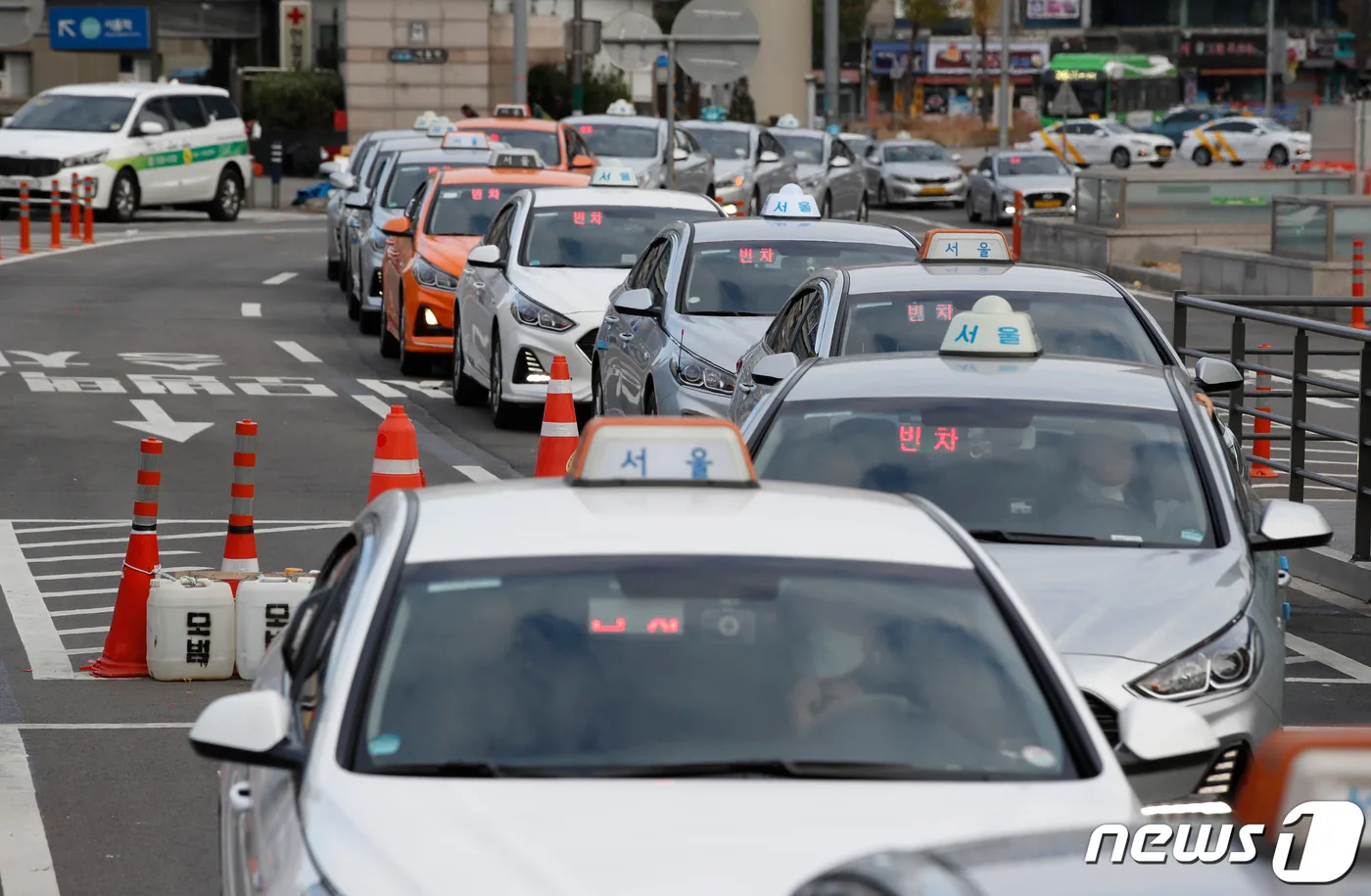
Three Taxi Apps for Foreigners
Foreign visitors can use three taxi apps: k.ride, TABA, and Uber. All three let you book a taxi in English, so you do not need to speak Korean.
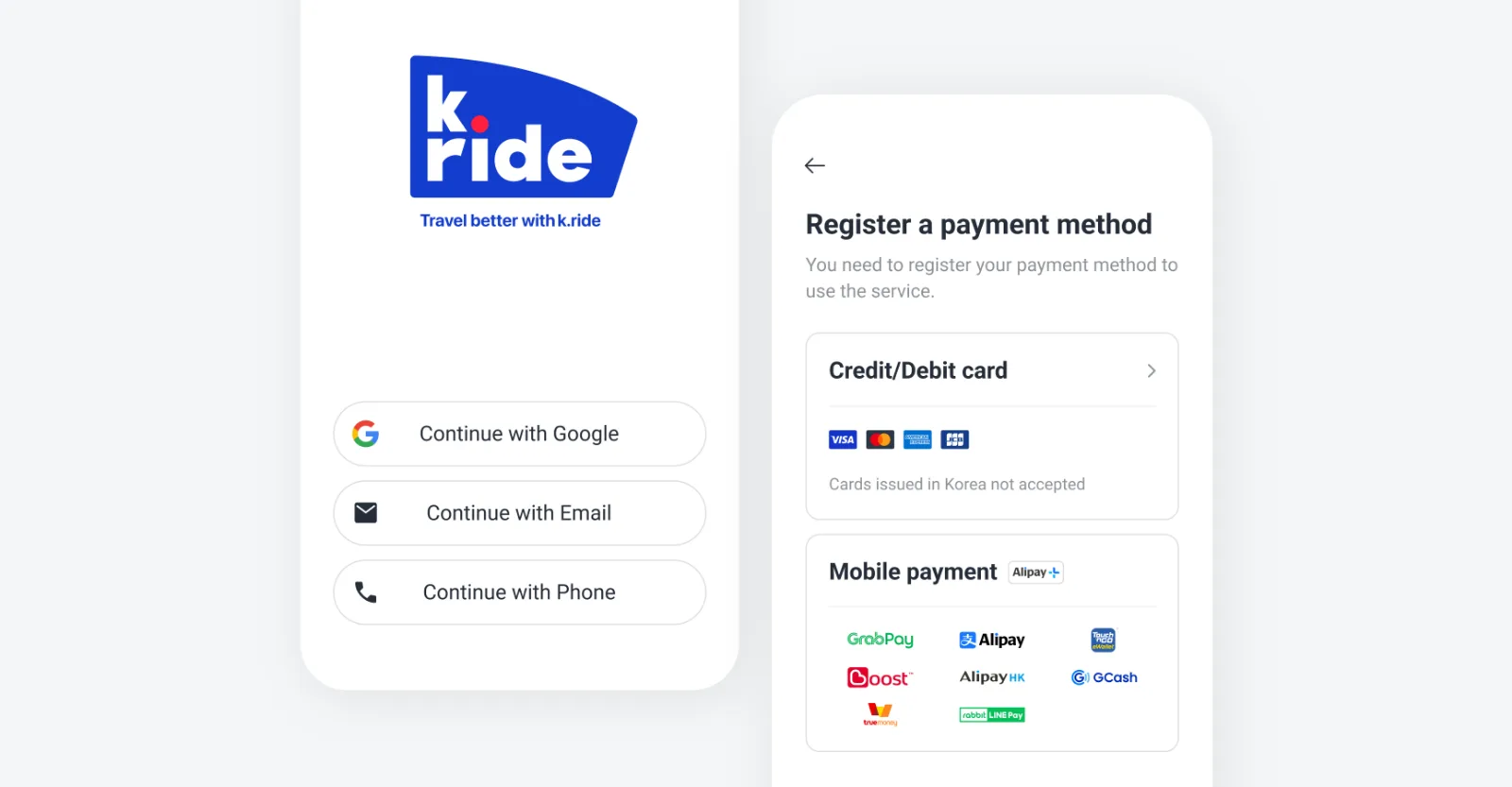
k.ride is an app for foreign visitors that Kakao Mobility launched in June 2024. It is available in the app stores of 14 countries and supports Korean, English, Chinese, and Japanese. You do not need a Kakao ID. You sign up with a phone number, an email address, or Google or Apple authentication, and the fare is charged automatically to a credit card issued abroad.
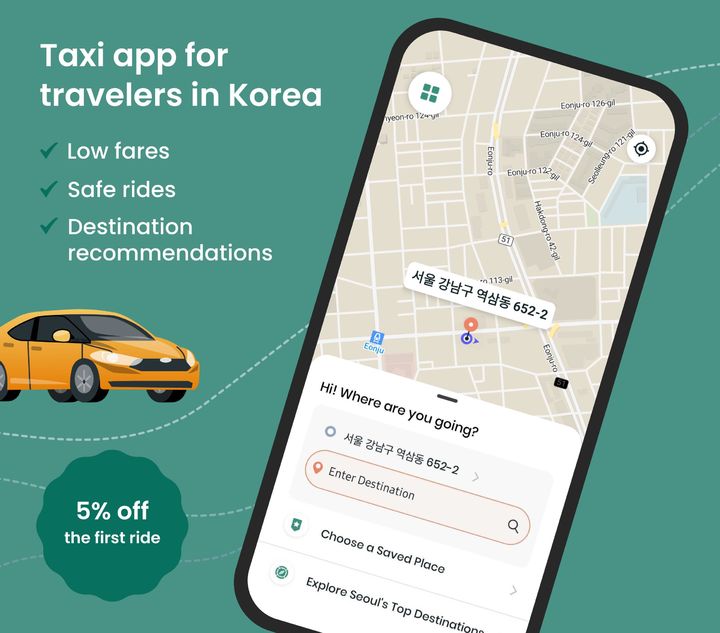
TABA is an iPhone app with an English interface and English customer support, made by Globaleur. You sign up with a phone number or a Google or Apple account, and you pay with Visa, Mastercard, Amex, Discover, Diners, JCB, or UnionPay cards. You can choose a standard 4-seater, a luxury 4-seater, or a 5-seater. The download is free. Some App Store reviews complain that drivers did not accept the ride request.
Uber is a technology platform run by UT LLC. It connects you with taxis and does not provide the transport service itself. The Uber Korea page shows a promotional banner for taxi fare discounts and a Reserve menu for booking in advance.
Show Your Destination in Korean
Even if you do not speak Korean, you can give the driver your destination through the app's search and translated chat. k.ride automatically translates destination search and chat with the driver in 100 languages.
If you take a taxi without an app, save the destination's address in Korean and a map pin on your phone before you leave. If you show the screen to the driver, you do not need to explain the destination out loud.
Seoul Standard Taxi Fare: ₩4,800
The daytime base fare for a standard taxi in Seoul is ₩4,800 for the first 1.6 km. After the base distance, the fare goes up ₩100 for every 131 m driven or every 30 seconds that pass.
The English guide from Incheon City also lists a base fare of ₩4,800 for the first 1.6 km for a standard taxi. However, in Incheon the fare rises ₩100 per 135 m or per 33 seconds, so the units differ from Seoul.
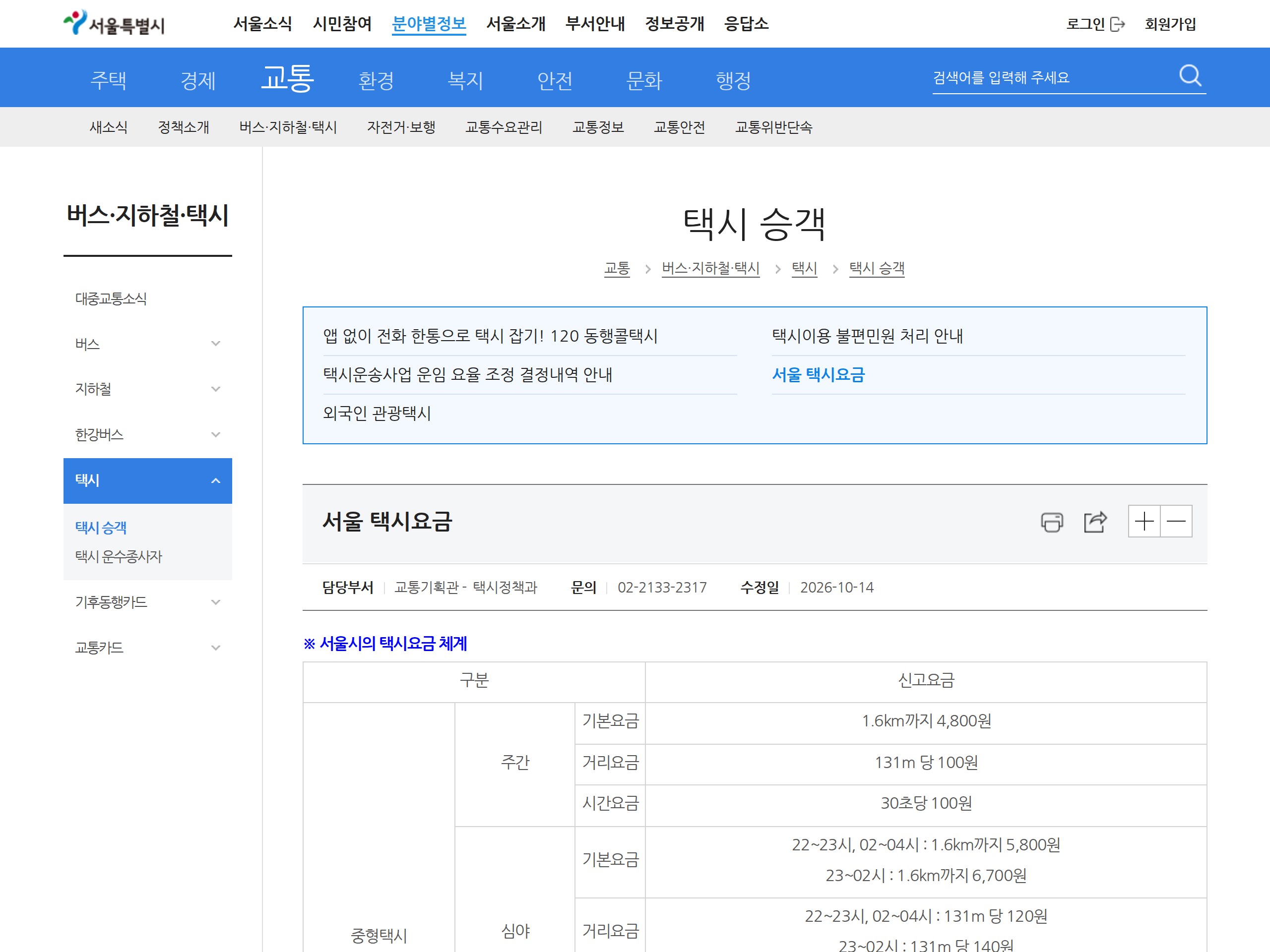
Night and Out-of-City Surcharges: Up to 60%
At night, a standard taxi in Seoul starts at ₩5,800 or ₩6,700, depending on the hour. The out-of-city surcharge is added when the taxi crosses the city boundary.
- 10 p.m.–11 p.m. and 2 a.m.–4 a.m.: ₩5,800 for the first 1.6 km, then ₩120 per 131 m or per 30 seconds (a 20% surcharge)
- 11 p.m.–2 a.m.: ₩6,700 for the first 1.6 km, then ₩140 per 131 m or per 30 seconds (a 40% surcharge)
- Out-of-city surcharge: 20% in Seoul. The Incheon English guide lists the surcharge for trips to other regions as 30% for standard taxis and 20% for large taxis.
For a regular taxi in Seoul, the night and out-of-city surcharges together are capped at 60%. For a deluxe (mobeom) taxi, the cap is 40%. At Incheon International Airport, the out-of-city surcharge applies from the border of the six cities and provinces.
Foreign Tourist Taxis and Airport Flat Fares
For the Foreign Tourist Taxi, the flat fare between Incheon Airport and Seoul, tolls included, is ₩70,000–95,000 for a standard taxi and ₩100,000–140,000 for a large or deluxe taxi, depending on the area. A flat fare (gugan-yogeum, 구간요금) means the price is set for each route instead of by the meter.
The metered fare for a Foreign Tourist Taxi is the same as for standard, large, and deluxe taxis. A 20% foreigner surcharge may be applied to foreign passengers. Hourly charter rates are listed below, with tolls charged separately.
- Standard: ₩70,000 for 3 hours, ₩240,000 for 1 day
- Large or deluxe: ₩90,000 for 3 hours, ₩260,000 for 1 day
Deluxe and Large Taxis, and How to Pay
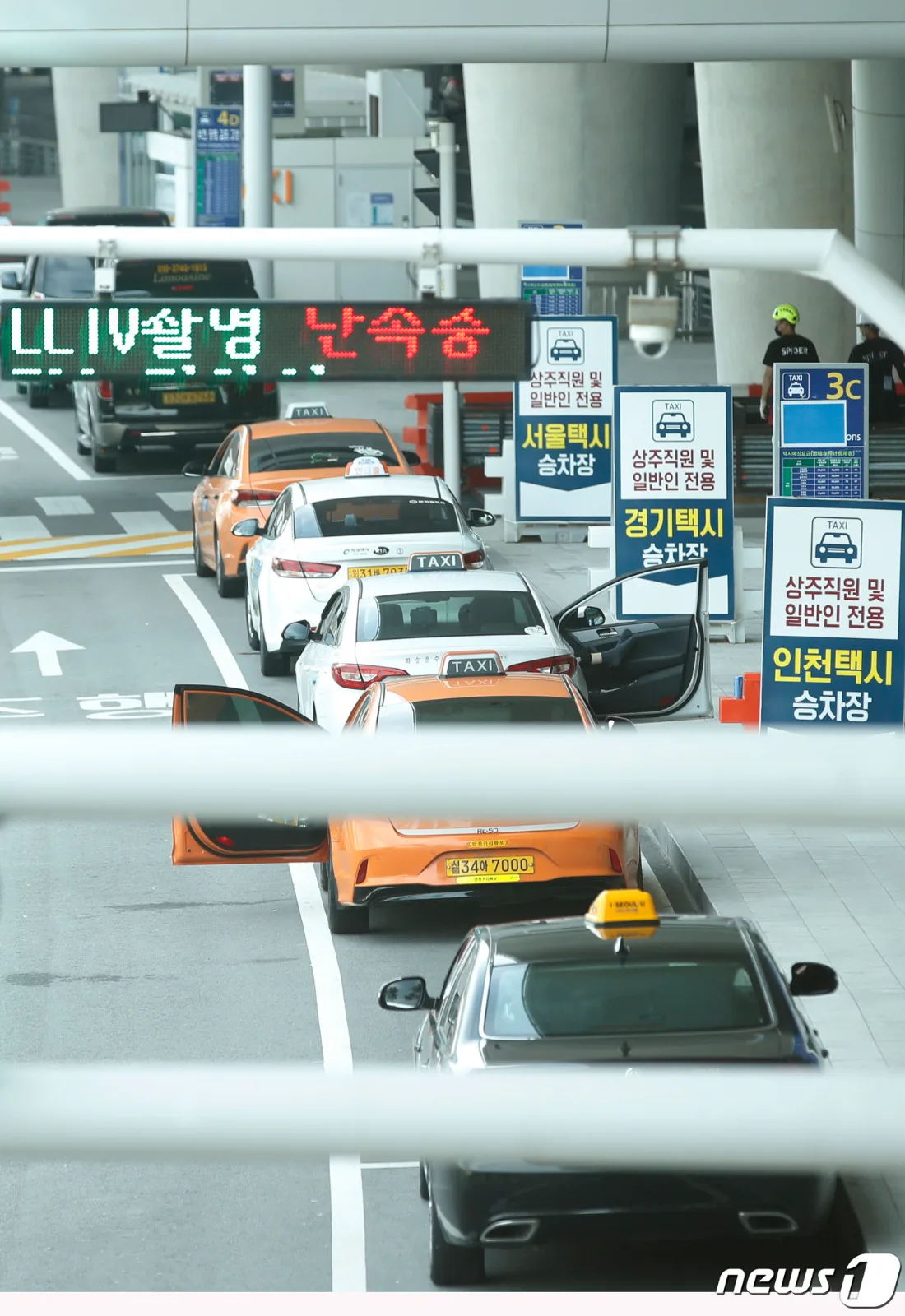
A deluxe taxi (mobeom taxi) costs ₩7,000 for the first 3 km in the daytime, then rises ₩200 per 151 m. At night (10 p.m.–4 a.m.), the fare is ₩8,400 for the first 3 km, with a 20% surcharge.
The base fare for a large van taxi (jumbo) depends on the operator.
- Kakao Venti: ₩4,000 for the first 0.8 km
- I.M: ₩5,500 for the first 0.75 km; ₩6,500 from 10 p.m. to 11 p.m. and 2 a.m. to 4 a.m.; ₩7,500 from 11 p.m. to 2 a.m.
Premium taxis such as Kakao Black and some platform fares run on flexible-fare or self-reported-fare systems, so they are set separately from the regular fare table. The Seoul city taxi policy team (02-2133-2317) takes questions about these fares.
Incheon City says you can pay the taxi fare with cash or a transit card. Transfer discounts do not apply to taxis.
Check the English Receipt for Overcharging
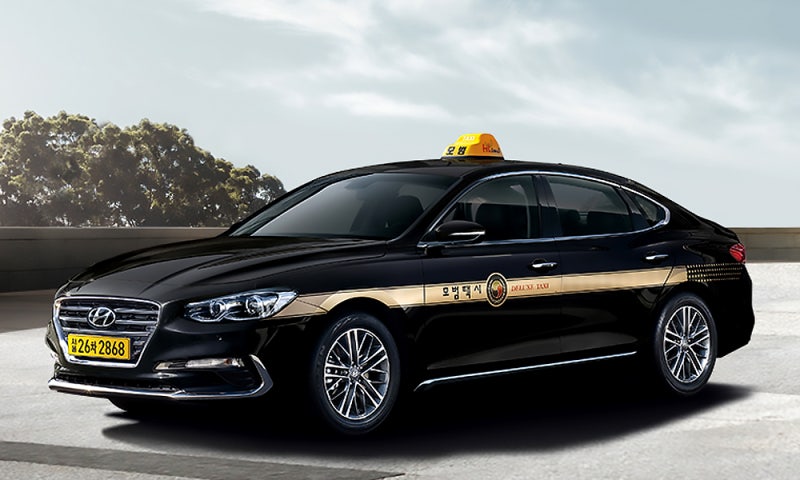
Compare the Meter Fare on your receipt with the fare on the taxi meter, and you can spot an overcharge right away. Since December 2025, paper receipts in Seoul taxis have been printed with English alongside the Korean. They show the final fare, the pick-up and drop-off times, and whether a night or out-of-city surcharge was applied.
On the receipt, the fare line is Meter Fare and the toll line is Toll fee. At the bottom are complaint instructions and the number for the 120 Dasan Call Center. The estimated fare in apps for foreigners also splits the ride fare and the toll.
Here are three cases that were actually caught.
- A driver in Myeong-dong who did not use the meter and charged ₩20,000 more than the fare shown in a map app
- A ride on December 4, 2025, from Gimpo Airport to Yeonhui-dong where the meter fare was ₩32,600 but the driver charged ₩56,000 (Seoul classified this as unfair fare collection)
- A ride from Hongdae to Incheon Airport where the out-of-city surcharge was applied improperly
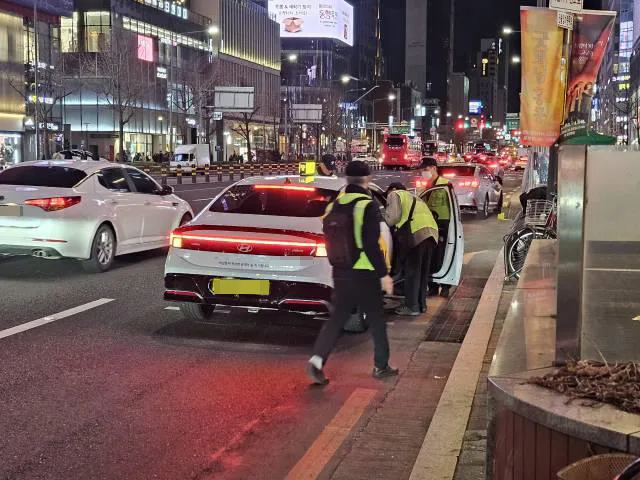
Since June 2025, Seoul has run a reporting system with QR surveys in English, Chinese, and Japanese, and it has placed QR leaflets at airport arrival and departure halls and tourist information centers. For about 100 days, the city ran a focused crackdown at Incheon and Gimpo airports, Myeong-dong, and other areas on refusing short rides, charging high prices after long idling to attract riders, and overcharging at night. Seoul took action, such as fines, on 8 of the foreigners' complaints.
The steps for taking a taxi are to install an app, save the address in Korean, ride on the meter fare, and check the English receipt. If you know Seoul's standard taxi base fare and surcharge structure, you can usually estimate the fare on the spot. A little preparation before you leave makes a taxi in an unfamiliar city a comfortable way to get around.
References
- Seoul transportation website: taxi fares
- Seoul special measures on taxis for foreign tourists
- Incheon City taxi guide in English
- k.ride launch
- English added to Seoul taxi receipts
- Overcharging of foreigners on taxi fares
- TABA on the App Store
- Uber Korea
- inmykorea guide (Korean address and map pin)
- thebitjoy guide