Foreign tourists in Korea can get a refund on value-added tax (VAT) when they shop at stores with a "Tax Free" sign. For expensive electronics such as smartphones, laptops, and cameras, the amount you get back and when you get it depend on the refund method and the customs steps you follow when you leave. Tax Free is a system that lets foreign tourists claim back the tax on goods they buy during a trip. A Global Tax Free notice posted at a store entrance in Seoul's Myeongdong shopping district. Photo: Tenant News Refunds are about 4–8% of the purchase price The Tax Free refund applies to foreign tourists who spend at least ₩15,000 per receipt. The amount you actually get back is about 4–8% of the purchase price. The taxes refunded are VAT and the individual consumption tax. The VAT included in the price is about 9%, and you receive that amount minus the refund agency's fee. You qualify if you are a non-resident foreigner staying in Korea for less th...
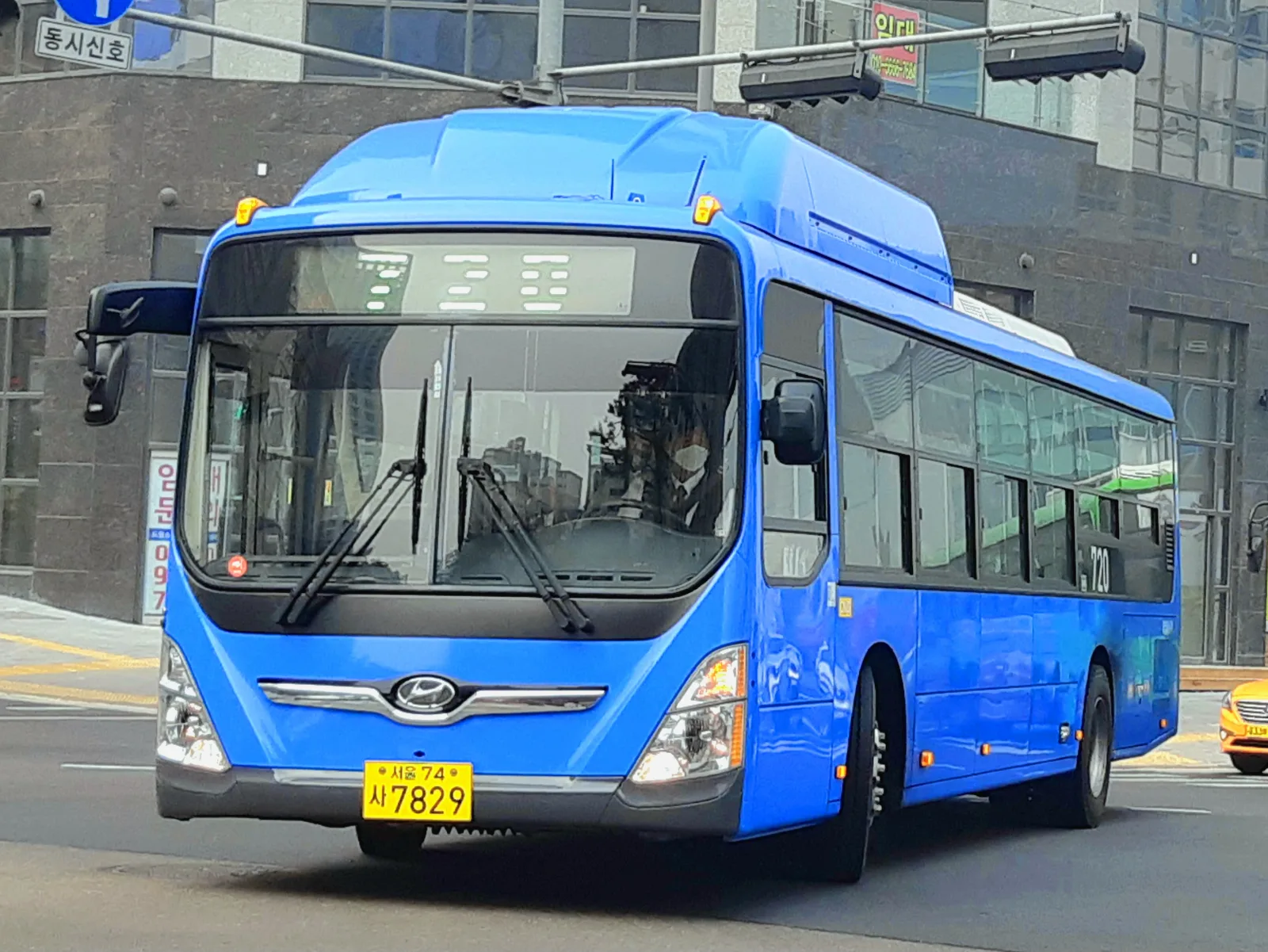
To ride a Seoul bus, board through the front door and tap your transit card. When you want to get off, press the bell, then tap your card again at the rear door. You pay with a transit card. The adult fare for trunk (blue) and branch (green) buses is ₩1,500. This guide covers how to board, how to pay, bus colors, transfers, and tourist routes.
How to Ride a Seoul Bus in 3 Steps
Riding a Seoul bus takes three steps: tap in, press the bell, and tap out.
1. Before you board, get your transit card ready. Check bus arrival times on the Bus Information System (BIS).
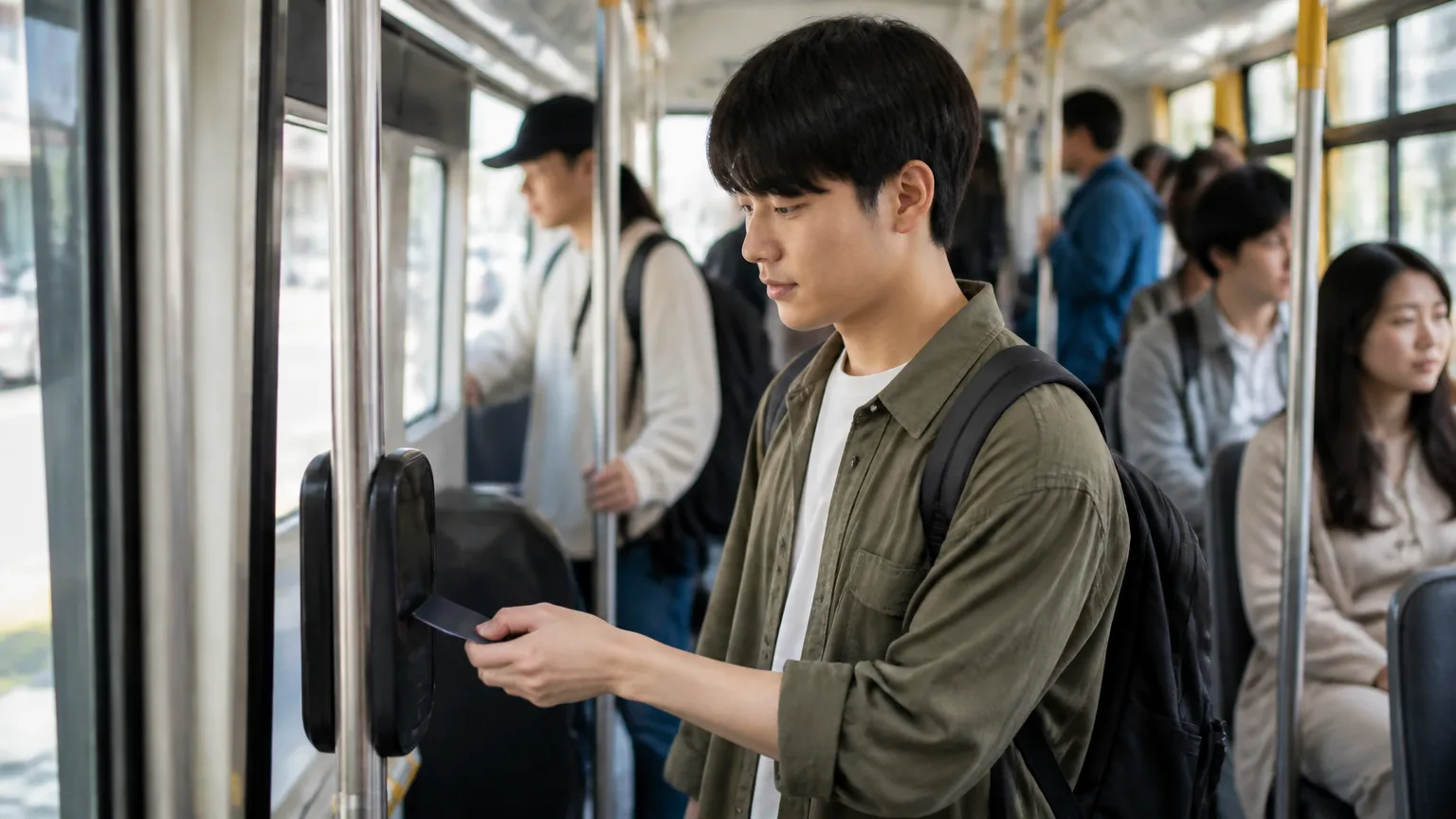
2. Board through the front door and tap your card on the reader to the right of the driver's seat. If you are paying for several people, tell the driver how many.
3. Press the bell before your stop. Tap your card on the reader at the rear door, then exit through that door.
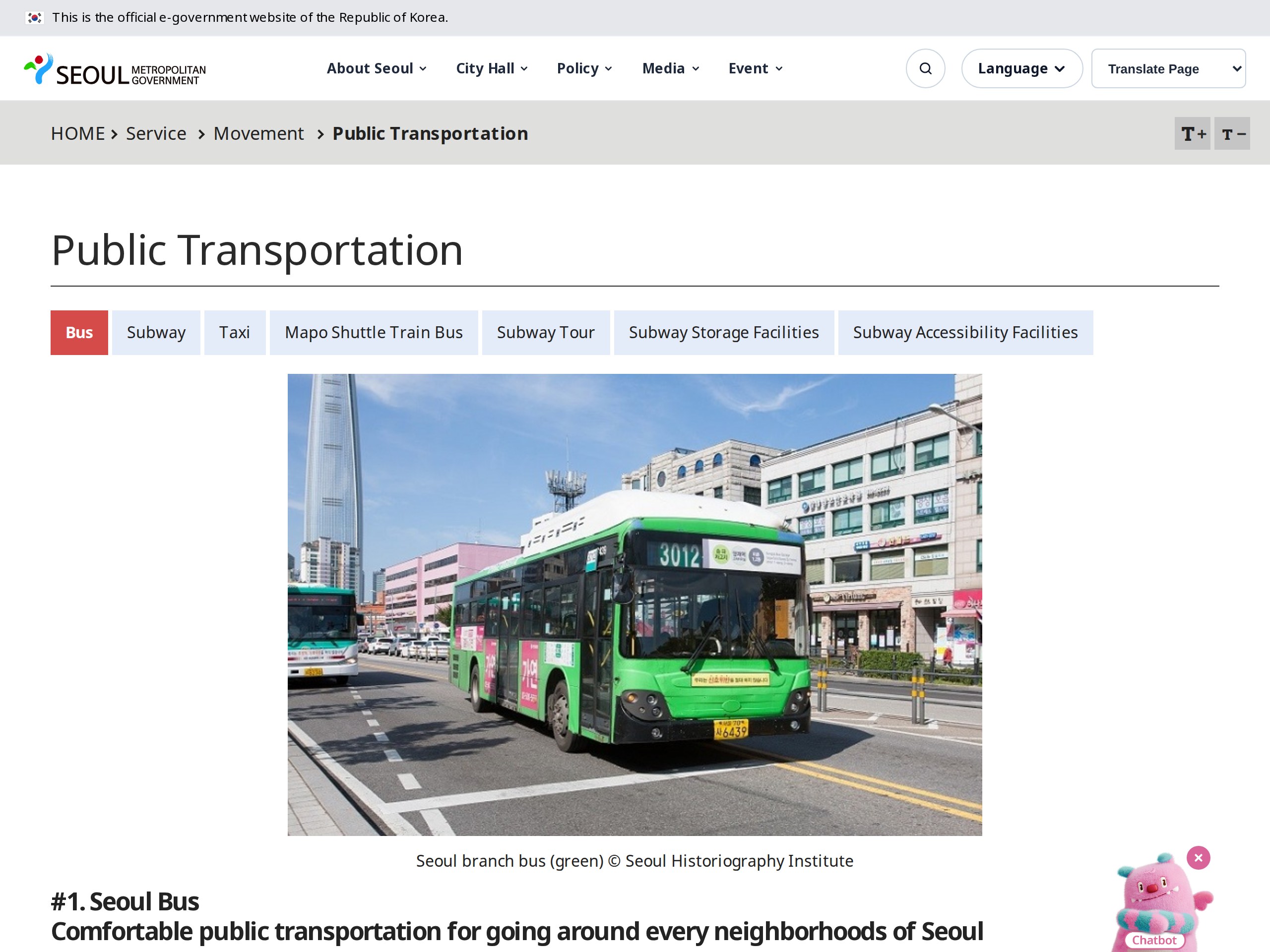
The official Seoul city English website gives the same steps.
Transit Cards and the ₩1,500 Bus Fare
On Seoul buses, you pay with a T-money or Cash-bee transit card. Both cards work on buses, subways, taxis, and public bikes. You can buy and reload them at convenience stores, subway stations, and online. Reload machines in subway stations accept cash, debit cards, credit cards, and mobile bank transfers, and they support multiple languages.
The adult fare for trunk and branch buses is ₩1,500 with a transit card. An extra charge may apply depending on distance. Children age 6 and under ride free when accompanied by a guardian.
A single-use ticket bought at a subway station is for the subway only. You cannot use it on a bus. Single-use tickets cost ₩100 more than the standard card fare and include a ₩500 deposit. If you plan to ride buses, get a T-money or Cash-bee card first.
Bus Colors and Route Types
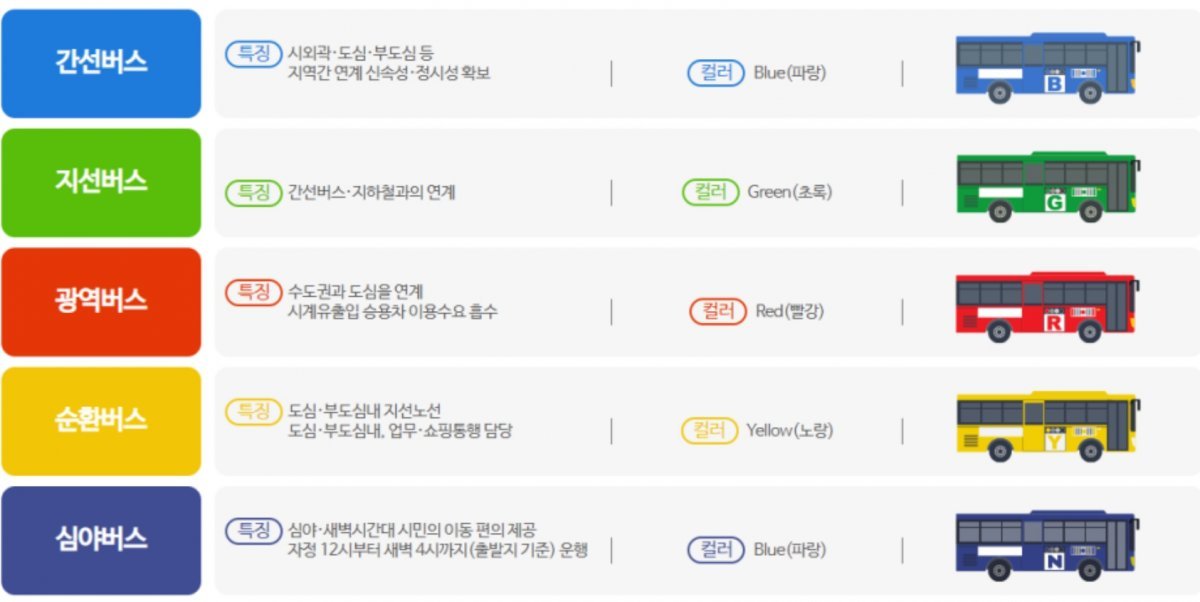
Seoul buses use four colors to mark the route type: blue, green, yellow, and red. Including village buses and night buses, the fares are as follows.
- Blue (trunk): Long routes across Seoul. Adult fare ₩1,500.
- Green (branch): Routes within a district that connect to other buses and the subway. Adult fare ₩1,500.
- Yellow (circular): Routes that loop around the city center and sub-centers. Adult fare ₩1,400.
- Red (express): Express routes between Seoul and nearby cities. Adult fare ₩3,000.
- Village bus: Small buses that run through residential neighborhoods. Adult fare ₩1,200.
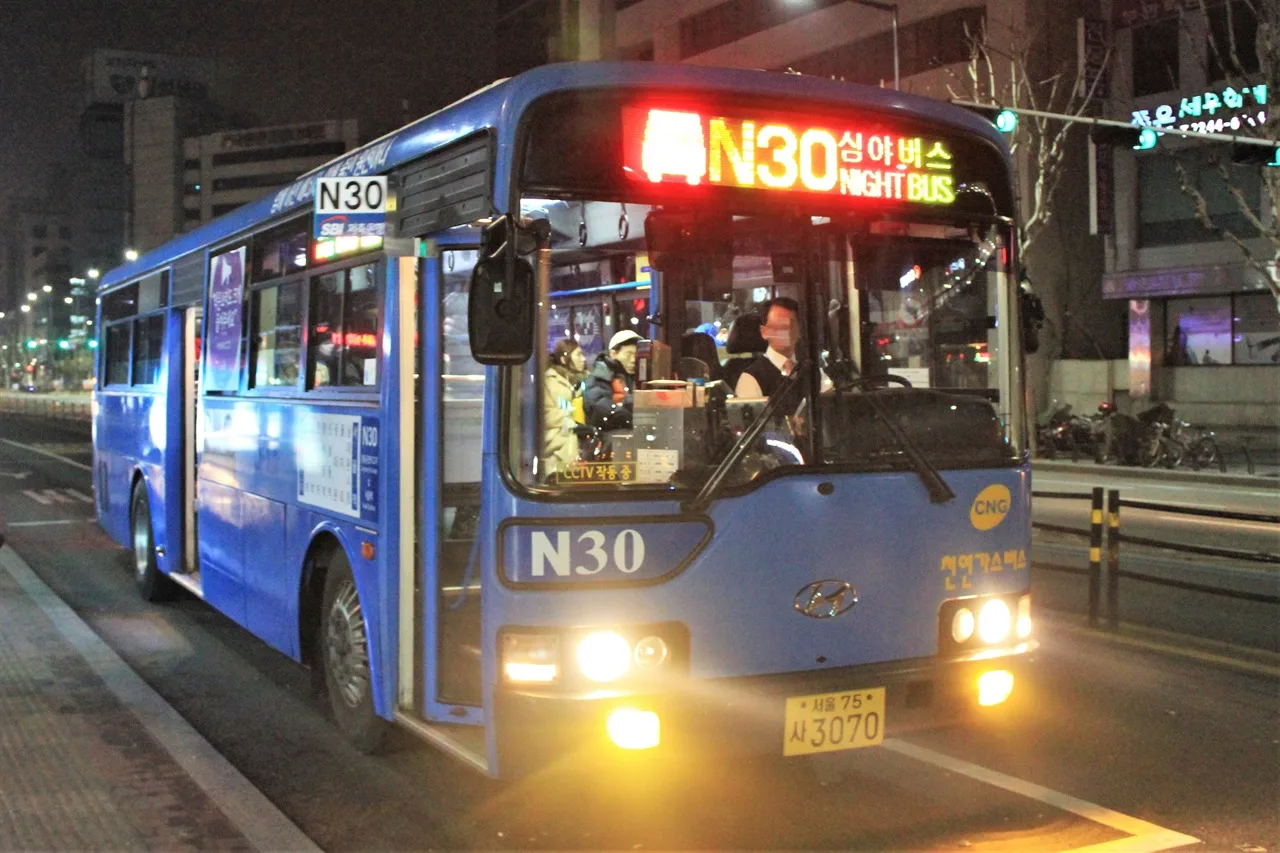
- Night (N) bus: Routes that run at night. Adult fare ₩2,500.
Transfers: 30 Minutes, or 1 Hour at Night
A Seoul bus transfer discount applies if you transfer within 30 minutes of your last tap. From 9 p.m. to 7 a.m. the next day, the window is 1 hour. The discount works for subway-to-bus and bus-to-bus transfers, up to 4 times a day. Transferring to a bus with the same number does not get the discount.
To get the transfer discount, you must tap both when you board and when you get off. If you skip the exit tap, you will not get the discount, and the base fare may be added the next time you board. Using more than one transit app at the same time can cause double charges or transfer errors, so use only one.
Night (N) buses run from midnight to 4 a.m. The last departure is at 4 a.m.
Namsan Buses 01A and 01B, and the City Tour Bus
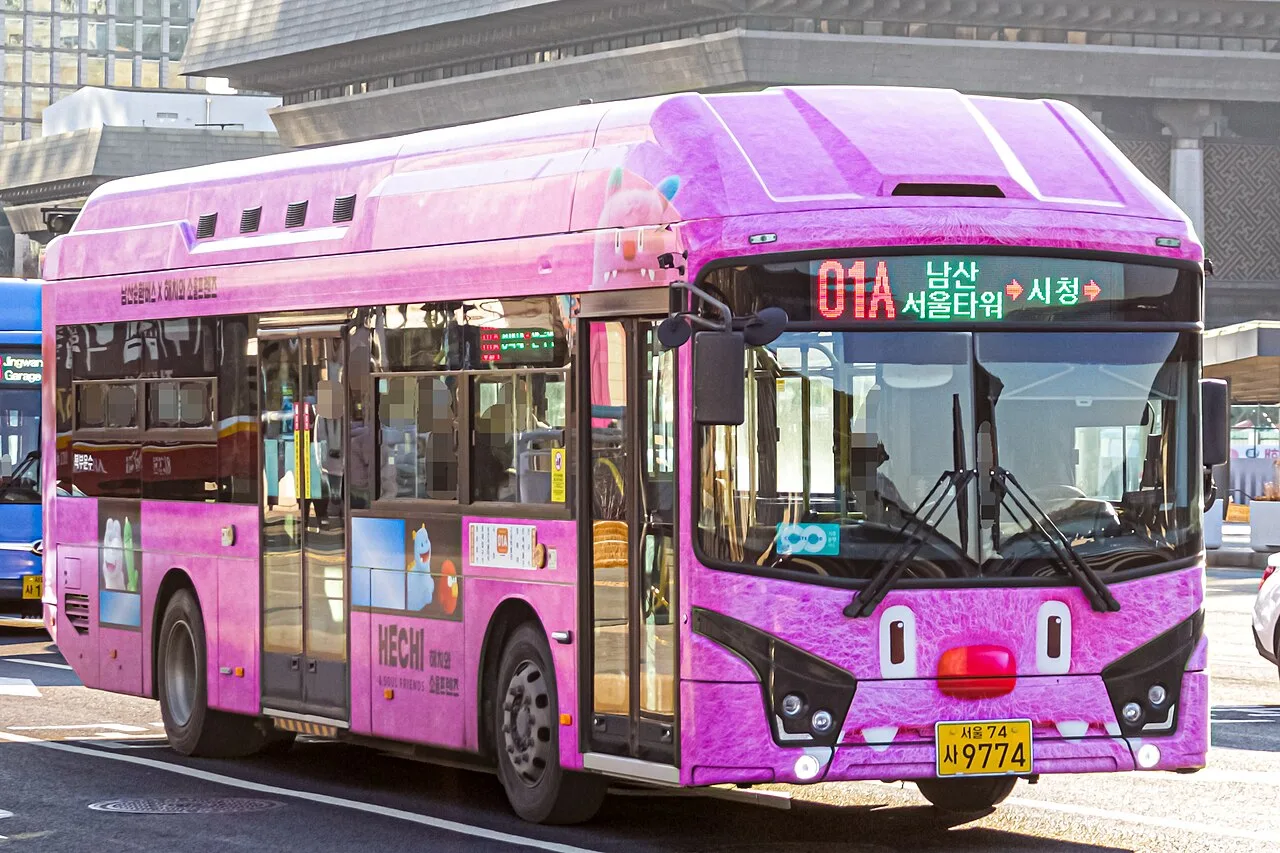
The Namsan circular buses 01A and 01B run from 06:30 to 23:00. The fare is ₩1,500, transit card only. Buses come every 9 minutes on 01A and every 14 minutes on 01B. They connect at Chungmuro Station and Dongguk University Station. Route 01A passes N Seoul Tower, the National Theater, Sungnyemun, Namdaemun Market, Gwanghwamun, Gyeongbokgung, Insa-dong, and Myeong-dong Cathedral, among other stops.
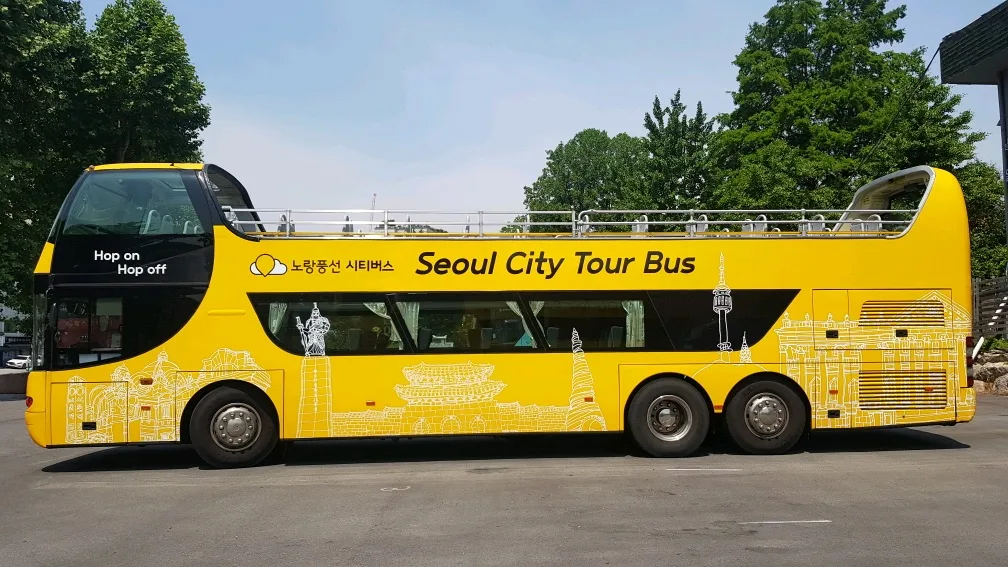
The Seoul City Tour Bus departs from Donghwa Duty Free in Gwanghwamun (Exit 6 of Gwanghwamun Station, Line 5). It runs from 9:30 a.m. to 6:20 p.m. on weekdays and from 9:20 a.m. to 6:20 p.m. on weekends. The last weekend bus leaves at 4:50 p.m. Buses come every 30 to 40 minutes. The service is closed on Mondays, but if a Monday is a public holiday, it runs as normal. One ticket allows unlimited hop-on, hop-off rides for the day, and the audio guide is available in 11 languages.
All you need to remember for Seoul buses is one transit card and two taps: front door and rear door. Get a T-money card, tap at the front door, press the bell when you want to get off, and tap again at the rear door. After one ride, you can get around Seoul by bus.