Foreign tourists in Korea can get a refund on value-added tax (VAT) when they shop at stores with a "Tax Free" sign. For expensive electronics such as smartphones, laptops, and cameras, the amount you get back and when you get it depend on the refund method and the customs steps you follow when you leave. Tax Free is a system that lets foreign tourists claim back the tax on goods they buy during a trip. A Global Tax Free notice posted at a store entrance in Seoul's Myeongdong shopping district. Photo: Tenant News Refunds are about 4–8% of the purchase price The Tax Free refund applies to foreign tourists who spend at least ₩15,000 per receipt. The amount you actually get back is about 4–8% of the purchase price. The taxes refunded are VAT and the individual consumption tax. The VAT included in the price is about 9%, and you receive that amount minus the refund agency's fee. You qualify if you are a non-resident foreigner staying in Korea for less th...
Your phone plan in Korea depends on one question: will you stay 90 days or less, or longer? If you stay 90 days or less, an eSIM or SIM card that you can buy with just your passport is enough. If you stay longer than 90 days, you need an Alien Registration Card (ARC) before you can get a postpaid plan or an MVNO plan. An MVNO (알뜰폰) is a service that rents a major carrier's network and charges lower rates. Below, you'll find the plan types, price ranges, how to get by while you wait for your ARC, and where to activate.
Passport for a SIM, ARC for postpaid
Foreigners can choose from three kinds of phone plans in Korea: a tourist eSIM or SIM, a prepaid SIM, and a postpaid or MVNO plan. Each needs different documents.
- Tourist eSIM or SIM: You only need your passport. These plans mostly offer data. In many cases, they do not support identity verification (such as PASS) for banking or government services.
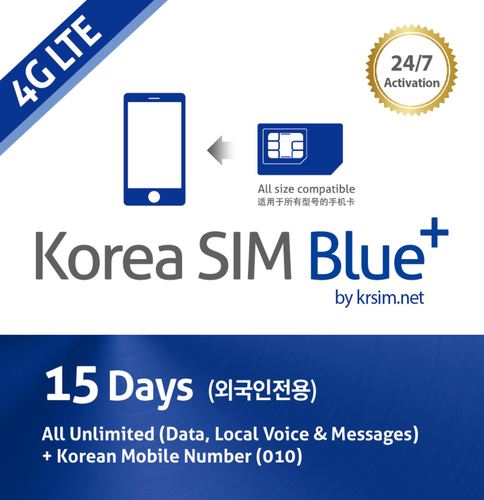
- Prepaid SIM: You register with your passport and get a number that can make calls. Among the plans made for foreigners, Korea SIM Blue Plus gives you a 010 number, and Korea eSIM Sky gives you a 012 number.
- Postpaid or MVNO: You need your ARC, passport, an automatic payment method (a Korean bank account or a card issued in Korea), and your device's IMEI (the unique ID number of your phone). You must visit a carrier store in person, and it takes 20 to 30 minutes.
90 days or less: eSIM and prepaid SIM
If you stay 90 days or less, the easiest option is to buy an eSIM before you arrive or a prepaid SIM at the airport or a convenience store. Prices vary by seller.
- Data-only eSIM (Kimchi Mobile): 5 GB for $7.99, 10 GB for $16.99, 20 GB for $27.99, and 50 GB for $47.99. Validity is 15 or 30 days.
- SKT-network Korea eSIM RED and SIM Gold: ₩5,500 for 1 day, ₩29,400 for 7 days, ₩59,900 for 30 days, and ₩119,900 for 90 days. Data is unlimited (up to 100 Mbps).
- Korea SIM Blue Plus (KT network): ₩25,700 for 5 days, ₩66,100 for 30 days, and ₩172,900 for 90 days.
- Korea eSIM Sky (LG U+): ₩24,900 for 5 days, ₩64,900 for 30 days, and ₩129,900 for 60 days.
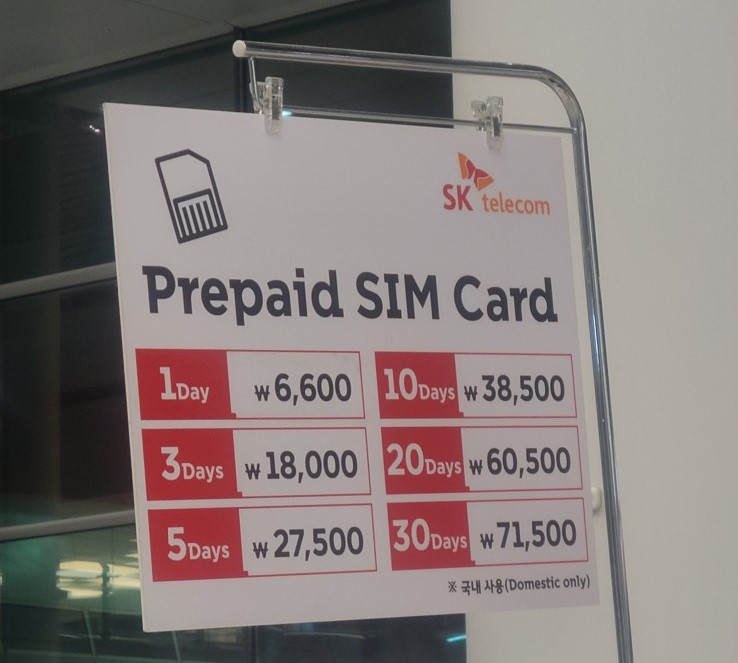
- Airport prepaid SIM: About ₩33,000 for 10 days of unlimited data, and up to ₩55,000 to ₩60,000 for 30 days of unlimited data.
- Convenience store prepaid: ₩10,000 to ₩30,000 per month.
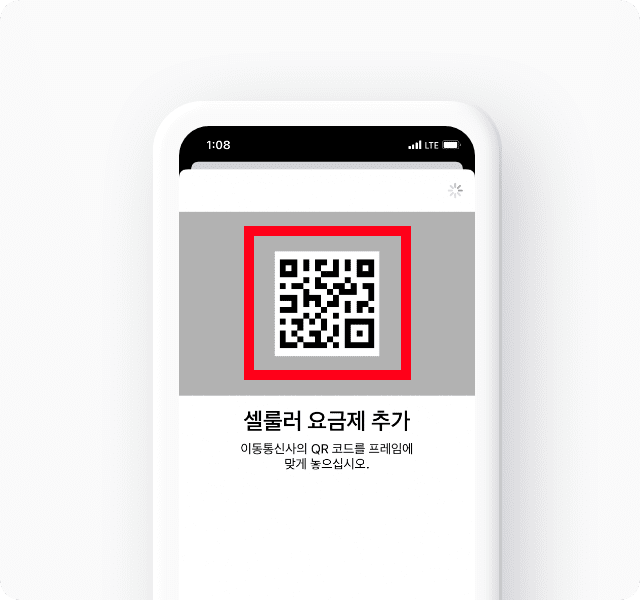
An eSIM activates in about 1 hour with a QR code. You install it and activate it after you arrive. A SIM card sent by mail takes 1 to 2 days.
More than 90 days: 3 to 5 weeks for your ARC
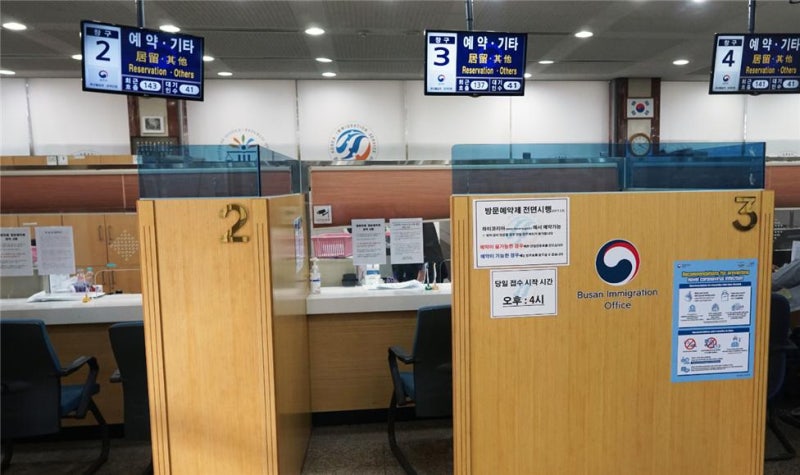
If you plan to stay longer than 90 days, you must register as a foreign resident within 90 days of the day you enter Korea. The Ministry of Justice lists these required documents: your passport, proof of where you live, one photo, and extra documents that depend on your visa status. Book a visit on HiKorea (hikorea.go.kr), then apply at your local immigration office. The information line is 1345. The ARC is an ID card with the same legal effect as a Korean resident registration card. That is why it unlocks postpaid and MVNO plans.
Getting the ARC usually takes 3 to 5 weeks, and sometimes 3 to 6 weeks. Use a prepaid SIM during that time. For a 90-day prepaid plan, Korea eSIM RED and SIM Gold costs ₩119,900, and Korea SIM Blue Plus costs ₩172,900. If you have 60 days or less left on your stay, you can only sign up for prepaid plans.
Once you have your ARC, move to an MVNO or postpaid plan.
- Postpaid from the major carriers: Some plans cost ₩69,000 to ₩89,000 per month with a 12- to 24-month contract. Others cost ₩45,000 to ₩80,000 per month.
- MVNO: Some plans cost about ₩33,000 per month (11 GB plus 2 GB extra each day). Others cost ₩11,000 to ₩30,000 per month.
- No-contract postpaid MVNO plans for foreigners: Woori Mobile (우리모바일) is ₩35,000, Chingu Mobile (친구모바일) is ₩25,000, and Toss Mobile (토스모바일) is ₩30,000.
An MVNO plan takes 1 to 2 business days to activate, and transferring your number takes 1 to 3 days.
July 6 ID checks and the one-line limit
Starting July 6, carriers and MVNOs verify your identity for new activations and number transfers. You can use face recognition, a government mobile ID, or a resident registration certificate issued that day. The ARC is not yet an ID that works with face recognition, so for foreigners nothing big changes right away.
The change that foreigners will actually notice is the number of lines. Until the new system is ready, foreigners are limited to one line per person, and you must explain your reason if you want more lines. Face recognition with the ARC is scheduled to be allowed in the second half of this year, and face verification based on passports is scheduled to start in 2027.
Where to activate, and the common traps
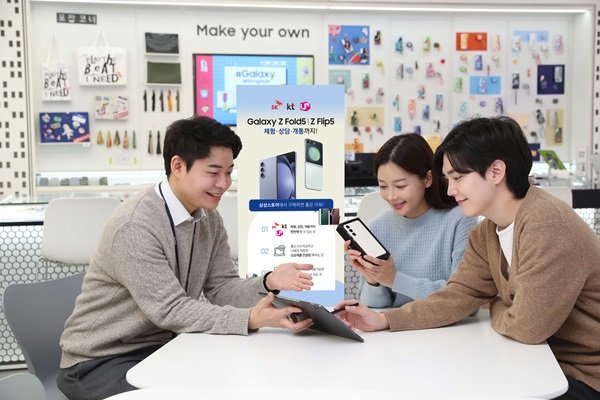
You can activate at the airport, a convenience store, a carrier store, or online. If you stay 90 days or less, use one of the first three or go online. If you have an ARC, activate at a carrier store.
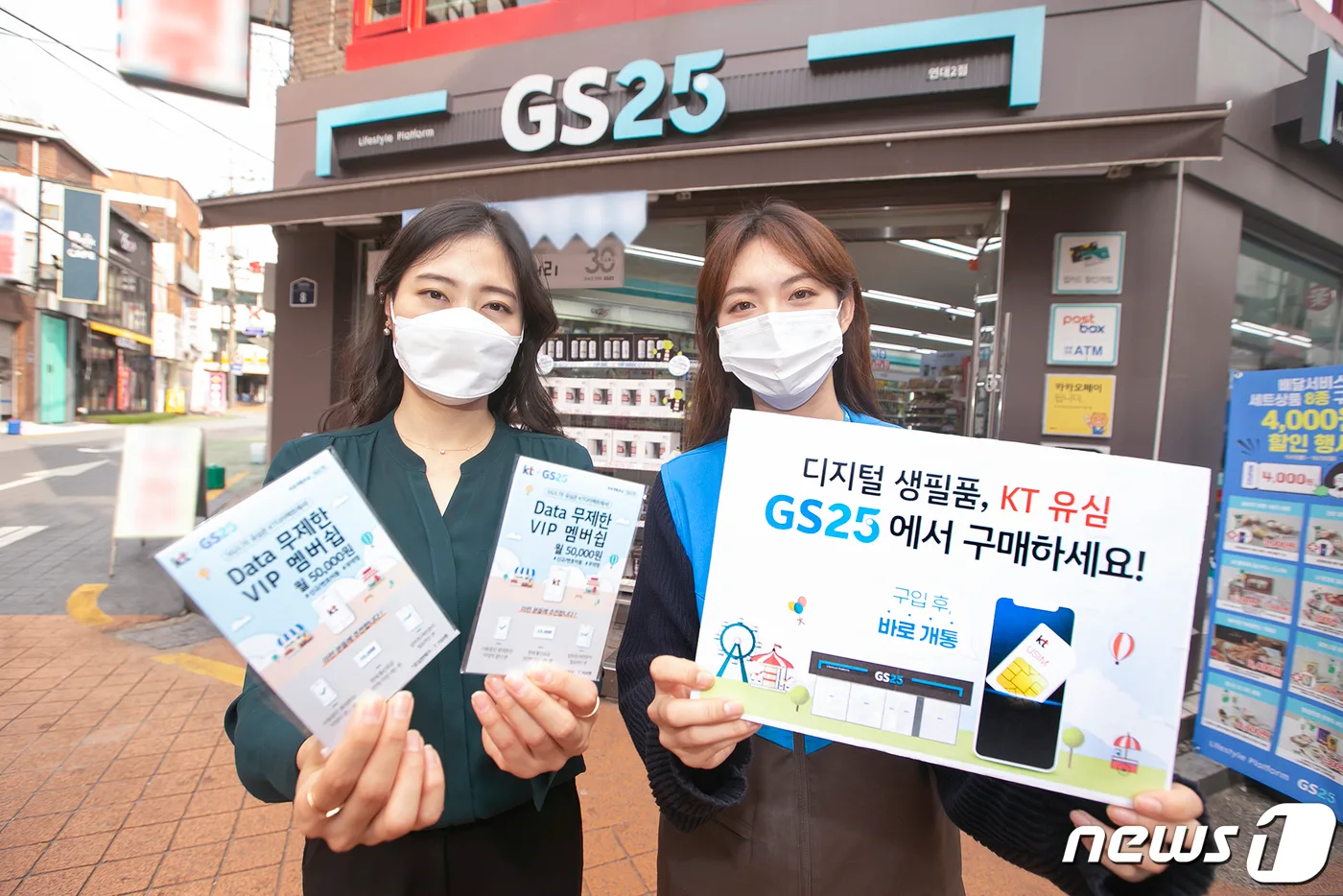
The SKT, KT, and LG U+ booths at Incheon Airport all run from 6 a.m. to 10 p.m., and each carrier has one 24-hour location. At Terminal 2, SKT is on the 4th floor, KT on the 1st floor, and LG U+ on the 3rd floor. The SKT roaming center on the 1st floor of Terminal 1 is also open 24 hours. Some prepaid SIMs sold at CU, GS25, and 7-Eleven activate after you upload a passport photo and wait 1 to 2 hours (9 a.m. to 6 p.m.). Others work right away with just your passport.
First-time arrivals often run into four problems.
- Name mismatch: Your name must match your ARC exactly, down to every letter and space. Otherwise, automatic payment and verification will fail.
- Identity verification: Services that need identity verification, such as banking and government services, are hard to use with a tourist SIM or eSIM.
- Canceling before you leave: If you leave Korea without canceling, unpaid bills go to collection and may affect your re-entry or visa. An early cancellation penalty can exceed ₩150,000.
- Age: People under 19 cannot buy a Korean SIM. They need to bring a SIM from their home country.
Start by counting your days in Korea. If you stay 90 days or less, an eSIM bought before you arrive or a SIM from the airport or a convenience store is enough. If you stay longer than 90 days, start with a prepaid plan, then move to an MVNO or postpaid plan once you get your ARC. Follow this order, and you stay connected from the day you arrive through the weeks you wait for your ARC.