Foreign tourists in Korea can get a refund on value-added tax (VAT) when they shop at stores with a "Tax Free" sign. For expensive electronics such as smartphones, laptops, and cameras, the amount you get back and when you get it depend on the refund method and the customs steps you follow when you leave. Tax Free is a system that lets foreign tourists claim back the tax on goods they buy during a trip. A Global Tax Free notice posted at a store entrance in Seoul's Myeongdong shopping district. Photo: Tenant News Refunds are about 4–8% of the purchase price The Tax Free refund applies to foreign tourists who spend at least ₩15,000 per receipt. The amount you actually get back is about 4–8% of the purchase price. The taxes refunded are VAT and the individual consumption tax. The VAT included in the price is about 9%, and you receive that amount minus the refund agency's fee. You qualify if you are a non-resident foreigner staying in Korea for less th...
Korea has three ways of counting age: Korean age (세는나이), international age (만 나이), and year age (연 나이). Since June 28, 2023, laws, contracts, and government administration use international age. This is the same system used in most of the world: it is based on your actual birthday.
There are exceptions. Alcohol, tobacco, military service, and elementary school entry do not follow international age. They still use year age or another standard. This guide explains how each age is calculated and where each one applies.
The Three Ages: Korean, International, and Year
Korea uses three age systems. Korean age is the traditional method, in which a baby counts as one year old at birth.
- Korean age (세는나이): You are 1 at birth, and you add one year every January 1. A baby born on December 31 turns 2 the next day.
- International age (만 나이): You are 0 at birth, and you add one year on each birthday.
- Year age (연 나이): This is the current year minus your birth year. You are treated as that age from January 1 of the year you reach it.
Korean age and year age go up on January 1. International age goes up on your birthday. International age in Korea is the same as the age counted by birthday in most other countries.
June 28: International Age Becomes the Standard
The unification of age to international age took effect on June 28, 2023. Amendments to the Civil Act and the Framework Act on Administrative Affairs were promulgated on December 27, 2022, and took effect six months later.
The change sets one rule: any age written in a law or contract is read as international age. Because laws and administration moved from Korean age to international age, most people became one or two years younger on paper.
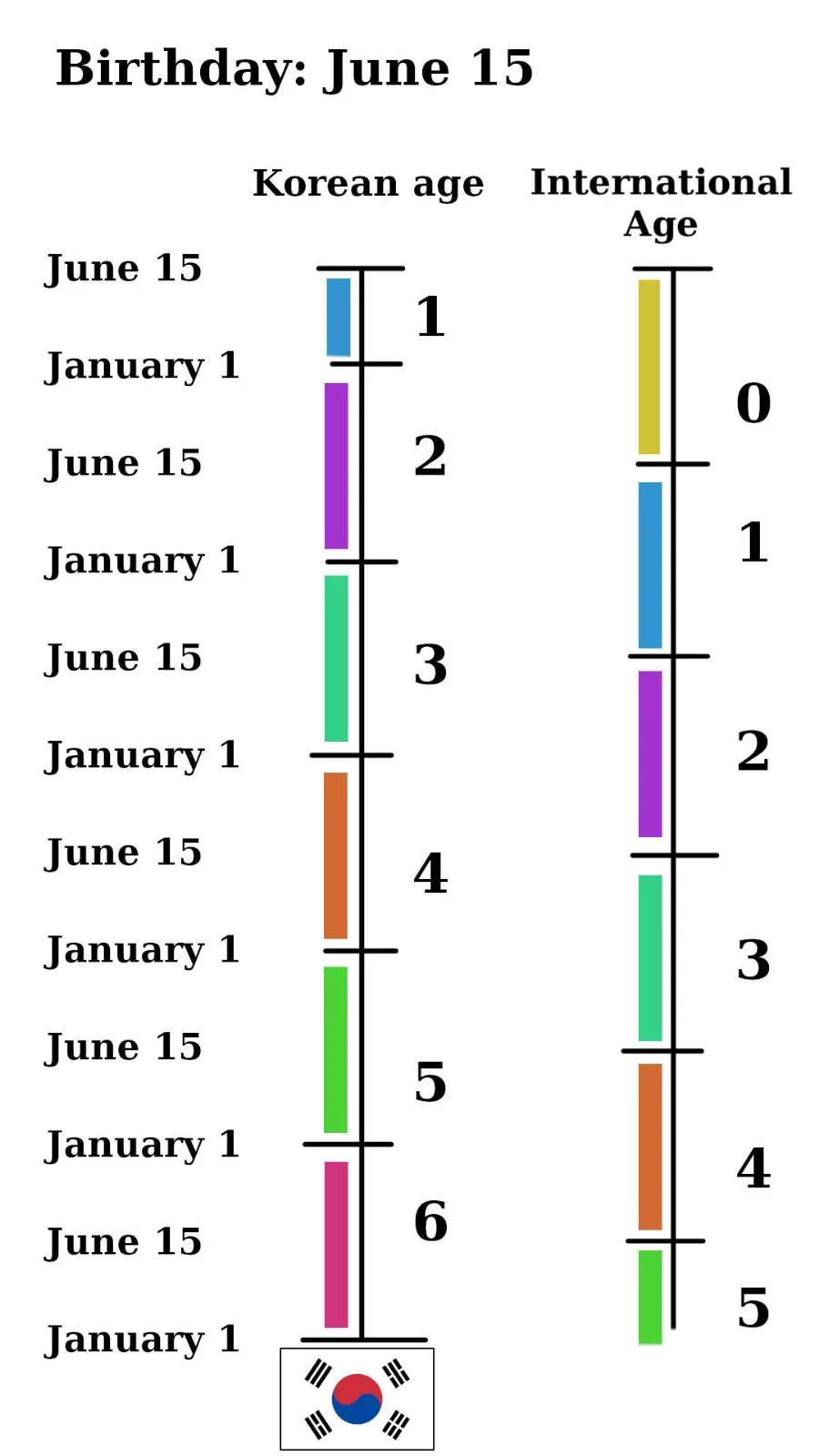
How to Calculate All Three Ages
You need two things: your birth year and your birthday.
1. Korean age: Subtract your birth year from the current year, then add 1.
2. Year age: Subtract your birth year from the current year.
3. International age: Start with your year age. If your birthday has not yet passed this year, subtract 1.
Take someone born in August 2003, calculated in 2023. Before the August 2023 birthday, their Korean age is 21, their year age is 20, and their international age is 19. After the August birthday, their international age becomes 20, the same as their year age.

Exceptions: Alcohol, Tobacco, Military Service, and School Entry
Alcohol, tobacco, military service, civil service exams, and elementary school enrollment are not covered by international age. The Youth Protection Act uses year age. Military service, the legal ages for drinking and smoking, and grade eligibility also stay on the year age method. Laws that use year age would each have to be amended individually, so they did not change with the age unification.

A child starts elementary school on March 1 of the year after the year they turn 6 by international age. This means children born in the same year start school together, even if their birthdays fall in different months.
Korean Age Still Appears in Daily Conversation
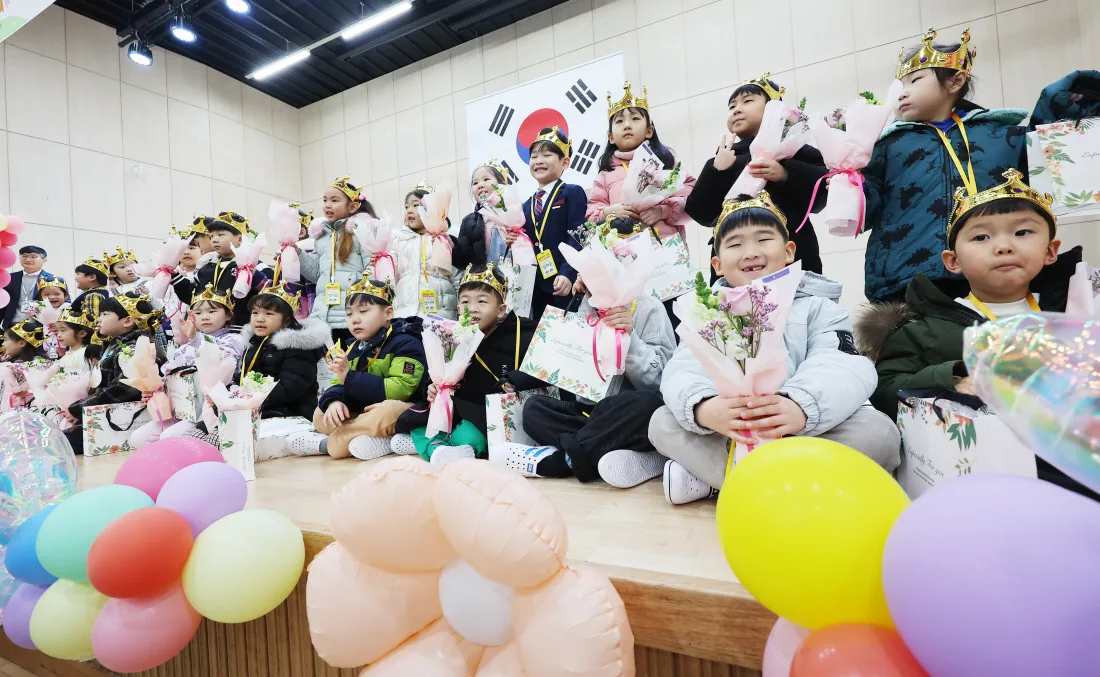
Namuwiki (나무위키), a Korean online encyclopedia, says most Koreans still use Korean age in daily life, and some people give their birth year instead of their age. Namuwiki also says Korean age has no legal effect.
When someone in Korea tells you their age, it may be their Korean age. If you know their birth year, you can work out all three ages with the formulas above. On official documents and contracts, use international age.

Why Korea Changed It: 81.6% Support
In a survey, 81.6% of participants supported unifying age to international age. The Ministry of Government Legislation ran the survey on its public comment platform (국민생각함) in September 2022. Of the 6,394 participants, 5,216 supported the change.
The stated reason for the change was to reduce confusion and social and economic costs caused by different ways of counting age. With three methods in use, the same person had to give a different age depending on the situation.
In short, ages in laws, contracts, and administration have been international age since June 28, 2023. Alcohol, tobacco, military service, and elementary school entry still use year age or another standard. Knowing which standard applies helps you avoid confusion when you talk about age in Korea.